Central Asia in Big Power Rivalry in Eurasia

 an hour ago
In the ongoing strife and turmoil at the global level, Central Asia has been caught in the complex web of competition and rivalry. The issue between the competing powers is; whether the future global order would be bipolar or multipolar? The evolving situation has been characterized as another version of the “Great Game”, where leading powers are vying with each other for space and economic benefit. The prime actors in the competition are the US and its allies on one side, while China and its strategic partner Russia on the other side. Both the sides perceive each other as the main challenger to their respective ambition of achieving global status.
Central Asia in Perspective
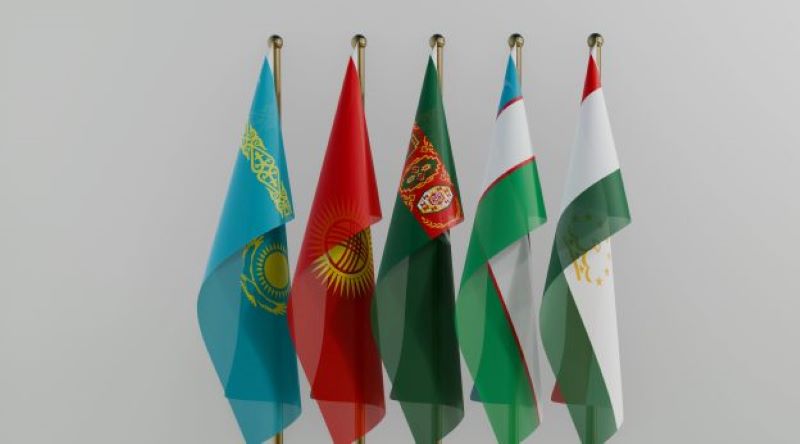
Central Asian is located in the heart of Eurasia with China flanking it in the east and Russia in the west. It is the strategic location of Central Asia that, is being coveted by leading and regional powers. Central Asia comprises of five states Kazakhstan, Kyrgyzstan, Tajikistan, Turkmenistan and Uzbekistan (CAS). All the CAS are landlocked nevertheless their centrality in the huge Eurasia landmass is of immense significance.
In view of the growing importance of trade and connectivity to the markets in international politics, the location of Central Asia as the transportation hub began gathering momentum. China's flagship project the Silk Road and Economic Belt now known as the Belt and Road Initiative (BRI) traverses the entire Eurasian landmass via Central Asia. Incidentally China’s trade and connectivity projects were launched from Kazakhstan in July 2013. Through the BRI China establishes contact with the people and spread its presence, if not influence in countries that opt for the BRI. The BRI helps China in geopolitical andeconomic terms.
Another major corridor of the Central Asia region is, the International North South Transport Corridor (INSTC) that connects Russia with south Asia via Iran. Presently it is not functioning efficiently due to the sanctions imposed by the US. Other transport corridor for the Central Asia region are in the planning stage.
Importantly Central Asia is richly endowed with natural resources especially critical minerals that have attracted world attention. Among the natural resources Central Asia is a vast depository of energy sources– oil, natural gas - and rare earth. The Kashagan oil field in Kazakhstan is known as the ‘Elephant in Asia’, while Turkmenistan has huge deposits of national gas. Kazakhstan is also rich in Uranium while Uzbekistan has modest deposits of coal, copper, Uranium.
Central Asia is also home to critical minerals such as Rare Earth, Lithium, Titanium, Cobalt etc. These minerals are sought after for the production of high grade weapons systems essential for ensuring security including cyber security. The Kumtor Gold mine in Kyrgyzstan has massive reserves of these precious metals. The competition among powers to procure, if not control these minerals is fierce. Regional groupings, the corporate sector are vying with each other for space and are willing to invest in Central Asia epically in the infrastructure so as to cart these resources to their countries and the markets.
Big Power Rivalry
In the process Central Asia has emerged as a ground for “Great Game” being played out there. In the evolving competition the US and China perceive each other as the main challenge to their global ambition. American President Donald Trump has initiated his policy “Make America Great Again” (MAGA). Thepolicy aims at America is recognized as a global power. On the other hand China also nurtures similar ambition. Its “Chinese Dreams” are based on the Chinese version of socialism to shape the future global order. Russia a major power in Eurasia and aims to regaining its lost Super Power status by integrating all the post-Soviet states into the Russian Federation. Its conflict with Ukraine is towards that goal.
In order to achieve their respective goals, Trump has relied on the containment policy of his predecessors, that is by creating sea based regional groupings around Eurasia particularly China. These are: Quadrilateral Security Dialogue (QUAD),Australia, United Kingdom and the US (AUKUS). The US has strongly supported the independence of Taiwan by pledging military and financial aid to it. It has formed a format with the Central Asian State - C5 + 1.
However American interest in the region especially to contain China seems to have flagged due to acceleration of its war with Iran with no end in sight. Consequently its active support to QUAD also flagged. In the opinion of Secretary of State Marco Rubio;QUAD is perceived as a discussion forum and had no concrete plan of action for partnership among members. However American policy began to focus on “From Threat” perception to Cooperation with China.”In May 2026 President Trump travelled to Beijing probably to seek China’s cooperation in ending its war with Iran. Reportedly Chinese President Xi Jinping is expected to visit Washington in September. It has also been reported that Trump is likely to visit Beijing when President Putin is expected to arrive in China. What a climb down for an American President. These developments have dented American prestige as a leading power at the global power.
From the Chinese perspective the global situation is fortuitous. Its main adversary the US is embroiled in a no ending war with Iran while Russia its strategic partner is involved in a long drown conflict with Ukraine.
In view of the present situation of turmoil and strife, China is silently expanding its presence andinfluence in Central Asia. China is the biggest investor in Central Asia especially in the infrastructure sector. The huge Eurasian region provides easy and quick land routes to Europe and markets elsewhere in the region.China's flagship project the Belt and Road Initiative (BRI) was launched from Kazakhstan. Importantly China needs Central Asian natural resources and critical minerals such as Rare Earth, Lithium, etc. for the production of high grade weapons. From the geopolitical and economic perspective Central Asia plays a major role in China's calculas. Besides China controls the South China Sea and has influence in Philippines, Brunei and is working to expand its presence in other South East Asian countries. However, according to reports China at present is facing economic difficulties and domestic issues.Consequently, its “Chinese Dreams” of shaping the future global order, is being pursued in a low key.
Russia a major power in Eurasia is aspiring to regain its lost superpower status. Its approach to this ambition is to integrate all the post Soviet States into the Russian Federation. Russia's long drawn conflict with Ukraine has disabled its capacity. Many analyst view Russia as a second rank power. From the economic perspective Russia's trading and search for connectivity has been highly circumscribed. One of Russia's land route the INSTC is unable to function efficiently due to US sanctions on Russia and Iran.
Russia’s strategic partnership with China has been diplomatically supportive in its conflict with Ukraine. A question arises how long will this tactical partnership last? Once China achieves its dreams of emerging as a global leader will the partnership survive?
Among other powers interested in Central Asia are Germany, The United Kingdom, The Netherlands, the European Union and Japan. It is central Asia's wealth of natural resources and minerals that has attracted them. However lack of direct connectivity to the outside world acts as a dampner.
India is keenly interested in enhancing its engagement with the central Asian region. Its Connect Central Asia Policy (CCAP) was initiated into 2012. Since then India's diplomatic interaction did increase but due to lack of direct connectivity, it is not robust. Presently the on-going competition and rivalry in Eurasia Indian interaction is stymied.
At the recent Summit meeting of the Shanghai Cooperation
Organisation in bishkek in August 2026,Prime Minister Narendra Modi highlighted in his address the common vision for the region. He stressed connectivity, security and opportunity. Earlier Prime Minister Modi stopped over in Tashkent that gave a push to the Indo Uzbek relations by raising the level of relationship to further strategic heights.
Finally, how will the Great Game be played out? At present it is difficult to predict the future shape of the new global order. The on-going US-Iran war appears endless. If and when, the peace deal would be signed,what would be its terms is uncertain. Nevertheless, the war has impacted negatively on the US image as a powerful country while Iran has emerged as a power to reckon with in the Middle East. Similarly the conflict between Russia and Ukraine continues endlessly with no end in sight.
Whenever the peace deal is signed it would be important to know, what would be the geopolitical changes in the Eurasian region. A salutary point to be noted is that, regional cooperation among the Central Asian State has gathered momentum. A collaborative view of the competition and rivalry in their neighbourhood is essential. It could lead to bette understanding of how the Great Game would be played out.
(The author, a former Professor at the School of International Studies, JNU, is a well-recognised commentator on foreign policy, political economy, and society in Central Asia.)








[[comment.comment_text]]