The FATF Report on Terror Financing

 1 year, 3 months ago
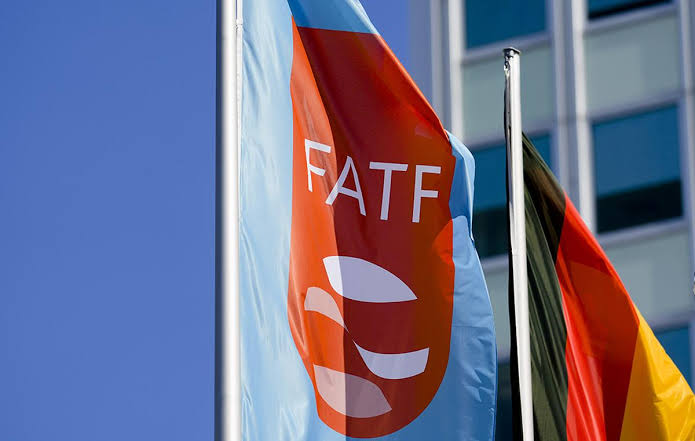
The Financial Action Task Force (FATF), a global financial intelligence watchdog, has released a critical report on terrorist financing risks, emphasising that terrorism is fundamentally about money, and state-sponsored groups possess significantly more funds and ease in moving them.
Established in 1987 by G-7 countries and others, the FATF combats money laundering, terrorist financing, and the financing of weapons of mass destruction proliferation. Its work is crucial as terrorist financing can "infect" the international banking system through various crimes, including human and narcotics trafficking.
The FATF conducts periodic country reviews. India, which joined in 2010, received an "outstanding" report in 2024 for its financial stability but was warned about the misuse of "non-profit" associations for terrorist financing, leading to the closure of several NGOs.
Conversely, Pakistan has faced multiple placements on the FATF's 'grey list' due to deficiencies in its financial systems, including from 2018 to 2022. During this period, Pakistan took some legal steps, such as sentencing Lashkar-e-Taiba (LeT) and Jaish-e-Mohammad (JeM) leaders, and enacting the Anti-Terrorism Act (Amendment) Bill, 2020.
However, the report suggests Pakistan's efforts are incomplete, indicating that terrorist financing activities have merely gone "deeper underground." It names LeT and JeM, along with their purported charitable arms, highlighting their persistent ability to exploit global financial systems.
A key takeaway is the sophisticated use of digital platforms. Terrorists leverage social media messaging apps, crowdfunding sites, shell companies, legal entities, and trusts to move funds, demonstrating remarkable adaptability to bypass conventional financial controls.
The report highlights the effectiveness of terrorist financing when groups control territory or are proximate to terrorist areas, enabling them to impose "taxes," divert humanitarian aid, and access natural resources. This provides a significant and direct source of income.
Crucially, the FATF report, for the first time, explicitly flags state-sponsored terrorism. While admitting it hasn't yet developed a typology, it cites instances of states helping designated terrorist groups circumvent sanctions, noting that non-designated organisations are more prone to financial activities.
This acknowledgement of state sponsorship is vital for counter-terrorism efforts, especially for countries like India. The report notes that donations are coordinated through encrypted communications, money services businesses, cash, and virtual assets, showcasing their agility in beating the system.
The report also reveals concerning trends in how money is moved. Networked organisations like the Islamic State and al Qaeda rely on regional entities, such as al Qaeda in the Indian Subcontinent (AQIS), to transfer funds across international borders.
Furthermore, it exposes the use of "hawala" transactions, which have evolved to employ cryptocurrency and blockchain-based pseudo-anonymous transfer systems, making them incredibly difficult for investigators to penetrate due to vetting processes for new users.
Beyond traditional methods, terrorists are now monetising social media platforms like Zoom and YouTube (through features like "Super Chat"), and even X (via its "blue tick" tipping feature), allowing direct financial support and increased visibility for their ideologies.
The report cites specific cases, including the Pulwama attack in India (2019), where explosives were moved cross-border, and a key component was procured through Amazon, underscoring the misuse of e-commerce. It also details how Pakistan successfully traced a car bomb attack by the Tehrik-e-Taliban Pakistan (TTP), demonstrating their capability when motivated.
Overall, the FATF report underscores the immense challenge security agencies face. The ease with which individual terrorists, radicalised by online propaganda, can orchestrate attacks with minimal funds, as seen in the Gorakhnath temple attacker's case, highlights the growing complexity.
Ultimately, the report emphasises that tracing every transaction is becoming nearly impossible. It concludes that the solution lies not just in tracking the "web" of transactions but in "smashing the spider" – shutting down the terrorists in their entirety to dismantle the networks at their source.
(Author, a PhD from SIS, JNU, is a regular EW columnist.)









[[comment.comment_text]]