From Target to Attacker: How Rahul Gandhi Flipped the Script on Political Aggression

 2 hours ago
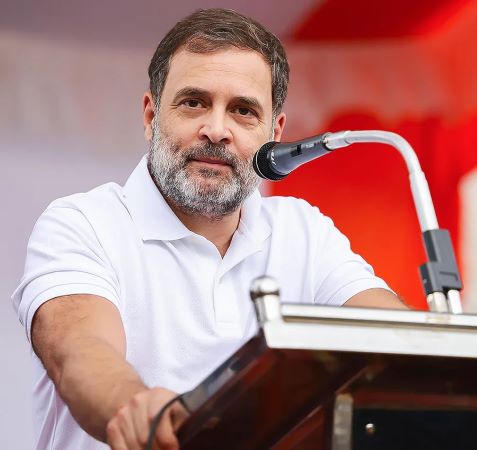
For over a decade, Indian political discourse operated under a well-entrenched postulate: any direct personal attack on Prime Minister Narendra Modi was politically self-destructive. Critics and opposition leaders who attempted to target him directly often found their arrows rebounding, resulting in a severe political boomerang. However, a significant transformation has taken place in the national political arena. The Leader of the Opposition, Rahul Gandhi, has abandoned defensive maneuvers and mounted an unprecedented, direct offensive against the Prime Minister.
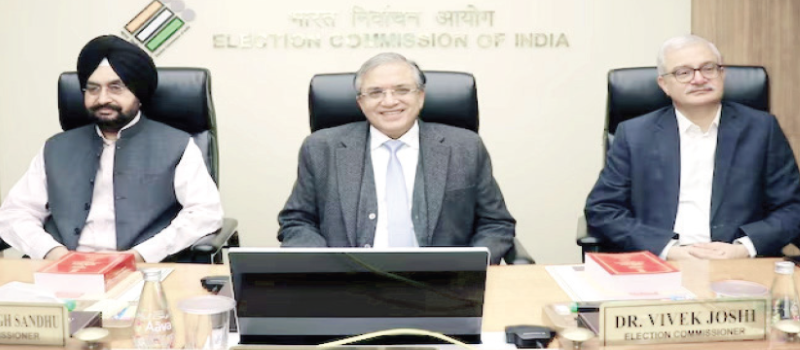
This direct attack is clear from several key incidents. First, regarding "Operation Sindoor," Rahul Gandhi claimed the military action was done mainly to boost PM Modi’s image rather than to fight Pakistan, alleging that Pakistan was even alerted beforehand. Second, citing former Army Chief Gen. M.M. Naravane's upcoming book, he questioned PM Modi's decision-making power during the border crisis with China, pointing out how the PM reportedly left the crucial decision to the general by saying "do whatever feels appropriate." Third, by demanding the resignation of Election Commissioner Gyanesh Kumar and telling him to turn approver, he directly accused PM Modi and Home Minister Amit Shah of conspiring to hijack Indian democracy and the Constitution. Together with his latest challenge claiming PM Modi is backed by foreign powers, these instances show how Rahul Gandhi is constantly trying to prove that the country's top leadership is unfit to govern.
Rather than triggering public backlash or political retribution, this high-stakes offensive is gaining visible traction and public resonance. Understanding this dynamic shift requires examining the compounding economic realities, the dismantling of orchestrated political caricatures, and the strategic inversion of nationalistic narratives. That means to understand why this major shift is happening, we need to look at three things: the growing economic problems people face every day, the breakdown of the false image created to make Rahul Gandhi look foolish, and the way he has turned the government's own national pride arguments against them.
Economic Fatigue and the Erosion of Political Immunity
The primary catalyst for this shifting public reception lies in the accumulation of severe economic anti-incumbency. In earlier years, an extraordinary reservoir of personal popularity and ideological messaging insulated the executive leadership from direct criticism. Today, everyday socio-economic pressures—persistently high inflation, the rising cost of living, systemic unemployment, and widespread distress among small and medium enterprises—have eroded that protective layer. When citizens face prolonged financial strain, structural economic promises ring hollow. The public’s willingness to defend political iconology or symbolism wanes as everyday realities press harder.
Consequently, aggressive questioning of top leadership is no longer viewed by the public as an uncalled-for insult to a revered figure, but as a necessary assertion of political accountability. The timing of this offensive aligns precisely with an electorate seeking answers to structural economic vulnerabilities and trade concessions.
The Failure of the Caricature and the Traitor Narrative
For years, a massive political apparatus worked to brand Rahul Gandhi as an incompetent, frivolous leader incapable of serious governance. That artificially constructed image collapsed under the weight of extensive public outreach campaigns, direct street politics, and sustained parliamentary engagements. Realizing that the previous caricature was no longer effective in diminishing his credibility, the ruling establishment shifted its strategy, attempting to construct a far more damaging narrative: framing him as an unpatriotic actor. By highlighting his foreign travels, interactions with overseas figures, and public commentary on domestic democracy, the ruling party sought to label him as an anti-national conspirator working alongside foreign elements to destabilize the nation.
Instead of retreating or defensively clarifying his foreign visits, Rahul Gandhi executed a classic offensive defense. He preempted the attempt to brand him a traitor by turning the exact same accusation back onto the Prime Minister. By challenging the Prime Minister to an open, live debate on foreign influence, external campaign support, and international trade concessions, he completely inverted the nationalistic narrative. Declaring his readiness to prove his assertions within minutes on any platform—and even cheekily suggesting that political opponents or corporate figures could act as the presiding judges—he transferred the burden of proof entirely onto the ruling establishment.
Legal Checkmates and Unscripted Dilemmas
This sharp strategic shift has exposed a profound tactical dilemma within the ruling party. Historically, sharp attacks against government leaders resulted in a flood of defamation lawsuits and immediate legal actions by party cadres. Yet, in response to these direct accusations of foreign backing and economic capitulation, the establishment has maintained a conspicuous legal silence. This restraint stems from a clear realization: entering a courtroom would open the doors to legal discovery. In a formal judicial setting, sensitive historical records, international trade communications, corporate email archives, and foreign consultancy relationships could be brought into public testimony. A legal proceeding would transform political rhetoric into official judicial evidence, bringing off-the-record controversies into public domain.
Furthermore, the challenge highlights an underlying asymmetry in political communication styles. The ruling leadership’s communication model has traditionally relied on highly structured, one-way broadcasts and carefully curated interactions. In contrast, demanding a face-to-face, unscripted debate pushes the political contest into a domain of spontaneous interrogation. By pointing out that parliamentary proceedings often restrict oppositional speech through microphone control and procedural limits, the call for an independent, open debate strips away institutional protections, putting the executive's unscripted communication capacity to the test.
A Fundamental Realignment in Opposition Politics
Ultimately, Rahul Gandhi’s recent political offensive marks a fundamental realignment in Indian opposition politics. By challenging the central pillar of the ruling party’s appeal—its claim to exclusive national stewardship—the opposition has dismantled the psychological barrier that once made direct executive criticism taboo. Supported by an electorate fatigued by economic pressures, this aggressive strategy has successfully disrupted the political status quo, transforming what was once a liability into a formidable tool of political accountability.
(Author, a PhD from School of International Studies, JNU, is a senior TEW editorial adviser and columnist.)



[[comment.comment_text]]