Social Media: The Dangerous Race for Virality

 4 months, 1 week ago
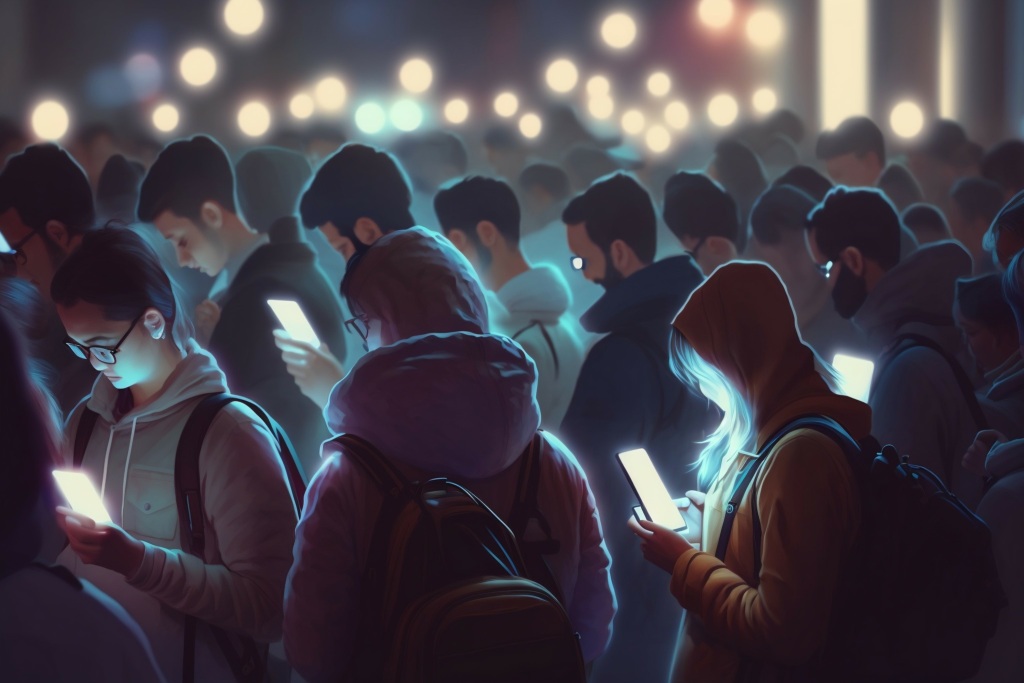
The digital revolution has transformed the way people communicate, learn, entertain themselves, and build careers. Platforms such as YouTube, Instagram, Facebook, and other short-video applications have democratized access to public attention in an unprecedented way. Today, anyone with a smartphone and an internet connection can potentially reach millions of people. For many talented individuals, social media has become a powerful platform for creativity, entrepreneurship, education, and self-expression.
However, beneath this success story lies a growing concern that deserves serious attention. An increasing number of content creators are turning to controversy, vulgarity, offensive remarks, and sensationalism in pursuit of views, followers, and financial gains. In the race to become viral, many appear willing to sacrifice responsibility, decency, and even social harmony.
The recent controversy involving Rewa-based YouTuber Manish Patel is a reminder of this disturbing trend. Patel came under legal scrutiny after allegedly making objectionable remarks about members of the Brahmin community and Brahmin women in social media content. The matter quickly escalated, resulting in police action and judicial intervention. Regardless of one's opinion about the specifics of the case, it has reignited a larger debate about the limits of free expression and the responsibilities that come with digital influence.
But the issue is much bigger than a single individual.
The Manish Patel episode is merely one example of a wider phenomenon that has been developing across social media platforms over the last several years. Increasingly, controversy is becoming a business model. The objective is no longer to create meaningful content but to attract attention at any cost. Whether that attention comes from appreciation or outrage often makes little difference because both generate engagement, and engagement generates revenue.
This transformation is closely linked to what experts call the "attention economy." Social media companies compete for user attention because attention translates into advertising revenue. Their algorithms are designed to identify and promote content that triggers strong emotional reactions. Videos that provoke anger, shock, curiosity, amusement, or outrage are more likely to be shared, commented upon, and discussed. As a result, creators quickly learn an important lesson: controversy travels faster than quality.
A thoughtful educational video may take days to research and produce, yet receive only modest engagement. Meanwhile, a provocative statement, an offensive joke, a personal attack, or an inflammatory comment can generate millions of views within hours. The incentives are obvious, and many creators adapt accordingly.
This trend is not limited to India. Around the world, social media has produced a culture in which visibility often matters more than credibility. Influencers frequently push boundaries because controversy increases reach. Public outrage, criticism, and even legal troubles can sometimes enhance a creator's popularity rather than diminish it. In some cases, being controversial has become a branding strategy.
India has witnessed several examples in recent years. Various influencers, comedians, podcasters, and content creators have faced criticism, police complaints, or legal scrutiny over content perceived as vulgar, offensive, or socially divisive. Yet many of these controversies also resulted in increased visibility and higher follower counts. This creates a dangerous feedback loop in which outrage becomes profitable.
The consequences extend far beyond social media platforms themselves. Young people are among the most active consumers of digital content. According to multiple studies, Indian teenagers and young adults spend several hours every day on social media platforms. For many of them, influencers have become role models, shaping not only purchasing decisions but also attitudes, language, behavior, and aspirations.
When young audiences repeatedly see individuals becoming wealthy and famous through controversial content, they may begin to internalize a troubling message: that attention is more valuable than achievement.
Traditionally, society celebrated excellence in education, science, literature, public service, sports, and innovation. Success was associated with hard work, expertise, and contribution. Today, however, viral fame is increasingly being presented as an achievement in itself. The process through which that fame is acquired often receives little scrutiny.
This shift is influencing public discourse as well. Social media rewards speed rather than reflection. Complex social, political, and cultural issues are frequently reduced to short clips designed to provoke emotional reactions rather than encourage thoughtful discussion. Nuance disappears. Context is lost. Sensationalism thrives.
The deterioration of public language is another visible consequence. Expressions that were once considered inappropriate for public conversation have become normalized in many online spaces. Offensive humor, personal insults, misogynistic remarks, and crude language are often presented as entertainment. Repeated exposure gradually reduces social sensitivity toward such behavior.
Sociologists refer to this process as normalization. When people encounter certain forms of behavior repeatedly, they begin to view them as acceptable, even when they conflict with broader social values. What begins as an exception eventually becomes part of the mainstream.
At the same time, it would be unfair to place all responsibility on content creators alone. Audiences play an equally important role in shaping digital culture. Algorithms do not operate in isolation. They respond to human behavior. Every click, share, comment, and view sends a signal about what people want to consume. If vulgarity, outrage, and sensationalism dominate social media feeds, it is partly because millions of users are engaging with such content.
In many ways, social media functions like a mirror. It reflects not only the choices of creators but also the preferences of society itself. This reality calls for collective introspection. Why do educational videos often struggle for attention while controversial content spreads rapidly? Why are experts, researchers, teachers, and scholars frequently overshadowed by individuals whose primary skill is generating outrage? These questions are not merely technological; they are cultural.
Fortunately, social media is not inherently harmful. The same platforms that amplify controversy have also enabled educators, journalists, doctors, scientists, historians, environmental activists, and entrepreneurs to reach audiences that traditional media could never have provided. Countless creators are producing high-quality content that informs, educates, and inspires.
The challenge is therefore not the technology but the incentives governing its use. Families have a role to play by encouraging responsible digital habits among children. Educational institutions must strengthen media literacy programs so that young people learn to evaluate content critically rather than consume it passively. Social media companies should reconsider whether engagement alone should determine visibility. Policymakers must continue to explore balanced regulatory frameworks that protect both freedom of expression and social responsibility.
Most importantly, society must redefine what it chooses to reward. Freedom of expression remains one of the cornerstones of a democratic society. However, freedom has always been accompanied by responsibility. The right to speak does not automatically confer the right to demean communities, spread hatred, or exploit public sensitivities for personal gain. A healthy democracy depends not only on the freedom to express opinions but also on the wisdom to exercise that freedom responsibly.
The controversy surrounding Manish Patel should therefore not be viewed merely as an isolated legal dispute. It is part of a larger conversation about the direction in which digital culture is moving. It forces us to ask difficult questions about the values being promoted online and the standards society is willing to accept in exchange for entertainment.
Ultimately, the future of social media will not be determined by algorithms alone. It will be shaped by the collective choices of creators, platforms, policymakers, and audiences. If society continues to reward controversy over character, provocation over substance, and virality over value, digital platforms may increasingly become marketplaces of outrage rather than spaces for meaningful engagement.
The real challenge before us is not how to create viral content. The challenge is how to create a digital culture where influence is earned through merit, creativity, knowledge, and responsibility rather than through division, vulgarity, and controversy.
The answer to that challenge will define not only the future of social media but also the character of society itself








[[comment.comment_text]]