State Suppression in PoK Exposes the Deepening Cracks in Pakistan's Kashmir Narrative
 1 month, 4 weeks ago
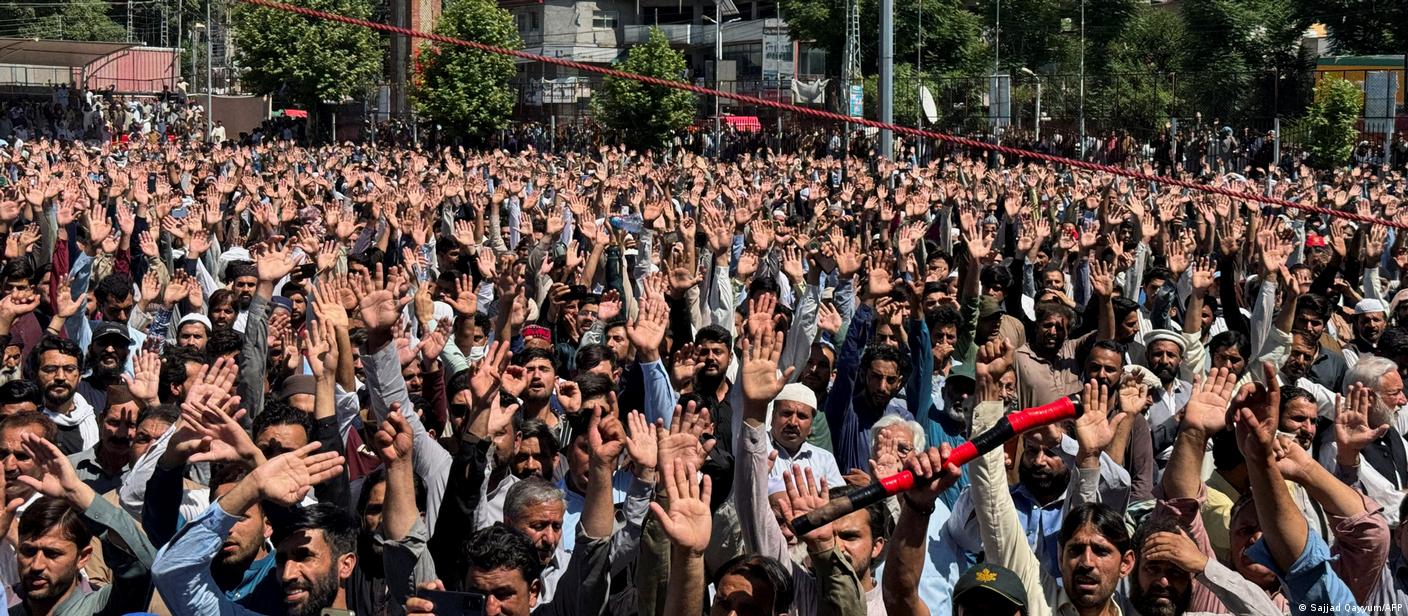
For decades, Islamabad has framed its stance on the Kashmir dispute around the principles of self-determination, positioning itself as a defender of political rights against Indian administration. However, the civil society mobilization in Pakistan-occupied Kashmir (PoK) exposes a stark contradiction within this narrative. What began in early July as an anti-government protest over inflated food prices, electricity tariffs, and local governance has rapidly escalated into state-led violence, weeks of internet blackouts, flawed local polls, and dozens of protester deaths. Rather than addressing basic administrative failures, the state’s heavy-handed suppression has laid bare the widening gap between Pakistan's international rhetoric and its domestic conduct.
At the center of this movement is the Jammu Kashmir Joint Awami Action Committee (JAAC), a coalition of traders, lawyers, students, and transporters. While the coalition initially won economic concessions regarding flour subsidies and utility costs in previous years, it eventually expanded its focus into a 38-point charter. Primary among its grievances is the reservation of 12 seats in PoK’s 45-seat Legislative Assembly for refugees residing in mainland Pakistan. Local activists contend that this arrangement allows Islamabad to control regional politics and divert local funds without offering genuine representation. Yet, altering this framework presents a constitutional dilemma for Pakistan, as its regional political architecture is intertwined with its long-standing diplomatic position on the Line of Control.
When negotiations collapsed, the Pakistani state responded through securitization rather than political compromise. Islamabad banned the JAAC under anti-terrorism laws, arrested key organizers, and deployed security forces, resulting in violent clashes and civilian casualties. The depth of political disillusionment was highlighted when protesters wrote directly to Army Chief Field Marshal Asim Munir, acknowledging that operational authority rests in Rawalpindi rather than civilian institutions. The rapid escalation subsequently forced a sudden rhetorical shift from state officials, with government advisers abruptly recasting the protesters from "terrorists" to "patriotic" citizens to manage mounting public outrage.
To control the narrative, the government reinforced its censorship regime across its peripheral regions. The Ministry of Information and Broadcasting introduced the Foreign Media Facilitation Guidelines, requiring foreign journalists, local fixers, and freelancers to obtain specialized No Objection Certificates (NOCs) to operate outside major urban centers. Media platforms face suspensions for reporting on local election irregularities, while local reporters risk enforced disappearances for breaching the military establishment’s red lines. This aggressive suppression of information reflects an effort to insulate the state's peripheral governance practices from international oversight.
All said and done, the unrest in PoK undermines Pakistan’s moral posture on Kashmir at a time when it is attempting to rebuild its international reputation as a diplomatic mediator in West Asia. The JAAC-led movement is not a secessionist campaign targeting the region's broader geopolitical status; it is a domestic demand for constitutional rights, fiscal transparency, and administrative accountability. By responding to local governance demands with anti-terror legislation and military force, an overstretched Pakistani state has severely compromised the credibility of its international advocacy on Kashmir.



[[comment.comment_text]]