MIRPUR 1947: A HOMELAND ERASED, A PEOPLE BETRAYED, A DEMAND FOR JUSTICE

 an hour ago
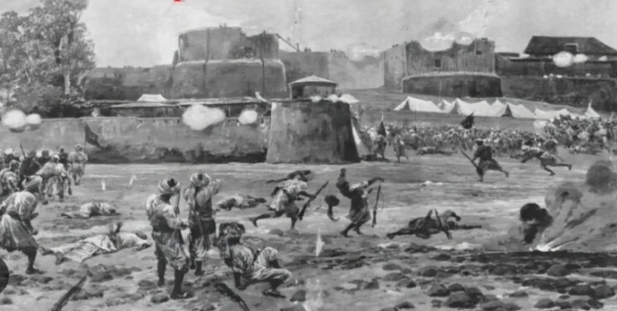
MIRPUR FALL DAY 10 MAGHAR 2004
Seventy-Nine Years of Neglect: Why the World Can No Longer Ignore the Plight of POJK’s Displaced Generations
Every year on 25 November, displaced families from Mirpur and Pakistan-Occupied Jammu and Kashmir (POJK) observe Mirpur Fall Day. To the outside world, it passes as an obscure calendar entry. To hundreds of thousands of survivors and their descendants, it marks an unhealed wound—seventy-nine years of violent dispossession, diplomatic amnesia, and institutional neglect.
On 25 November 1947, following weeks of relentless siege during the Pakistani tribal invasion, the historic town of Mirpur fell. What followed was not mere collateral damage of war, but a systematic campaign of mass slaughter, mass abduction, plunder, and forced expulsion. Hindu and Sikh minorities were hunted down because of their faith. Women were abducted and subjected to unspeakable atrocities; community elders, professionals, and civic leaders were executed. Overnight, ancient communities across Mirpur, Bhimber, Kotli, Muzaffarabad, and Poonch were stripped of their homes, businesses, fertile lands, and sacred shrines—driven out with nothing left but the clothes on their backs.
These were not voluntary migrations. This was the violent uprooting of an indigenous population, left to rebuild from ashes while the world looked away.
Nehru’s Telegram: The Smoking Gun in Official Archives
The atrocity of Mirpur is neither folklore nor partisan exaggeration. It is etched in black and white in the highest diplomatic records of independent India.
On 2 December 1947—barely seven days after Mirpur fell—India’s first Prime Minister, Jawaharlal Nehru, sent an urgent cable directly to Pakistani Prime Minister Liaquat Ali Khan. Preserved in the Nehru Archive and reproduced in the Government of India’s White Paper on Jammu and Kashmir, Nehru’s dispatch stated unequivocally that "Mirpur town has been completely destroyed." He recorded that out of 13,000 non-Muslims, a mere 2,000 had survived to reach within fifteen miles of Jhelum, while sounding the alarm over thousands of missing refugees and reports of large numbers of abducted Hindu women being marched into the Jhelum district.
This was contemporaneous diplomatic evidence sent as the blood was still drying. It leaves policymakers and historians with a damning question: When the Prime Minister of India formally placed this mass atrocity on record in December 1947, what excuses seventy-nine years of inaction and silence?
The Complicit Silence of the International Community
For nearly eight decades, the United Nations and global human rights institutions have dissected the territorial dispute over Jammu and Kashmir from every geopolitical angle—yet they have maintained a deafening silence on the ethnic cleansing of Mirpur’s Hindu and Sikh minorities.
Survivors and their descendants have long asserted that their communities were targeted for total eradication based on religious identity. The scale of the killings, the organized abduction of women, and the permanent expulsion of entire populations bear every hallmark of genocidal persecution—crimes that demand independent international investigation and scrutiny under the UN Genocide Convention.
Selective human rights advocacy is a betrayal of human dignity. A people robbed of their homeland cannot be erased a second time from global conscience.
Seventy-Nine Years of Bureaucratic Cruelty
Today, almost the entire generation that survived the horrors of 1947 has passed away without ever seeing justice. Their children and grandchildren have inherited not only the trauma of exile, but the burden of fighting a rigid, indifferent bureaucracy.
Official figures tabled before the Indian Parliament acknowledge 31,619 registered displaced families from POJK—26,319 in Jammu and Kashmir and 5,300 scattered across other states. Yet these figures expose a glaring administrative failure:
• The Uncounted Thousands: Countless families fled directly to Delhi, Punjab, Haryana, Himachal Pradesh, Uttar Pradesh, and beyond in sheer terror, bypassing formal camp registries.
• Fractured Families: Joint households were torn apart during the exodus, leaving entire branches permanently locked out of official rolls.
When families fled burning towns to save their lives, carrying property deeds and registration slips was impossible. To deny a victim’s descendant their birth right today because their grandparents lacked paperwork in 1947 is bureaucratic cruelty. The absence of a paper slip does not erase a historical truth.
The Second Erasure: Drowned Beneath the Mangla Dam
For the people of Mirpur, exile was followed by literal annihilation of their homeland.
Between 1961 and 1967, Pakistan constructed the Mangla Dam on the Jhelum River inside occupied territory. Its massive reservoir submerged the historic city of Mirpur, dozens of surrounding villages, and vast tracts of ancestral farmland.
For families already driven out in 1947, this was an irreversible final blow. Their ancestral homes, neighbourhoods, temples, and heritage vanished beneath deep water—extinguishing even the physical possibility of return. First they were expelled from their land; then their land itself was drowned.
Token Relief Is Not Justice: The Betrayal of the Third Generation
The Union Government’s 2016 approval of a one-time financial grant of ₹5.5 lakh per eligible family was a belated acknowledgment—but token compensation cannot pass for comprehensive rehabilitation. Unresolved land rights, missing records, split family claims, and the exclusion of families outside Jammu and Kashmir continue to leave thousands in limbo.
Meanwhile, a third generation has come of age. Born in independent India solely because their grandparents were violently expelled from POJK, these young citizens are entering universities, professions, and public life with zero structural recognition of their historical displacement. They do not ask for charity or sporadic handouts; they demand permanent, enforceable rights.
Five Non-Negotiable Demands for Urgent Action
Sympathy without policy is empty rhetoric. The Government of India must immediately constitute an empowered, time-bound committee—with representation from displaced families and domain experts—to execute five concrete measures:
1. Restore Meaningful Political Representation: Act on the 2014 Parliamentary Standing Committee recommendation to defreeze eight Assembly seats for POJK displaced persons. One nominated representative under the 2023 amendment is symbolic; a community of over a million displaced citizens demands substantive legislative power.
2. Guarantee National Educational Access: Establish a dedicated educational framework for eligible children and grandchildren of POJK displaced families—including supernumerary seats, scholarships, and fee concessions across central universities, IITs, NITs, medical colleges, and premier institutions nationwide, irrespective of their state of residence.
3. Create Targeted Employment Pathways: Introduce special employment-support measures, including age and fee relaxations, for eligible descendants in central government services and public sector undertakings within constitutional frameworks.
4. Issue a Uniform Descendant Certificate: Mandate a standardized, nationally valid POJK Displaced Family Descendant Certificate for second- and third-generation members, permanently establishing their lineage and unlocking seamless access to state and central welfare schemes.
5. Reopen Registration for Left-Out Families: Launch a special, time-bound verification drive for genuine families and split branches excluded from earlier rolls, accepting historical government correspondence, revenue records, and credible corroborative evidence in place of lost 1947 slips.
A Final Warning on 25 November 2026: History Is Watching
The tragedy of Mirpur must break out of annual memorial halls and enter the corridors of national power and international diplomacy. The Government of India must formally place the historical and humanitarian dimensions of the 1947 POJK displacement before United Nations forums and global human rights bodies, demanding independent documentation and accountability for a forgotten minority exodus.
As we mark the seventy-ninth anniversary of the fall of Mirpur, let this be clear: this is not a plea for mercy—it is an assertion of undeniable rights.
A homeland may have been severed beyond a ceasefire line. The original witnesses may be gone. The streets and temples of old Mirpur may lie beneath the waters of the Mangla Dam. Yet the history of a people cannot be drowned, their identity cannot be legislated out of existence, and the rightful claims of their descendants cannot be silenced.
Seventy-nine years after Mirpur fell, the third generation refuses to inherit only the trauma of exile. They demand—and deserve—the recognition, dignity, and justice their ancestors were denied.
MIRPUR MUST NEVER BE FORGOTTEN. ITS PEOPLE MUST NEVER BE SILENCED.
(Dr. Virender Mahajan is a second-generation descendant of displaced families from Mirpur, born in independent India, and an Advocate for the Rights, Recognition, and Rehabilitation of Displaced Families from Mirpur and Pakistan-Occupied Jammu and Kashmir.)





[[comment.comment_text]]