Walking Must Become a Right, Not a Risk: India Needs a National Pedestrian Policy

 an hour ago
Safer footpaths, accessible crossings and accountable urban planning are essential to building an inclusive, sustainable and people-centric India.
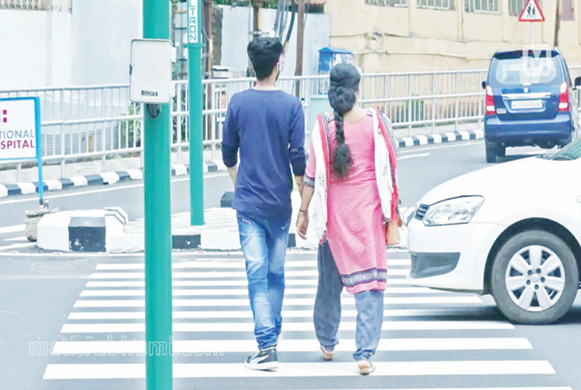
Walking is the most fundamental form of human mobility. Every citizen, irrespective of age, income, occupation or place of residence, is a pedestrian at some point during the day. A child walking to school, a worker heading to the bus stop, an elderly person visiting a hospital, a woman going to the market or a commuter completing the last stretch of a journey by metro or train—all depend on safe and accessible pedestrian infrastructure. Even those travelling in private cars ultimately become pedestrians when they step out of their vehicles.
Yet, despite its universal importance, walking remains one of the most neglected aspects of India’s transport and urban-planning systems. In cities and towns across the country, pedestrians are routinely forced to negotiate unsafe roads, broken footpaths, encroachments, inadequate crossings and speeding traffic. In many places, footpaths are either missing or discontinuous. Where they exist, they are frequently occupied by parked vehicles, construction material, utility installations and other obstructions. Pedestrians are consequently compelled to walk on the carriageway, sharing limited road space with fast-moving vehicles and exposing themselves to avoidable risks.
This situation is particularly difficult for senior citizens, children, persons with disabilities, pregnant women and those accompanying small children. For wheelchair users and persons with visual impairments, the absence of accessible footpaths, tactile paving, ramps and audible pedestrian signals can make even a short journey extremely challenging. The problem is not merely one of convenience or traffic management; it concerns the fundamental rights, safety and dignity of citizens.
India has made significant investments in highways, expressways, metro rail networks, flyovers and urban transport infrastructure. However, the development of a modern transport system cannot be measured exclusively by vehicle speed, road capacity or the number of kilometres of highways constructed. It must also be judged by whether ordinary citizens can walk safely to schools, hospitals, workplaces, markets and public transport facilities.
It is therefore time for the Government of India to formulate and effectively implement a comprehensive National Pedestrian Policy.
The Need for a Dedicated National Framework
India has already taken several important initiatives concerning urban mobility, road safety, sustainable transport and universal accessibility. The National Urban Transport Policy and subsequent government programmes and guidelines recognise the importance of public transport and non-motorised transport, including walking and cycling. The Ministry of Housing and Urban Affairs has also issued guidelines concerning universal accessibility and pedestrian-friendly urban infrastructure.
These initiatives provide a useful foundation. However, pedestrian concerns require a more focused and coordinated national framework with clearly defined objectives, uniform minimum standards, institutional responsibilities, dedicated funding and measurable implementation targets.
At present, responsibility for pedestrian infrastructure is often fragmented among municipal corporations, development authorities, public works departments, traffic police, road-owning agencies and other government institutions. This fragmentation frequently results in poor coordination, overlapping responsibilities and a lack of accountability. Footpaths may be constructed by one agency, dug up by another and left unrepaired for months. Similarly, road-widening projects and infrastructure developments often proceed without adequate consideration of pedestrian requirements.
A National Pedestrian Policy should address these institutional shortcomings and establish walking as an essential component of India’s transport planning rather than treating it as an afterthought.
International Lessons Worth Examining
Several countries have demonstrated that pedestrian safety improves when walking is integrated into national transport policies and urban-design principles.
The United Kingdom offers an important example through its Manual for Streets, which emphasises inclusive street design and the development of connected pedestrian and cycling networks. It recognises that streets should be designed not merely to facilitate the movement of vehicles but also to create safe, accessible and comfortable environments for people.
The United States has developed an extensive framework of pedestrian safety guidance through institutions such as the National Highway Traffic Safety Administration and the Federal Highway Administration. Its approach emphasises motorists’ responsibility to exercise due care, the importance of designated crossings, pedestrian signals and accessible infrastructure for persons with disabilities. Although traffic laws vary across states, the underlying principle is that pedestrian safety must be an integral part of road management.
Singapore provides another valuable example. Its transport planning promotes walking, cycling and public transport as interconnected and sustainable modes of mobility. The Active Mobility Act provides a legislative framework for the management and safe use of public paths, while walking and cycling considerations are incorporated into the planning of major developments. The emphasis is on ensuring that pedestrian requirements are addressed at the design stage rather than after construction.
The Netherlands, internationally recognised for its road-safety and cycling infrastructure, demonstrates the importance of designing transport systems around vulnerable road users. Its approach places considerable emphasis on safer road design, traffic management, enforcement and reducing conflicts between motorised and non-motorised users.
These experiences underline an important lesson: pedestrian safety cannot be achieved merely by constructing footpaths. It requires integrated planning involving road design, public transport, accessibility, land use, traffic enforcement, public awareness and institutional accountability. India must adapt these principles to its own demographic, economic and urban realities.
What Should a National Pedestrian Policy Provide?
The proposed policy should begin by recognising pedestrians as priority road users and walking as an essential component of the national transport system. This recognition must translate into practical standards and enforceable responsibilities.
First, uniform national standards should be prescribed for footpaths, covering minimum effective width, continuity, surface quality, drainage, lighting, maintenance and accessibility. Footpaths should be free from unnecessary obstructions and designed to accommodate the actual volume of pedestrian movement.
Second, universal accessibility must become a non-negotiable feature of public infrastructure. Footpaths and crossings should be usable by senior citizens, wheelchair users, persons with visual impairments and others with mobility limitations. Tactile paving, kerb ramps, audible signals and appropriately designed pedestrian facilities should be provided wherever required.
Third, safe pedestrian crossings must be established at appropriate intervals, particularly near schools, hospitals, markets, railway stations, bus terminals and government offices. Zebra crossings, pedestrian signals, refuge islands, raised crossings and traffic-calming measures should be introduced according to local traffic conditions and pedestrian volumes. Intersections deserve particular attention because they are often among the most dangerous points for pedestrians.
Fourth, the integration of pedestrian networks with public transport must receive priority. A commuter’s journey does not begin at a metro station or end at a bus stop. Safe walking routes are essential for first- and last-mile connectivity. Every major public transport facility should have convenient, continuous and accessible pedestrian access.
Fifth, major infrastructure, commercial, residential and institutional projects should be required to undertake pedestrian impact assessments before receiving necessary approvals. Such assessments should examine how a proposed development will affect pedestrian movement, accessibility, crossings and connections with existing public transport networks.
Similarly, periodic pedestrian safety audits should be conducted on major roads and intersections. Identified deficiencies must be corrected within specified timeframes, with responsibility assigned to the concerned agencies.
Special attention should be given to school zones and routes used by children. Safe crossings, appropriate speed limits, traffic-calming measures, clearly marked walking routes and effective traffic regulation can substantially reduce risks to school-going children.
The policy must also extend beyond metropolitan cities. Rural and peri-urban areas frequently lack safe pedestrian infrastructure, particularly along roads passing through villages, near schools, markets, bus stops and railway crossings. Walking is an essential mode of mobility in these areas, and their requirements must receive equal consideration.
Addressing Encroachments Without Ignoring Livelihoods
One of the most contentious aspects of pedestrian management in Indian cities is the occupation of footpaths by vendors, parked vehicles, construction material and other structures. While the right of pedestrians to use footpaths safely must be protected, the solution should not be indiscriminate displacement of street vendors and other economically vulnerable groups.
Urban local bodies should develop properly designated vending zones, regulate parking, ensure adequate space for utilities and establish clear pedestrian rights-of-way. Planning must balance pedestrian access with legitimate livelihood concerns. Footpaths should remain accessible without turning the issue into a conflict between ordinary citizens and economically weaker sections.
Technology can play a significant role in this process. GIS-based mapping of pedestrian networks, digital records of footpath conditions, citizen-reporting platforms and data-driven identification of accident-prone locations can help authorities identify deficiencies and monitor corrective action.
The government should also publish regular information on pedestrian infrastructure, road crashes, fatalities, accessibility and remedial measures. Public accountability is essential if national standards are to translate into meaningful improvements.
VIP Movements and Unauthorised Occupation of w Roads
A comprehensive National Pedestrian Policy must also address certain administrative and public-order practices that frequently restrict the movement of ordinary citizens.
Security arrangements during the movement of VIPs and other protected dignitaries are necessary. However, such arrangements should be proportionate, carefully planned and limited to what is genuinely required for security. Prolonged road closures, unnecessary traffic stoppages, diversion of pedestrian routes and occupation of footpaths by security personnel or accompanying vehicles often cause considerable inconvenience.
The hardship is particularly severe for senior citizens, women, children, persons with disabilities and patients requiring urgent medical attention. Security protocols should therefore incorporate pedestrian access and ensure that alternative arrangements are available wherever temporary restrictions become unavoidable.
Another important concern is the unauthorised occupation of public roads, footpaths and pedestrian pathways for political meetings, religious gatherings, social functions, demonstrations and other public events. While freedom of expression, assembly and religious practice are constitutionally protected, their exercise must be reconciled with the rights and safety of other citizens.
Public roads and footpaths are shared civic assets. Their occupation for events without appropriate permission, traffic-management arrangements or alternative pedestrian routes can force people onto busy carriageways and expose them to serious accidents. Authorities must ensure that public gatherings are regulated through transparent procedures, appropriate permissions and adequate safety arrangements. The objective should not be to restrict legitimate democratic or religious activities but to prevent the unreasonable denial of public access and the obstruction of essential mobility.
A National Mission for Safe and Accessible Walking
To translate policy into action, the Government of India should consider establishing a National Mission for Safe and Accessible Walking under the appropriate Union Ministry, with the participation of the Ministry of Housing and Urban Affairs, Ministry of Road Transport and Highways, State Governments, urban local bodies, traffic police, transport authorities, accessibility specialists, urban planners and civil society organisations.
The Mission should establish measurable targets, including the proportion of urban roads with continuous and accessible footpaths, the percentage of major intersections equipped with safe pedestrian crossings, the number of public transport stops with secure pedestrian access and the reduction in pedestrian fatalities.
A dedicated funding mechanism should be created, with suitable central assistance and performance-based incentives for States and urban local bodies that meet prescribed standards. Implementation should be monitored through periodic audits and publicly available progress reports.
The policy should also provide for emergency access and clearly defined emergency corridors for ambulances, police vehicles and fire tenders. Emergency services must be able to move without avoidable obstruction, while pedestrian infrastructure and public access are maintained through proper traffic planning.
A Question of Dignity, Equality and Sustainability Development
India is undergoing rapid urbanisation and investing heavily in transport and infrastructure. This transformation presents an opportunity to rethink the way public spaces and roads are planned and managed. A city cannot be considered truly modern if its citizens are unable to walk safely. Nor can development be called inclusive when persons with disabilities, children and elderly people face daily barriers in accessing basic public facilities.
Walking also has wider social and environmental benefits. It promotes physical activity, reduces dependence on private vehicles, supports local commerce, lowers congestion and contributes to cleaner air. A pedestrian-friendly environment makes neighbourhoods more accessible, strengthens community interaction and improves the overall quality of urban life.
The final few hundred metres of every journey deserve as much attention as the highways, railway lines and metro corridors connecting cities. A road should not be judged only by how quickly a vehicle can travel along it, but also by whether a child can cross it safely, whether an elderly person can reach a hospital, whether a wheelchair user can access a bus stop and whether an ordinary citizen can walk to work without fearing fast-moving traffic.
The Government of India should, therefore, give immediate consideration to directing the concerned ministries to examine the formulation of a comprehensive National Pedestrian Policy; constituting an expert committee with representation from the Union and State Governments, urban local bodies, road-safety professionals, accessibility experts and civil society; preparing uniform national standards; establishing dedicated funding and monitoring mechanisms; and launching a time-bound National Mission for Safe and Accessible Walking.
The central principle must be clear: roads and public spaces belong to all citizens, not merely to those who own or operate motor vehicles. Every Indian has the right to move safely and with dignity.
India stands at a defining moment in its journey towards becoming a developed, inclusive and globally competitive nation. Its investments in infrastructure, urbanisation and modern transport systems must be accompanied by an equally strong commitment to the safety and dignity of people who use those systems. Development cannot be considered complete when citizens are unable to walk safely outside their homes.
All said and done, the success of a modern transport system should not be judged merely by how quickly a car travels, how many kilometres of highway are constructed or how many new flyovers are inaugurated. It should also be judged by whether a child can reach school safely, whether an elderly person can cross a road without fear, whether a wheelchair user can independently access a bus stop and whether an ordinary citizen can walk along a public road without being forced into moving traffic.
A road is not truly modern if it is safe for vehicles but dangerous for people. A city is not truly developed if its footpaths exclude the elderly, persons with disabilities and children. And a nation cannot claim inclusive growth if its citizens must struggle for the simple freedom to walk safely.
India needs a paradigm shift—from vehicle-centric road development to people-centric mobility. A National Pedestrian Policy, backed by political commitment, institutional accountability and assured financial support, would be an important step towards that transformation.
The right to walk safely is not a privilege to be granted; it is a basic civic necessity that governance must protect. It is time to put pedestrians first.
(The author, a former Cabinet Minister and Acting Chief Minister in UP government, is a widely respect ed political leader and educationist. A life President for The Organisation of Nuclear Disarmament and World Peace, he has extensively traveled to the US, UK, Turkey, Afghanistan, Hong Kong, Italy, Russia, Iran, Iraq, Kuwait and South East Asian countries.)









[[comment.comment_text]]