Karnataka’s Elephant Crisis: Why Conventional Conservation Measures Are Failing

 an hour ago
As human casualties mount and agricultural fields increasingly become conflict zones, the state’s dependence on expensive land acquisitions and ad-hoc capture operations appears to be reaching a scientific dead end
The limitations of corridor acquisition, reactive capture operations and conventional wildlife management call for a more scientific understanding of elephant behaviour and habitat requirements.
For decades, Karnataka has occupied a paradoxical position in India’s wildlife conservation landscape. It has the country’s largest population of wild Asian elephants, a long tradition of elephant capture and management, and a judiciary that has consistently issued progressive directions on ecological protection. Yet, the state continues to struggle with escalating human-elephant conflict (HEC).
As human casualties mount and agricultural fields increasingly become conflict zones, the state’s dependence on expensive land acquisitions and ad-hoc capture operations appears to be reaching a scientific dead end. The underlying problem, according to this assessment, is that legal frameworks, administrative interventions and conservation policies have not adequately incorporated the complexities of elephant behaviour and psychology.
The Legacy of Conservation and the Changing Landscape
Karnataka’s present forest landscape is, to a considerable extent, the outcome of visionary conservation initiatives undertaken by earlier generations of forest administrators. Officers such as S. Shyam Sunder, IFS, and S. Parameshwarappa, IFS, played important roles in securing large and continuous forest tracts through their notification as national parks and wildlife sanctuaries. Their efforts helped protect the Western Ghats and the Nilgiri biosphere, creating habitats in which elephant populations could survive and recover.
Several pioneering field administrators subsequently strengthened this conservation framework. Officers including C.H. Basappanavar, K.M. Chinnappa, B.M.T. Rajeev, S.G. Neginahal and Yathish Kumar developed an intimate understanding of forest ecosystems, elephant behaviour and migration patterns through years of field experience.
They recognised that conservation required adequate and undisturbed space for wildlife. One significant intervention involved the voluntary relocation of forest-dwelling communities from core sanctuary areas. By facilitating access to agricultural land, better livelihoods and modern amenities outside protected forests, these initiatives helped reduce human disturbances along traditional elephant movement routes.
Their experience demonstrated that protecting continuous forest habitats and addressing human pressures could contribute substantially to wildlife conservation.
The subsequent rise in human-elephant conflict, however, has exposed the limitations of conventional administrative responses.
Following serious conflict incidents, public interest litigations have frequently prompted judicial intervention. The Karnataka Elephant Task Force (KETF) recommended a landscape-based approach involving Conservation Zones, Coexistence Zones and Removal Zones. Similarly, judicial interventions, including the Anekal Elephant Corridor case, reinforced the principle that traditional elephant pathways must be protected against unplanned infrastructure development.
One consequence has been the increasing emphasis on acquiring private land to restore or expand elephant corridors. Although such acquisitions can be valuable in appropriate locations, treating them as a universal remedy for human-elephant conflict represents a fundamental policy limitation.
Elephant Behaviour: Why Corridors Alone Cannot Solve the Crisis
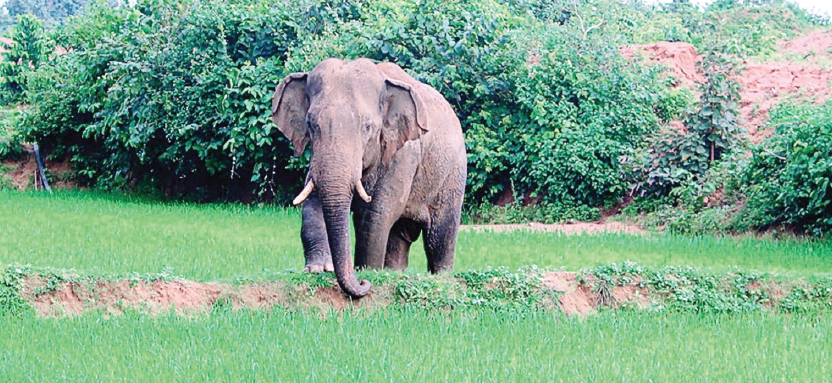
The effectiveness of corridor restoration depends considerably on the behaviour and movement patterns of the elephants concerned. It may benefit family herds led by experienced matriarchs, which generally follow established routes and traditional movement patterns. However, the situation becomes considerably more complicated when dealing with solitary, crop-raiding male elephants.
Understanding this distinction requires examining elephant social behaviour and spatial memory.
Elephants possess exceptionally developed cognitive abilities and remarkable long-term memories. Their hippocampus plays an important role in spatial learning, while knowledge of traditional pathways and feeding grounds is transmitted across generations.
Young males undergo a significant social transition when they reach sexual maturity and gradually leave their natal herds. Once separated, they must navigate an increasingly fragmented landscape marked by highways, resorts, plantations and other infrastructure.
When traditional pathways become inaccessible, some individuals adapt to the altered environment rather than retreating into the forest. They may begin occupying smaller patches of coffee estates, eucalyptus plantations and other agricultural landscapes, using them as daytime refuges before entering nearby fields at night.
Crops such as sugarcane, maize and paddy offer concentrated nutritional rewards. Consequently, agricultural landscapes can become attractive feeding grounds, particularly where natural forest resources are degraded or inaccessible.
Such elephants may gradually become independent of their original forest habitats. Their movements are no longer simply seasonal excursions along traditional corridors; they may develop new patterns of movement and feeding within human-dominated landscapes.
This behavioural adaptation explains why restoring a traditional corridor may not necessarily resolve conflict involving an established crop-raiding bull.
The distinction is important for conservation planning. A strategy designed for family herds cannot automatically be applied to solitary males that have adapted to agricultural environments.
Capture Operations and the Missing Psychological Dimension
When conflict escalates and elephants become difficult to control, forest authorities frequently resort to capture operations under the applicable provisions of the Wildlife (Protection) Act, including Section 11 where its legal conditions are met.
Modern genetic research, including DNA analysis of dung samples, can help identify individual elephants and establish relationships within populations. Mitochondrial DNA provides information about maternal lineages, while nuclear DNA offers a broader picture of genetic relationships.
However, capturing a solitary bull is not merely a matter of removing an individual animal from a conflict location. It also raises important questions about its psychological condition, social history and capacity to adapt to captivity.
This is where Karnataka’s conservation system needs a significant change in perspective.
Despite its long history of elephant management, including traditional khedda operations, pitfall capture methods and mahout-based handling, the state needs greater institutional expertise in elephant cognition and behavioural science.
Traditional mahout and kawadi practices rely heavily on familiarity, routine, conditioning and physical control. These methods have evolved over generations and have produced close relationships between handlers and elephants. Nevertheless, an animal’s apparent submission in captivity should not automatically be interpreted as psychological adjustment or successful domestication.
Modern animal-behaviour research recognises that prolonged stress, trauma and learned helplessness can affect captive animals. These possibilities deserve systematic scientific investigation, particularly in elephants subjected to capture and intensive handling.
The emotional bonds that sometimes develop between mahouts and elephants over decades of shared experience are genuine and significant. However, they do not eliminate the need to examine the psychological consequences of capture and confinement.
Earlier field officers such as Basappanavar and Chinnappa often relied on years of direct observation and an intuitive understanding of elephant behaviour. Contemporary institutional training, by comparison, places considerable emphasis on veterinary medicine, legal procedures and physical management. These remain essential, but they need to be complemented by formal training and research in elephant psychology, cognition and social behaviour.
There is also a need to assess the wider demographic consequences of repeatedly capturing dominant adult males. The social development of younger elephants and the role of mature males in elephant populations deserve closer scientific examination rather than assumptions about the consequences of removing individual animals.
The experience of neighbouring Kerala is sometimes presented as an alternative, given its emphasis on local monitoring and traditional elephant-handling practices. However, models cannot be transferred mechanically between states.
Kerala’s predominantly hilly and forested terrain presents a different geographical context from Karnataka’s fragmented tablelands, agricultural expanses and infrastructure corridors. Regions such as the Hassan-Kodagu-Tumakuru belt face distinct challenges arising from plantations, settlements and extensive linear infrastructure.
The scale of habitat fragmentation and the presence of elephants living within commercial agricultural estates require a more specialised and landscape-specific approach.
Towards Scientific and Sustainable Conflict Management
The growing human-elephant conflict cannot be resolved through public relations campaigns, fundraising initiatives or the generalised promotion of peaceful coexistence. Such efforts have limited value unless they are supported by effective habitat management, scientific monitoring and protection of vulnerable communities.
Karnataka needs to reconsider its dependence on expensive corridor acquisitions and reactive capture operations. A more comprehensive strategy should address both the ecological requirements of elephants and the legitimate safety concerns of people living alongside forests.
Three broad interventions merit serious consideration.
First, strengthen physical protection at forest boundaries. Instead of indiscriminately acquiring large areas of private land for corridors that certain elephants may no longer use, the state should prioritise scientifically planned barriers at vulnerable forest-agriculture interfaces. Recycled railway-line steel barricades and properly maintained trenches can be considered where terrain, ecological assessments and engineering studies establish their suitability.
Such structures must be designed carefully to avoid obstructing the movement of other wildlife or fragmenting habitats further. Their effectiveness also depends on regular maintenance and monitoring.
Second, restore the ecological quality of core forest habitats. Elephants may enter agricultural areas partly because natural food and water resources within forests have deteriorated. Large areas of Bandipur and Nagarahole have been affected by invasive species such as Lantana camara and Senna spectabilis, which compete with native vegetation.
Systematic removal of invasive plants, restoration of indigenous grasses and bamboo, and protection of natural water sources should therefore become priorities. Solar-powered water facilities may be considered in locations where scientific assessments establish a genuine need, without disturbing natural water systems or encouraging artificial concentrations of wildlife.
The objective should be to improve the availability of food and water within protected habitats, reducing the ecological pressures that contribute to movement into agricultural landscapes.
Third, address population density and habitat carrying capacity. International conservation experiences, including elephant management in parts of South Africa, demonstrate that habitat capacity must be considered when managing confined wildlife populations.
India’s legal and ethical framework does not permit a casual adoption of population reduction through culling. Moreover, the ecological and cultural significance of elephants makes such approaches particularly contentious.
Nevertheless, the question of carrying capacity cannot be ignored. If habitat restoration and improved boundary protection result in greater concentration of elephants within limited forest areas, the state will need reliable population assessments and long-term demographic monitoring.
Non-lethal fertility management, including immunocontraception, may warrant scientific investigation, but its application must be based on rigorous research into effectiveness, animal welfare, ecological consequences and legal permissibility. It cannot be treated as an established or universally suitable solution.
Ultimately, Karnataka’s elephant crisis is not simply a problem of insufficient funding, inadequate forest protection or a shortage of experienced administrators. It reflects a deeper failure to integrate ecological science, animal behaviour, landscape planning and community safety into a coherent conservation policy.
The pioneering forest officers of earlier decades understood that wildlife needed space and that conservation required sustained administrative commitment. The challenge today is to build on that legacy through modern scientific knowledge.
Elephants are intelligent, socially complex and remarkably adaptable animals. Their behaviour cannot be understood exclusively through capture statistics, corridor maps or administrative orders. Equally, the safety and livelihoods of rural communities cannot be sacrificed in the name of an abstract idea of coexistence.
Karnataka must move beyond reactive interventions towards evidence-based, landscape-specific management. Only a policy that respects both the ecological requirements of elephants and the legitimate rights of human communities can offer a sustainable way forward.
(Author, a former Deputy Chief Conservator of Forests in Karnataka, is a known expert on forestry, wildlife, and governance issues.)











[[comment.comment_text]]