Karnataka Eco-Tourism Mission 2037 : A model for other States

 2 weeks, 6 days ago
India does not need more tourism in fragile landscapes. It needs better tourism—responsible visitors, stronger rural economies and a larger share of tourism revenue returning to conservation.
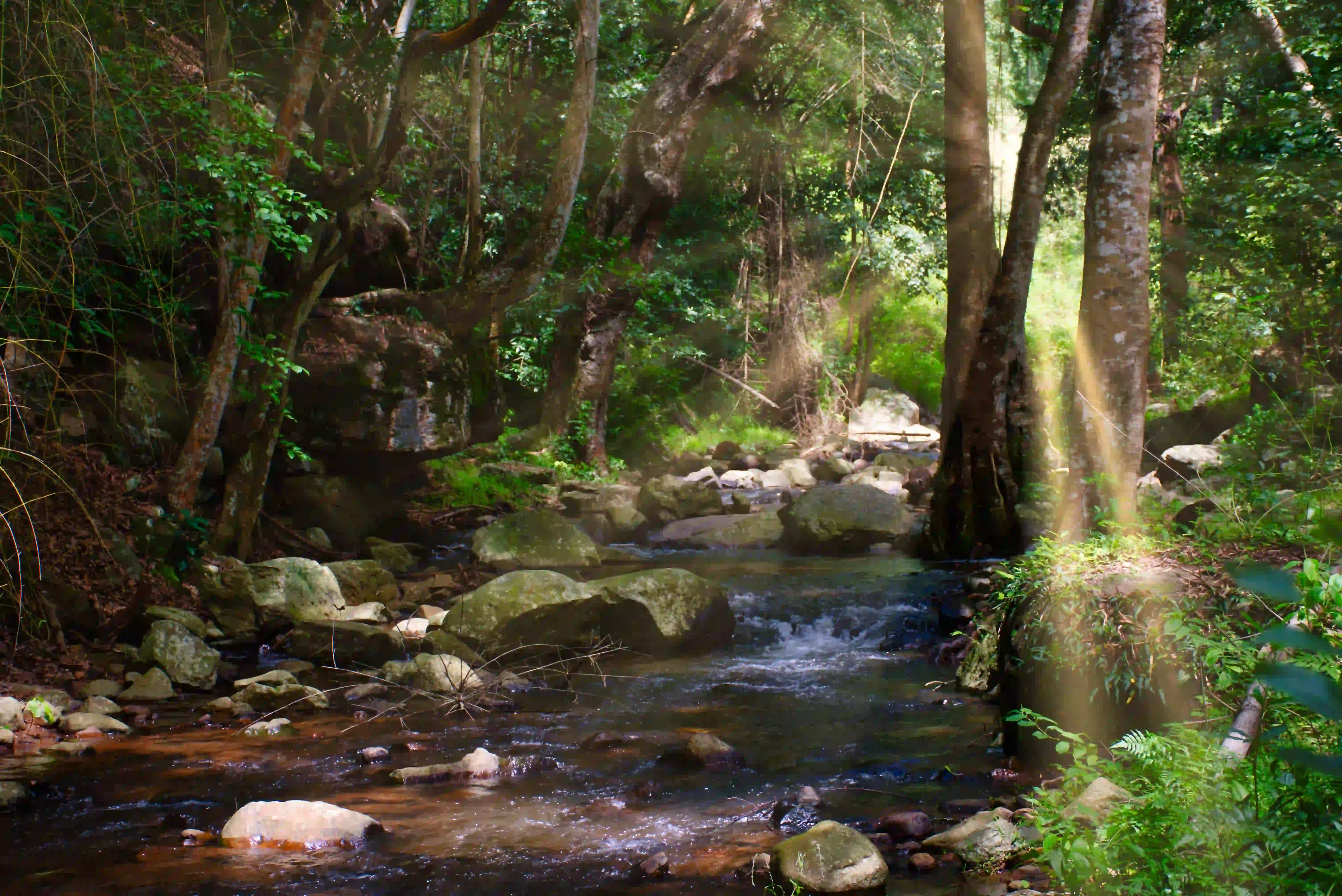
Karnataka’s forests, Western Ghats, wildlife areas, rivers, wetlands, coffee landscapes, coast, drylands, trekking routes and diverse rural and tribal cultures provide an exceptional foundation for responsible nature-based tourism. The challenge is to ensure that tourism does not damage the very landscapes that attract visitors.
The governing principle of Karnataka Eco-Tourism Mission 2037 should therefore be clear: The forest must determine the scale of tourism—not tourism demand determine the scale of the forest experience.
The Mission should be a long-term policy framework with five linked objectives: protecting ecological integrity; creating sustainable rural livelihoods; improving visitor experience and environmental awareness; generating predictable conservation finance; and developing a model that other States can adapt.
By 2037, Karnataka should demonstrate that tourism can strengthen, rather than weaken, conservation and rural development.
A clear institutional framework
The Mission should be guided by a high-level Eco-Tourism Mission Council comprising the Forests, Tourism, Rural Development, Tribal Welfare, Environment and Finance Departments, the Karnataka Ecotourism Development Board (KEDB), Jungle Lodges & Resorts Ltd. (JLR), conservation scientists, tourism professionals, local communities and responsible private-sector and civil-society representatives.
The Council should approve the State strategy, district plans, funding priorities, carrying-capacity protocols and annual performance reports.
KEDB should function as the principal coordinating and destination-management institution. It should prepare the State strategy, identify and classify destinations, coordinate with the Forest Department, JLR and district administrations, establish guide-training and certification systems, manage a unified digital platform, develop interpretation standards, support local enterprises and publish annual performance reports.
KEDB should gradually evolve into a professional State Eco-Tourism Destination Management Agency with technical, financial, digital, legal and community-engagement capacity.
The Forest Department must retain statutory authority over forests, wildlife and protected areas. It should approve or reject destinations and activities on ecological grounds, determine or validate carrying capacity, regulate access, enforce forest and wildlife laws, monitor habitat and wildlife disturbance, approve routes and seasons, and supervise conservation outcomes.
No tourism proposal should proceed without the Forest Department’s ecological clearance and site-specific management conditions.
JLR, as a Government of Karnataka enterprise, should serve as a principal operating and demonstration partner for regulated wildlife tourism and selected ecotourism facilities. It can help establish standards for safari operations, train drivers and guides, maintain safety and environmental norms, support digital booking and monitoring, and pilot low-impact accommodation and interpretation.
Where ecological sensitivity requires tight control, regulated institutional operations through JLR or similarly accountable entities should be preferred over unrestricted commercial vehicle operations.
District administrations and Gram Panchayats should support land-use planning, sanitation, emergency response, local enterprise development and convergence with rural-development schemes. Village Forest Committees and equivalent community institutions should assist with visitor registration, trail maintenance, cleanliness, waste control, local safety, incident reporting and benefit distribution. The Forest Department would retain statutory authority, while communities would receive defined responsibilities, training and a transparent share of appropriate revenues.
Classifying destinations
Not every attractive landscape should be opened to tourism. The Mission should classify destinations according to ecological sensitivity.
High-sensitivity landscapes—such as critical wildlife habitats, breeding areas, corridors, fragile wetlands and high-altitude ecosystems—should remain closed or be limited to carefully controlled research, education or guided access.
Regulated nature-tourism landscapes may include selected protected-area routes, treks, birding sites, river stretches and forest destinations where tourism is compatible with conservation under strict limits.
Community-based rural and agro-ecotourism landscapes may include villages, farms, coffee areas, craft clusters and traditional livelihood zones where tourism can generate income without entering sensitive habitats.
Peri-urban and educational destinations may include urban forests, biodiversity parks, wetlands, nurseries, interpretation centres and short nature trails suitable for families, schools and day visitors.
District-level plans should identify ecological sensitivity, carrying capacity, permitted activities, seasonal restrictions, infrastructure needs, local livelihood opportunities, emergency arrangements, waste systems, revenue-sharing mechanisms and monitoring indicators.
A useful planning principle would be:
“One landscape, one signature nature experience—supported by a range of local experiences.”
A diversified but regulated portfolio
Subject to ecological approval, Karnataka can offer a wide range of experiences: trekking and hiking, birdwatching, cycling, low-impact camping, river and backwater activities, agro-ecotourism, village experiences, eco-heritage, nature retreats, tribal and indigenous tourism, youth programmes and citizen science.
Motorcycle and four-wheel-drive routes should remain outside critical wildlife habitats, sensitive ecological areas and important wildlife corridors. River activities must respect water quality, breeding seasons, wildlife movement, local livelihoods and safety requirements.
The objective should be to provide different ways of experiencing nature without opening every forest, hill, river or wetland to tourism.
Carrying capacity must set the limits
Carrying capacity must be determined scientifically and enforced administratively. Assessments should consider habitat fragility, wildlife movement and breeding, trail erosion, water availability, waste generation, noise, fire risk, seasonal variation, road and parking pressure, emergency capacity, local community tolerance and the cumulative impact of multiple activities.
Every major destination should have a maximum daily visitor limit, vehicle and trip limits, permitted routes, operating hours, seasonal closures, group-size limits, guide requirements, emergency procedures, waste standards and penalties for violations.
These limits should not be increased merely because demand rises.
Safari tourism
Safari management requires particular discipline. Vehicle and trip numbers should be scientifically determined, routes and zones rotated, safari duration prescribed and vehicles GPS-enabled or geotagged. Drivers and guides must maintain safe distances from wildlife and prevent chasing, crowding or blocking animals.
Drivers should not use mobile phones to communicate sightings during safaris, as this can trigger sudden congregation of vehicles. Repeated violations should attract penalties, including suspension of permits.
A safari should never become a race to reach a tiger. The quality of a safari should be measured by responsible conduct and ecological integrity, not by the number of animals photographed.
Karnataka’s experience of regulating safari numbers according to the carrying capacity of individual protected areas offers a useful model. What may be appropriate in one reserve cannot automatically be justified in another. The Forest Department, KEDB and JLR should continuously monitor safari operations and review them through ecological data.
Communities must be partners
Community participation should be an economic and governance partnership, not symbolic consultation.
Each destination should have a local livelihood plan covering guides, homestays, local transport, food, handicrafts, nursery products, waste management, trail maintenance, cultural interpretation and digital services. A defined share of eligible opportunities should be prioritised for nearby residents, with training linked to actual market opportunities.
KEDB should establish a graded certification system for guides. Training should cover natural history, local flora and fauna, interpretation, first aid, visitor safety, wildlife behaviour, communication, digital systems, emergency response and local culture. Guides should be educators and conservation ambassadors, not merely route escorts.
Certified homestays should meet standards for hygiene, sanitation, food safety, fire and visitor safety, waste management, water use, digital payments, local sourcing and transparent pricing.
Women’s self-help groups can provide traditional food, local products, handicrafts, nursery plants, waste-management services and hospitality. Young people can be trained as guides, naturalists, drivers, interpreters, digital service providers, biodiversity monitors and emergency assistants.
Tribal and indigenous tourism must be based on dignity, consent, cultural ownership and direct economic benefit. Communities should control how their culture, knowledge, food, crafts and traditions are presented. Traditional ecological knowledge must not be commercially appropriated without consent and fair benefit-sharing.
Young Eco-Karnataka
Young Eco-Karnataka should become a statewide environmental education and citizen-science programme. Activities could include bird and butterfly surveys, biodiversity documentation, tree identification, water-quality monitoring, wildlife-track interpretation, nature camps, school and college nature clubs, and supervised visits to villages around protected areas.
Young participants could also meet villagers in and around Protected Areas and sensitise their role in conservation , use street theatre (beedi natakas) and social-media campaigns to communicate environmental messages. Sensitive wildlife information, however, must not be publicly disclosed in ways that could facilitate disturbance or illegal activity.
Such programmes can create a generation that understands forests not merely as tourist attractions but as living ecological systems requiring care and protection.
Build lightly and leave no trace
Ecotourism infrastructure should demonstrate environmental responsibility. Solar power, rainwater harvesting, efficient sanitation, wastewater treatment, waste segregation and plastic reduction should become standard.
Bamboo and other sustainable local materials may be used for shelters, interpretation centres, signage, viewing platforms and seating wherever technically appropriate. Overnight camping should be permitted only at carefully selected locations where ecological assessments allow it.
Hotels, concrete structures and unnecessary permanent facilities should not be permitted inside sensitive forests or Eco-Sensitive Zones. Existing buildings should be reused wherever possible, while new infrastructure should be located outside or at the periphery of sensitive habitats.
All destinations should adopt a Leave No Trace Karnataka standard. Visitors must carry back everything they bring, including food waste. Single-use plastic should be prohibited, unavoidable waste segregated and scientifically disposed of, and operators required to maintain waste records. Refundable deposits for bottles and other regulated items could be considered.
Digital governance and transparency
KEDB should establish a unified digital platform covering destination information, ecological rules, permits, reservations, visitor limits, guide allocation, certified homestays, payments, weather and safety advisories, safari monitoring, visitor feedback, incident reporting, refunds and revenue-sharing information.
The platform should prevent block bookings, opaque access arrangements and discriminatory pricing. Private agencies may provide services, but public access, reservations, permits, pricing rules and visitor limits must remain within a transparent public framework.
Any allegation that reservations are being blocked prematurely or that access is being channelled through selected operators at inflated prices should be independently examined. Contracts, concessions and service arrangements should be disclosed in accordance with applicable transparency requirements.
Conservation finance
Ecotourism cannot be sustainable if the State bears all conservation costs while tourism businesses and visitors receive the benefits.
A dedicated Eco-Tourism Conservation and Community Fund should receive an appropriate share of entry, trekking, safari, camping, concession and licensing fees, along with voluntary contributions, CSR support and grants.
The Fund should support habitat and wildlife conservation, protected-area management, trail maintenance, waste and sanitation, guide and community support, village development, nature education, research, monitoring and emergency systems.
A transparent formula should distribute eligible revenues among conservation institutions, KEDB, JLR or operating agencies, Village Forest Committees, local governments and destination-maintenance systems. The formula should be publicly disclosed and independently audited.
Annual accounts should show revenue collected, expenditure, funds transferred to communities, conservation outcomes, contracts and audit findings.
Phased implementation
The first phase, from 2026 to 2027, should establish the Mission, strengthen KEDB, define institutional roles, inventory and classify destinations, conduct carrying-capacity assessments, create standard operating procedures, establish the digital platform, identify 20 to 25 flagship landscapes, prepare livelihood plans and begin guide and homestay training.
From 2028 to 2030, flagship pilots should be operationalised with digital reservations, certified guides, interpretation centres, community-management arrangements, Young Eco-Karnataka programmes, GPS-based safari monitoring, waste systems and transparent revenue-sharing.
From 2031 to 2034, successful models can be extended to additional districts, linked with rural-development and tribal-welfare programmes, and supported by regional training centres and low-carbon transport.
From 2035 to 2037, the Mission should be independently evaluated. Activities causing unacceptable impacts should be reduced, redesigned or closed. Karnataka should publish an Eco-Tourism Standard and share its experience with other States.
Expansion should occur only after independent evaluation confirms that a destination is ecologically, socially and financially viable.
Measuring success
The Mission should not be judged merely by tourist numbers or revenue. Annual reports should measure wildlife disturbance, habitat condition, trail erosion, water quality, waste recovery, fire incidents, compliance with visitor limits, local employment, guide and homestay income, women’s and youth participation, village revenue, visitor satisfaction, environmental learning, safety incidents and grievance resolution.
The central questions should be:
How many visitors came? What did the forest gain? What did the village gain? What did the visitor learn? How much stronger is conservation because tourism took place?
A model for India
Karnataka already possesses important institutional assets through KEDB, the Forest Department and Jungle Lodges & Resorts. The Eco-Tourism Mission should integrate these strengths into a single policy framework with clear responsibilities, measurable outcomes and enforceable safeguards.
The intended cycle is:
Responsible visitor → nature experience → trained local guide → local enterprise → village income → conservation revenue → stronger conservation → better nature experience → more responsible tourism.
By 2037, success should be visible in healthier forests, better-protected wildlife, cleaner destinations, prosperous villages, stronger local enterprises, meaningful opportunities for women and youth, professional guides, transparent governance and predictable conservation finance.
The objective is not to maximise tourist arrivals. It is to bring the right number of responsible visitors, maximise benefits for local communities and ensure that tourism contributes directly to conservation.
Karnataka can then offer India a practical model for the Himalayas, Northeast, Western Ghats, central Indian forests, coasts, wetlands and drylands.
That is the real promise of Eco-Tourism Mission 2037.
Not tourism for the sake of tourism, but tourism in the service of nature and people.
The forest sets the limits. The village shares the benefits. The guide builds understanding. The visitor becomes a conservation partner. And tourism helps pay for the protection of the very nature that brought the visitor there.
(Author, a former IFS officer, served as PCCF & HoFF in Karnataka. He also chairs Bamboo Society of India.)





[[comment.comment_text]]