Message of Opposition Unity from Ramlila Maidan

 1 week, 5 days ago
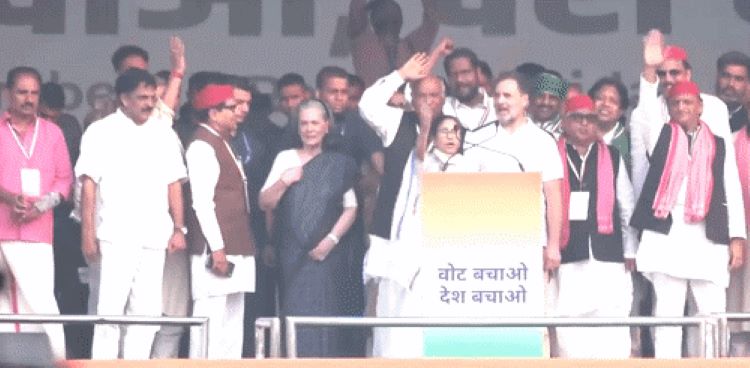
The massive turnout at the capital’s Ramlila Ground marks a rare and potent demonstration of cohesion among India’s often fragmented opposition coalition. By focusing their collective ire on the controversial voter registration list revisionss, a core structural issue striking at the bedrock of democratic participation, the opposition has successfully pivoted from reactionary politics to a high-stakes campaign entered on institutional integrity. Rahul Gandhi’s fierce rhetoric and the presence of regional allies of INDIA bloc, underscore a calculated attempt to construct a unified narrative that frames Prime Minister Narendra Modi’s administration as overreaching.
Crucially, this display of organizational maturity comes at a pivotal juncture as the country moves toward critical assembly elections in power-center states like Uttar Pradesh and Punjab. For an alliance that has frequently struggled with internal rivalries and conflicting regional ambitions, channeling public outrage into a disciplined, multi-party movement creates a necessary proving ground. The ability to seamlessly mobilise diverse cadres from Congress party loyalists to regional centrist and left-wing groups suggests that the coalition is finally synthesising a coherent ground strategy capable of challenging the ruling party's electoral machinery.
The upcoming state elections will serve as the ultimate litmus test for whether this strategic unity can translate into electoral momentum. Uttar Pradesh and Punjab represent radically different political landscapes, but both present significant battlegrounds where opposition coordination is vital. By embedding their battle cries in fundamental civil rights issues like voter disenfranchisement, opposition leaders are attempting to build a broad base of grievance that cuts across state-level divides and regional identity politics.
Naturally, the ruling Bharatiya Janata Party (BJP) has pushed back vigorously, dismissing the rally as a calculated attempt to foment unrest, anarchy, and undermine constitutional norms. Yet, the opposition’s disciplined execution of a massive, peaceful protest signals a crucial shift in their operational calculus. Rather than relying solely on high-level political bargaining, leaders are increasingly taking their fight directly to the streets to build visible, grassroots momentum ahead of the state-level polls.
Sunday’s rally demonstrates that India's political opposition understands the stakes. Mobilizing tens of thousands in the heart of New Delhi is a significant tactical victory, but maintaining this momentum through the crucible of upcoming state campaigns will be the true determinant of whether this coalition can offer a formidable alternative to the BJP's dominance.

[[comment.comment_text]]