Serbia Repents, Indian Media Reflects
 2 hours ago
The episode raises an uncomfortable but important question for Indian media: Will the media ever have the guts to examine itself and make itself accountable to its own conscience after forgetting its fundamental responsibility to challenge those in positions of authority?
The readiness of journalism to own up to its mistakes following a change of power is an act of moral courage; a change of government is a political event. The world has been made aware of this bravery by a development from Serbia. It is a public acknowledgement by the fourth pillar of democracy that it did not fulfil its basic obligations, not just an apology from a state broadcaster. The episode raises an uncomfortable but important question for Indian media: Will the media ever have the guts to examine itself and make itself accountable to its own conscience after forgetting its fundamental responsibility to challenge those in positions of authority?
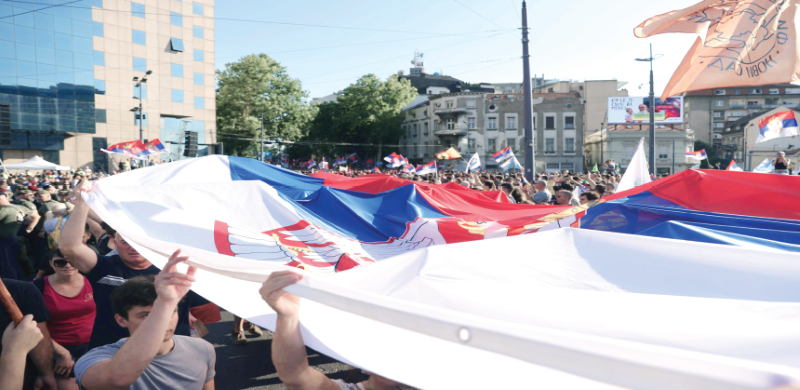
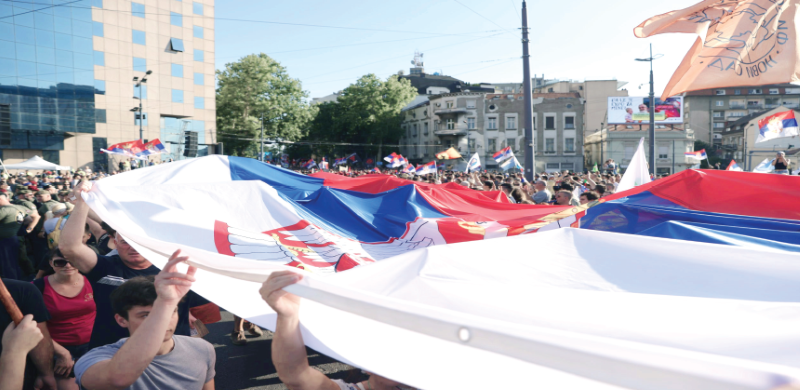
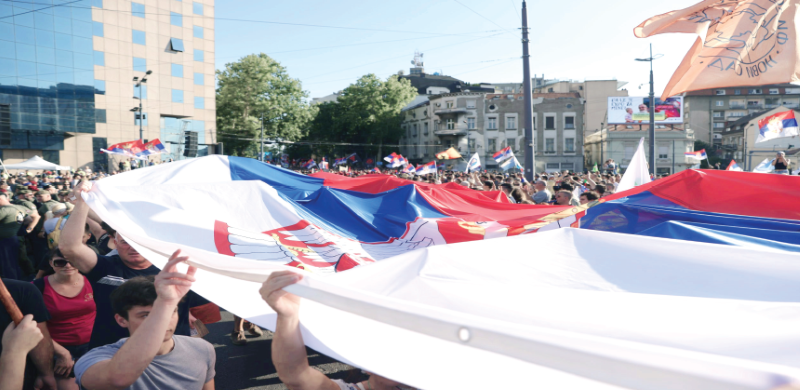
The student-led anti-corruption movement known as "Student List" defeated President Aleksandar Vučić's party, which had ruled for almost 14 years, in October 2026. Goran Eror, an anchor for Radio Television of Vojvodina (RTV), Serbia's official broadcaster, apologised to listeners during a live broadcast on October 26, the day after the election results. Eror acknowledged that the channel has not practiced impartial journalism for years. Pro-government bias, disregard for public concerns and opposition voices, and a chronic refusal to pose challenging questions to the administration were among its editorial failings. The acting editor-in-chief of the station then quit as well.
The significance of this episode lies not in the change of power but in journalism’s courage to acknowledge its own failures. The fundamental duty of journalism is not to defend those in power but to hold them accountable. When the media abandons its role as a watchdog and turns into a propaganda machine, democracy’s very system of accountability begins to weaken.
As a result, Serbia's admission raises an equally unsettling question for Indian media: Will a media institution that has neglected its basic duty to challenge those in positions of authority ever look within and have the bravery to take responsibility for its own shortcomings?
Indian Media: Watchdog or Propaganda?
The media issue in India is not specific to any one anchor, editor, or station. It is indicative of a broader trend in which questions are increasingly chosen to accommodate rather than to question individuals in positions of authority. Political mudslinging, communal division, and created noise often push away the real concerns of citizens, while issues that could cause discomfort for the administration often vanish from prime-time debates.
The duty of journalism is to objectively examine the government's policies, choices, and shortcomings rather than to promote its accomplishments. An election majority does not grant immunity from responsibility or permission to use power arbitrarily; rather, it is a mandate to rule. One of the media's most important duties is to inform the public about this critical democratic distinction.
Today, the question is: Is a sizable portion of the Indian media truly answerable to the people, the Constitution, and journalistic ethics, or to those in positions of authority and business interests? Journalism starts to lose its character when criticism of the government is presented as criticism of the country, political opposition as anti-nationalism, and challenging those in positions of power as animosity. The ability of the populace to think for themselves is similarly at risk when the government is equated with the country.
Democracy is not weakened by criticism of people in positions of authority; rather, it is weakened from its foundation when those in positions of authority are shielded from criticism.
When News Becomes Narrative
Credibility is the media's most valuable asset. Without a steadfast dedication to the truth, cameras, studios, and 24-hour broadcasts do not qualify as journalism. Journalism's value is determined by its bravery in posing difficult questions, not by how frequently it broadcasts. These days, the crisis involves more than just choosing the news; it also involves controlling how it is presented and what it means. The basic underpinnings of journalistic credibility are undermined by persistently emphasising one side of an issue while making the other invisible, portraying accusations as proven facts, and transforming public problems into political spectacles. The media ceases to be a watchdog of democracy and turns into a propagandist for the establishment when it stops challenging those in positions of authority and instead tries to convince the public to support them.
Indian Journalism’s Silent Conscience
Not only can poor government actions exacerbate the crisis of democracy, but the voices that are supposed to challenge them also get weaker. Institutions can fail, governments can make blunders, and those in positions of authority can abuse their elected mandate. However, democracy's system of checks and examination starts to lose its efficacy when the media itself stops asking questions.
Journalists' independence becomes little more than a formality when they start considering the business interests, political affiliations, and possible pressures of their institutions before challenging individuals in positions of authority. News is measured by its political and economic value rather than its public relevance when corporate interests, ownership influence, political pressure, and advertising income start dictating editorial priorities.
Acknowledging the diversity of Indian media is equally crucial. Many journalists continue to challenge those in authority, frequently at great danger, as do independent digital platforms and regional media outlets. However, accountability throughout the media establishment cannot be replaced by a few brave voices. The true question is aimed at powerful media organisations that have the ability to significantly influence public opinion: Are they educating and empowering people or are they using them as tools of political divisiveness? Because the fourth pillar of democracy starts to neglect its most basic duty when the media ceases challenging people in positions of authority and begins to shape public opinion in their favour.
Journalism, Conscience and Democracy
Being a journalist is more than just a job; it's a duty based on public confidence. People watch news networks to find answers to the questions they want to ask their leaders, not to hear praise from those in positions of authority. The line between independent journalism and government propaganda begins to blur when the media starts to exclusively present what the powerful want the people to see.
The occurrence in Serbia is significant not just because of the public apologies but also because of the subsequent concerns about institutional accountability. The departure of the acting editor of RTV's First Television Program raises the possibility that the editorial system as a whole may be to blame for journalistic failure rather than just an individual's shortcomings. But an apology is nothing unless it is coupled with editorial independence, accountability, and institutional transformation. It is not atonement to deny one's previous behaviour just because the administration has changed. A change in government does not alter journalistic ethics.
Indian media must be held to the same standards. Will our news organisations ever openly admit which public issues they disregarded, which awkward questions they purposefully avoided, and how frequently they mistaken airing the assertions of people in positions of authority for carrying out their journalistic obligations?
Such reflection is crucial for defending journalistic independence and the power of democracy itself, not for endorsing or opposing any political party. Because journalism does not gain credibility by praising those in positions of authority; rather, it does so by having the guts to challenge them and gaining the public's trust.
Will Indian Media Face Its Own Mirror?
The experience of Serbia presents the Indian media with a significant moral dilemma rather than a political solution. The credibility of unbiased media cannot be established by acknowledging journalistic failure following a change of government. The true test of journalism occurs when people in positions of authority are deeply ingrained, criticism unnerves them, and stating the truth has a cost. Speaking truth to power while it is still in office is a sign of courage, not just offering an apology for previous transgressions after it has been transferred.
India needs journalism that challenges both the Prime Minister and the Leader of the Opposition and that reports the government's accomplishments truthfully while refusing to hide its shortcomings. journalism that maintains a watchful eye on national security without letting it serve as a pretext for undermining responsibility. journalism that acknowledges dissent as a necessary component of democracy rather than as animosity. Because journalists have an obligation to uphold the truth rather than defend people in positions of authority.
The statement made by Serbian anchor Goran Eror also raises some really uncomfortable issues for all Indian journalists, editors, and newsrooms. Will the Indian media ever have the guts to admit in front of its viewers that it neglected to ask important questions, gave some realities insufficient room, disregarded some voices, and, on many instances, compromised the core duties of its profession? Will it acknowledge that revealing the truth and producing a news spectacle are two completely different things?
Election mandates, governments, and persons in positions of authority all undergo change. However, journalism's past does not. It accurately documents whether the media supported the people or the powerful when they demanded answers. What could pose a bigger threat to a democracy than a scenario where journalism's silence—turning a blind eye to governmental shortcomings—becomes more powerful than the shortcomings themselves, gradually eliminating the need to ask questions?
Thus, Serbia's repentance serves as a mirror for the Indian media. The question is not why Indian journalism apologised, but rather when it will be forced to examine itself and face its own conscience.
Governments are held accountable through elections, but journalism is held accountable by the people and history. Furthermore, history will evaluate the media based on the cause it chose to support when the truth itself needed to be heard, not on how many stories it aired.
(The author, a Doctorate in Laws, is a senior lawyer and civil society activist.)


[[comment.comment_text]]