Kaun Rahul? From Ridicule to Relevance: Rahul’s Political Journey
 an hour ago
This is a sign of Rahul Gandhi’s growing political significance rather than a testament to his popularity. But his true test is still to come.
On India's political scene, the derisive slogan " Kaun Rahul?" was once used to minimise Rahul Gandhi's political prominence. His appearance was disputed more than his ideas, and his personality was mocked more than his enquiries. However, politics has an odd way of flipping things around. Those in positions of authority are forced to respond to questions posed by the very guy whose significance was previously disregarded. Once confined to political jokes, the moniker is now at the centre of opposition resistance, public demonstrations, and legislative discussions. The irony is obvious: " Kaun Rahul?" was the inquiry yesterday. Now is the time—who will respond to Rahul's queries?
This is a sign of Rahul Gandhi's growing political significance rather than a testament to his popularity. But his true test is still to come. Can he turn a reputation moulded by mockery into public confidence, political opposition into respectable substitute leadership, and popular dissatisfaction into tangible policy recommendations? It's one thing to disturb those in positions of authority, but it's quite another to become a respectable rival to them. For the time being, Indian politics are being forced to consider the issue "Who is Rahul?" much more seriously than in the past.
Rahul’s Rising Political Significance
The biggest obstacle facing Rahul Gandhi has never been Narendra Modi or the BJP; rather, it has always been trying to reimagine his own political persona. A crucial component of democracy is criticism. Rebuilding one's identity, however, becomes a difficult task when it devolves into persistent mockery and is used to minimise a leader's political significance.
His lectures were seldom taken seriously, his political travels were occasionally written off as political tourism, and his leadership was frequently blamed for the Congress party's electoral losses. His organisational control and political maturity were also questioned. However, he has made an effort to shift the focus of his politics in recent years. His political speech has increasingly focused on the Constitution, social justice, unemployment, farmers, youth, and the accountability of democratic institutions.
From public outreach to his position as Leader of the Opposition in Parliament, from the Bharat Jodo Yatra to the Bharat Jodo Nyay Yatra, Rahul Gandhi has worked to connect his politics with broader social issues and transcend the traditional confines of electoral struggle. It is up for discussion whether this has resulted in an increase in his popularity. But ignoring his political presence is becoming more and more challenging.
The most important question is whether Rahul Gandhi is becoming more than just an opposition leader who can hold the administration accountable for its actions. In a democracy, the opposition's true strength is found in the questions it poses, whereas the ruling establishment's strength is found in its resources. Rahul Gandhi is trying to use that ability to question authority to gain political clout.
Rahul Gandhi: A Growing Political Challenge
Rahul Gandhi's ability to force the administration to answer hard questions is the true measure of his political efficacy, not the quantity of speeches or protests he organises. His persistent criticism of the Special Intensive Revision (SIR), worries about names being removed from voter lists, and the Election Commission's accountability over the last few months have elevated electoral transparency to the forefront of the country's political conversation.
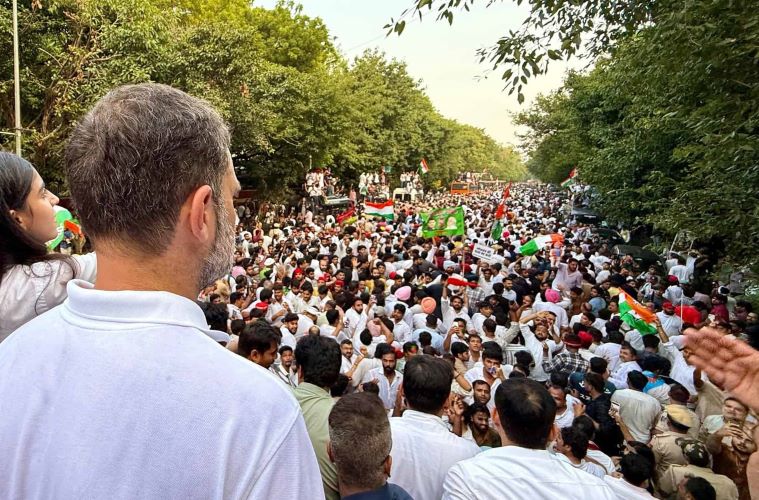
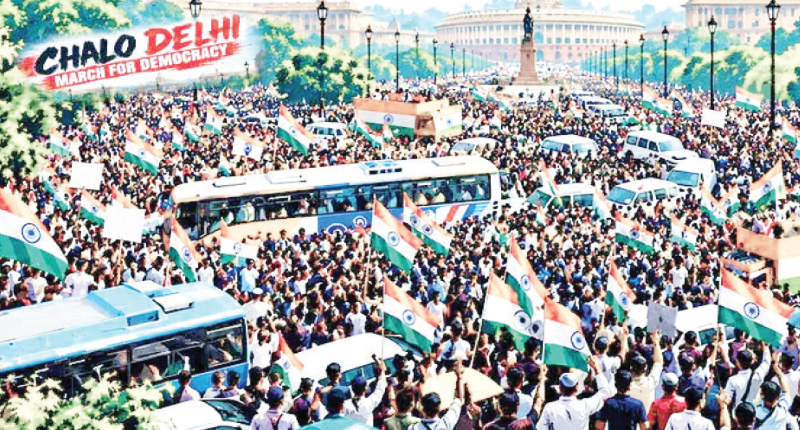
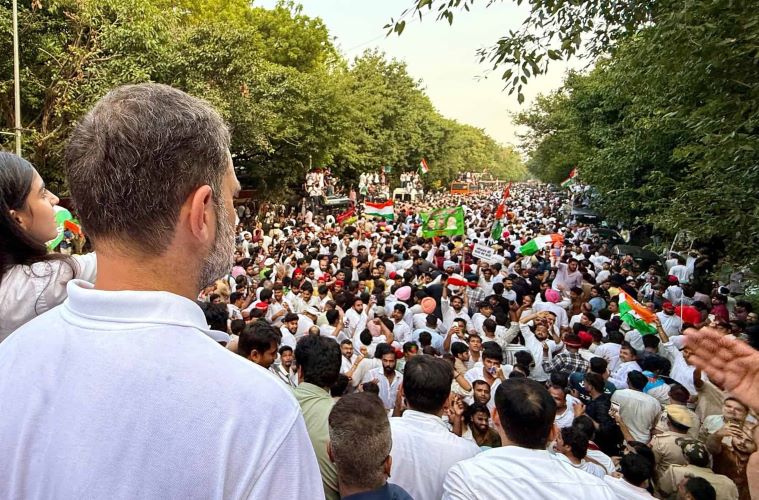
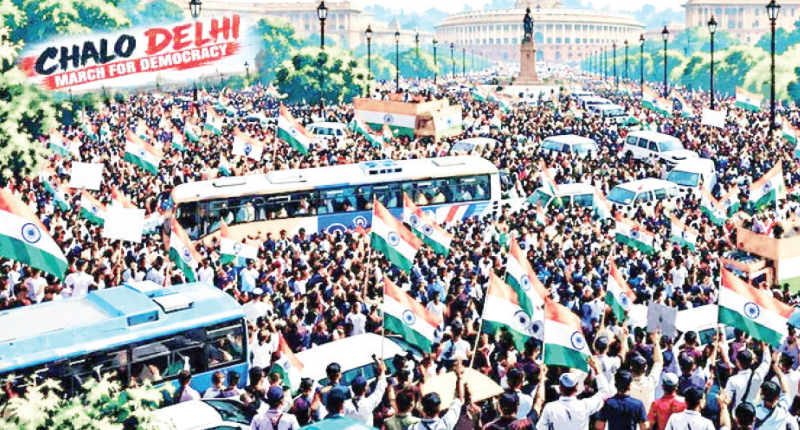
This campaign was continued on November 1 at the INDIA alliance gathering at Ramlila Maidan, where opposition politicians gathered to voice concerns about Chief Election Commissioner Gyanesh Kumar. Allegations of "vote chori", however, are still assertions made by the opposition rather than proven facts. Nevertheless, the problem has put pressure on the government to take action.
It is one thing to make a government uncomfortable, but quite another to overthrow it. Closing that gap is Rahul Gandhi's true political challenge.
Rahul Gandhi: The Politics of Power and Resistance
Rahul Gandhi's politics don't seem to be limited to responding to government policies anymore; through the problems he brings up, he is increasingly attempting to influence the path of the country's political conversation. One overarching topic unites employment, social justice, economic inequality, farmers' concerns, education, and the accountability of constitutional institutions: who is truly gaining from progress, and where in a democracy is the true authority to make decisions? His approach could put the administration on the defensive, but the true difficulty lies in turning popular dissatisfaction into political support and public trust. For the opposition, being relevant involves more than just challenging people in positions of authority; it also entails providing reliable responses to those queries and outlining a viable alternative for administration.
Rahul vs the Government: The Political Challenge
The political argument has taken on a new dimension as a result of Rahul Gandhi's agitation in October and November 2026 regarding the Special Intensive Revision (SIR) and election record transparency. The topic changed from being a Congress-led campaign to a common opposition concern after the October 31 protest and the INDIA bloc's joint attendance at the November 1 march at Ramlila Maidan. The BJP was also forced to respond. One thing is clear: Rahul Gandhi has elevated the fairness of the electoral process and the responsibility of constitutional institutions to the forefront of national discourse, even though it would be premature to characterise this as a decisive political cornering of the government. His approach is straightforward: challenge people in positions of authority and hold democratic institutions accountable.
Rahul and the Politics of Public Trust
The real test of a politician's political savvy is how well they comprehend the struggles of common people, which those in positions of authority frequently choose to ignore. This changing strategy is seen in Rahul Gandhi's public appearances and political travels, where he aims to mingle with farmers, labourers, small business owners, students, jobless youth, gig workers, and tribal groups. He wants social fairness, economic injustice, employment, inflation, and education to be at the forefront of political conversation. In addition to caste and religion, today's inhabitants are worried about their prospects and future. However, gaining the public's trust and knowing how the public feels are two completely different things. Transforming this insight into practical measures and enduring public trust is Rahul's true challenge.
Rahul and the Youth
The unpredictability of work, irregularities in competitive exams, the quality of education, and unequal access to opportunities are major issues facing today's youth in India. Rahul Gandhi is making an effort to centre his political agenda around these issues. His July 2026 demonstration in favour of student movements outside the Prime Minister's mansion, along with young people's involvement in the October protests against SIR, elevated him in the political conversation about youth unrest. These movements are a major political opportunity for the opposition, according to Reuters as well.
However, young people's involvement in protests cannot be interpreted as proof that young voters generally support Rahul Gandhi. Young people now want more than just political slogans; they want opportunity, jobs, and security for the future. Rahul's true task is to turn youth dissatisfaction into long-lasting public confidence and viable policy options. It may be relatively simple to mobilise youth against those in positions of authority, but it is far more challenging to become a reliable option for their future.
Rahul Gandhi: From Protest to Power
Three fronts are forming in Rahul Gandhi's politics: the streets, Parliament, and social issues. His street presence has become a way to engage the public, from student demonstrations to the Bharat Jodo Yatra. His parliamentary comments as Leader of the Opposition give him an official forum to challenge the administration on constitutional and policy issues. The third aspect of his approach is his endeavour to integrate social justice, economic injustice, unemployment, and institutional accountability into a shared political discourse. However, organisational strength, a credible alternative, and a cohesive policy agenda will be just as important to these activities' success as political prominence. This is Rahul Gandhi 2.0's true test.
Rahul’s Test: Holding the Opposition Together
Rahul Gandhi's ability to keep the opposition united is one of the main political tests. The main obstacles facing the INDIA alliance are regional parties' competing interests, leadership aspirations, and disputes about seat-sharing between states. There was little indication of opposition unity around shared concerns at the Ramlila Maidan event on November 1. However, maintaining a shared political path and uniting on a single platform are two different things. Rahul must maintain the trust of the Congress's partners while bolstering the party's mass base. His challenge is not just to bring the Opposition together but also to provide it with a clear path toward a common political alternative.
Rahul’s Defining Moment?
A defining moment in politics is determined by one's capacity to change one's political identity, struggle, and leadership path rather than just winning elections. Rahul Gandhi finds himself at this very moment. Can he convert the Leader of the Opposition's constitutional authority, the Congress's organisational might, and the INDIA alliance's combined potential into long-term public support? Can he provide viable answers to the problems of economic inequality, social injustice, and unemployment? Can he keep the Opposition united while revitalising the Congress at the local level? His true challenge is to position himself and his party as a legitimate alternative to power, not just to oppose those in positions of authority.
From Protest to Power: The Real Test
In a democracy, the opposition is important not just for cornering the administration but also for holding it responsible and offering a viable alternative. Rahul Gandhi has centred his political speech around the Constitution, social justice, economic inequity, and institutional accountability. However, it would take specific policy recommendations on jobs, education, agriculture, and youth chances to turn these worries into public trust. The Congress also needs to build a strong second line of leadership, promote internal democracy, and improve its organisational structure. Offering an alternative necessitates planning, vision, and the ability to lead; opposing those in authority involves political battle.
Rahul’s Rising Political Significance
Rahul Gandhi has traditionally been seen through two different prisms in Indian politics: one sees him as a force for political change, while the other brushes off his every action as political PR. However, preconceived notions or the lens of mockery are no longer sufficient to comprehend his changing political function. He is now at the centre of the political conversation thanks to his interventions as Leader of the Opposition, his articulation of constitutional concerns, and his attempts to engage with public issues.
However, being a credible alternative to those in positions of authority and opposing them are two quite different things. Rahul Gandhi's main task is to turn political action into a strong organisational structure, youth aspirations into tangible programs, and political resistance into long-lasting public trust. The Congress must also put aside its criticism and present a convincing alternative vision of governing. It takes bravery to ask questions in a democracy, and it takes leadership to be able to respond to them. This test will eventually determine how Rahul Gandhi's political career unfolds.
(The author, a Doctorate in Laws, is a senior lawyer and civil society activist.)





[[comment.comment_text]]