Sexual Harassment Complaints Rock Delhi University Colleges
 14 minutes ago
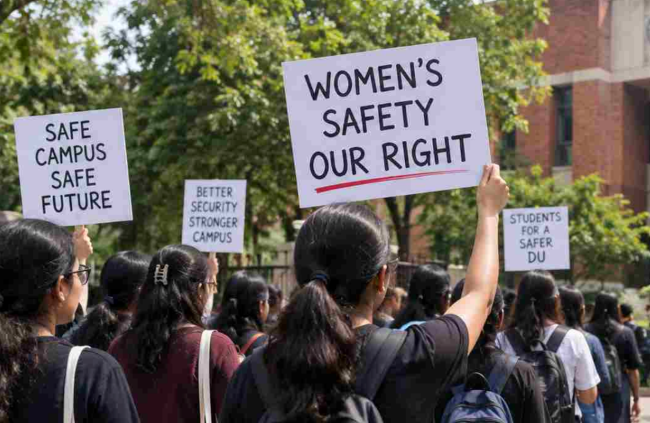
Three separate complaints alleging sexual harassment and misconduct have emerged across Delhi University institutions within approximately 30 days. This have brought campus safety and the implementation of the Sexual Harassment of Women at Workplace (Prevention, Prohibition and Redressal) Act, 2013, back into focus.In all three cases, women students have accused their teachers of inappropriate conduct and sexual harassment.
At Satyawati College (Morning), an Associate Professor was placed on leave and issued a show-cause notice following a November 2 complaint alleging repeated phone harassment and sending an obscene PDF, with the matter currently being examined by the college's ICC.
At Daulat Ram College, an Assistant Professor was suspended after the ICC recommended action and Vice-Chancellor Yogesh Singh approved the suspension, following allegations of sexual harassment, molestation, coercion and inappropriate messages.
A third complaint was filed on October 19 by an NCWEB student whose study centre is at Dr. B.R. Ambedkar College, alleging molestation, sexual harassment, coercion and inappropriate behaviour by an ad-hoc teacher, who has since been removed from teaching NCWEB students. The Delhi Commission for Women has sought an Action Taken Report from Satyawati College, while the National Commission for Women has sought an inquiry report in the Daulat Ram case. Further university-level action in the NCWEB matter remains awaited. The accused in all three cases have denied the allegations, which remain subject to investigation.
This raise an important question: are educational institutions doing enough to ensure that students can report sexual harassment without fear, particularly when the person complained against holds a position of academic authority?
Institutional Accountability under Scrutiny
Three Separate complaints have emerged across different academic structures of Delhi University, raising questions about the effectiveness of institutional complaint-redressal mechanisms, student safety and accountability in higher education institutions.
Under the UGC's 2015 Regulations on the Prevention, Prohibition and Redressal of Sexual Harassment of Women Employees and Students in Higher Educational Institutions, colleges and universities are required to maintain functional Internal Complaints Committees and follow prescribed procedures for examining complaints. The regulations provide for completion of the inquiry within 90 days of receipt of a complaint, followed by submission of the inquiry report within the prescribed period.
While the Daulat Ram College case has reached the stage of an approved suspension, the Satyawati College inquiry remains underway, and the wider university-level outcome of the NCWEB complaint remains unclear
The three complaints are at different stages of institutional examination, and the allegations remain subject to investigation. The developments underline the need for timely and impartial inquiries, effective grievance-redressal mechanisms and accountability from university authorities. While ensuring the complainants' safety, confidentiality and protection against academic retaliation, institutions must also uphold due process for those accused.
Daulat Ram College: Student alleges sexual harassment and academic threats
The first complaint concerns an assistant professor at Daulat Ram College.
A woman student alleged that a 55 year old Assistant professor had been sending her sexually inappropriate messages for nearly three months. She further alleged that an incident of sexual assault took place on the college premises on October 27. The student also claimed that the professor threatened to fail her academically.The student reportedly submitted her complaint on October 29. Following the complaint, the college initiated proceedings through its Internal Committee and placed the professor on leave.The matter took a further turn when the IC recommended the professor's suspension. As reported on November 12, the recommendation received approval from the Vice-Chancellor.
The National Commission for Women (NCW) also took suo motu cognisance of the matter and sought a fair impartial and time-bound investigation under the applicable PoSH Act provisions and UGC regulations. It stressed the importance of protecting the complainant from any form of academic retaliation and maintaining confidentiality during the proceedings.The professor has denied the allegations, describing them as false and baseless.The Commission sought an Action Taken Report within 15 days and called for precautionary measures, protection against academic retaliation, psychological support and confidentiality of the complainant's identity
Satyawati College: Associate professor served show-cause notice
Another complaint has emerged from Satyawati College (Morning), where an associate professor was placed on leave and served a show-cause notice following a complaint by a woman student. According to the complaint, the professor allegedly contacted the student over the phone, used inappropriate language and sent her an obscene PDF document, claiming that it was part of the syllabus. The student also alleged other instances of inappropriate behaviour. The student reportedly submitted her complaint on November 2, two days after the alleged incident.College Principal Subhash Kumar Singh confirmed that the matter had been referred to the college's Internal Committee. He stated that the committee had held a meeting and that, after receiving its report, the matter would be placed before the governing body and subsequently forwarded to the University for Further Action.The associate professor has denied the allegations, calling them false and fabricated. He has stated that he appeared before the IC and submitted his reply, which was also video-recorded. He has expressed confidence that the inquiry will be conducted fairly.The college administration has indicated that further action will depend on the committee's findings.
On November 13, the Delhi Commission for Women (DCW), took suo motu cognisance of the allegations and sought a detailed Action Taken Report from the college.The Commission has sought relevant records, details of action initiated on the complaint, and information regarding the functioning of the ICC. It has also called for a fair, impartial and time-bound inquiry and measures to ensure the safety and dignity of female students and women employees.
NCWEB Study Centre at Dr. B.R. Ambedkar College: Complaint against ad-hoc teacher
In a third separate matter involving Delhi University, a woman student enrolled with the Non-Collegiate Women's Education Board (NCWEB), whose study centre is located at Dr. B.R. Ambedkar College reportedly filed a complaint against an ad-hoc teacher.The complaint alleged molestation, sexual harassment, coercion and inappropriate behaviour. The student reportedly submitted it on October 19 to the teacher-in-charge of the study centre and other university officials.Following the complaint, the teacher was removed from teaching NCWEB students. The matter was also brought to the attention of the university and NCWEB authorities.However, College Principal Sadanand Prasad stated that he had not received the complaint and that appropriate action would be taken if it was received. The teacher has denied the allegationsdescribing them as false, and stated that he was continuing to attend college and teach.
Although these are separate matters, taken together they call for serious examination of the complaint-handling systems operating within educational institutions.
The Internal Committee cannot be reduced to a formality
The most important institution under the PoSH Act is the Internal Committee. Its role is not limited to receiving complaints or conducting meetings. It is expected to provide an independent, fair and effective mechanism for addressing sexual harassment.In colleges and universities, this responsibility becomes even more important because of the unequal relationship between teachers and students.A teacher may exercise considerable influence over a student's attendance, internal assessment, examination-related matters, academic guidance, research opportunities and future recommendations. A student may therefore hesitate to complain, particularly when the allegation concerns a faculty member who holds authority over her academic life.The Internal Committee must ensure that no student faces intimidation, discrimination or academic disadvantage for approaching it.At the same time, an allegation cannot be treated as an established fact merely because a complaint has been filed. A faculty member being placed on leave or suspended during an inquiry does not amount to a finding of guilt.The IC must examine the available material, consider the statements of both parties, assess relevant evidence and provide a reasonable opportunity to present their respective cases.An inquiry must neither become a tool to protect influential faculty members nor a process in which a respondent is presumed guilty before the allegations are examined.
The credibility of the Internal Committee depends on its independence, fairness and ability to reach a reasoned conclusion without external pressure.
What does the PoSH Act say about students in colleges?
There is often a misunderstanding that the PoSH Act protects only women employees. This is not correct.
Section 2(a) of the PoSH Act defines an aggrieved woman to include a woman of any age, whether employed or not, who alleges sexual harassment at a workplace.
Further, Section 2(o) includes educational institutions within the definition of workplace.
Consequently, a woman student who faces sexual harassment in a college or university can seek protection under the Act, even though she is not an employee of that institution.
Section 4 provides for the constitution of the Internal Committee.
Section 11 deals with the inquiry into complaints, while Section 13 deals with the inquiry report and recommendations.
The Act prescribes a period of 90 days for completion of the inquiry.
The responsibility of an educational institution, however, does not end with constituting an IC. It must ensure that the committee is properly constituted, that its members understand their responsibilities and that students know how to approach it.The committee must also function independently of the college administration and should not be influenced by the academic position, seniority or institutional standing of the person against whom a complaint has been made.
Academic authority must not become a source of fear
One of the most sensitive aspects of sexual harassment complaints in educational institutions is the possibility of misuse of academic authority.A student should never have to choose between protecting her dignity and protecting her academic future. Equally, a teacher should not have to face a predetermined conclusion without a proper inquiry.The Internal Committee must be particularly careful in examining allegations involving threats of failing a student, misuse of academic influence, inappropriate communication through mobile phones or digital platforms, and the use of academic work as a possible excuse for personal or inappropriate interaction.Digital messages, call records, emails and other relevant material may become important evidence. They must be examined in their proper context rather than in isolation.The committee must also distinguish between an uncomfortable interaction, a breach of professional conduct and conduct that falls within the definition of sexual harassment under the Act. Every workplace dispute or disagreement cannot automatically be treated as a PoSH complaint.This distinction is important for both the complainant and the respondent.
Campus safety requires more than policies on paper
The recent complaints from Delhi University colleges once again raise questions about the actual implementation of the PoSH Act in higher educational institutions.Many colleges have constituted Internal Committees and conduct awareness programmes. However, the real test of compliance is not the existence of a committee on paper. It is whether students know about it, trust it and can approach it without fear.Colleges must regularly display the names and contact details of IC members, organise awareness programmes, explain the complaint procedure and ensure that students understand the protection available to them.They must also ensure that confidentiality is maintained under Section 16 of the Act. The identity of the complainant, respondent and witnesses, along with details of the complaint and inquiry proceedings, must not be disclosed in violation of the law.Public discussion and media reporting must also be responsible. While allegations deserve serious attention, the privacy and dignity of everyone involved must be protected.A safe campus is not created by issuing circulars or constituting committees alone. It is created when students have the confidence to speak, teachers have confidence in a fair process, and the institution has the courage to act according to law.
The real test lies in the conduct of the inquiries
These college complaints are not merely administrative matters for the respective college authorities. They concern the responsibility of educational institutions to provide an environment where students can pursue their education with dignity and without fear.The Internal Committees now have an important responsibility. They must complete the inquiries within the prescribed period, examine the evidence carefully and submit reasoned findings in accordance with the Act.The university, in turn, must ensure that the committees receive the necessary institutional support without interference in their decision-making.There should be no attempt to protect an institution's reputation at the cost of a complainant's rights. Equally, there should be no pressure to reach a particular conclusion merely because a matter has attracted media attention.The real measure of Delhi University's response will not be how quickly it announces action, but whether every complaint is examined fairly, every party is given a proper hearing and accountability follows wherever the allegations are established.
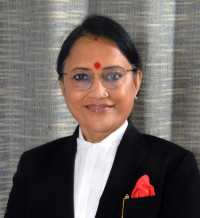
(Author, a former AICC member, is a well-rec ognised lawyer-campaigner for female rights, and has authored “Breaking the Silence: A Handbook on the PoSH Act”.)









[[comment.comment_text]]