Supreme Court Doubts EC-Mandated Revision of Bihar Electoral Rolls

 1 year, 3 months ago
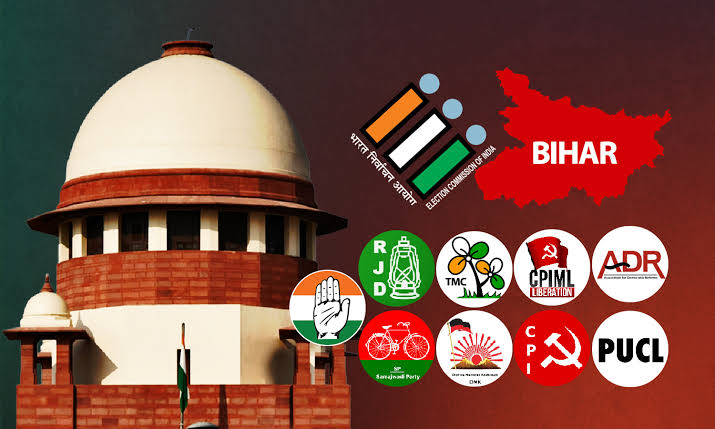
The Supreme Court has expressed "serious doubts" regarding the Election Commission's (EC) "special intensive revision" of Bihar's electoral rolls, mere months before the Assembly elections. While acknowledging the EC's constitutional mandate to revise rolls, the Court primarily questioned the timing, stating, "Your exercise is not the problem... it is the timing. We have serious doubts if you can manage this exercise."
A key concern raised was the potential for disenfranchisement, with Justice Sudhanshu Dhulia noting that individuals might not have sufficient time to appeal their exclusion before voting, as courts typically do not interfere once the electoral roll is finalized. Justice Joymala Bagchi added that while the intensive process to remove non-citizens is valid, it "should be de hors (conducted separately from) this election."
The Court also critically questioned the EC's decision to exclude Aadhaar from the list of acceptable re-verification documents, emphasizing that the exercise is "primarily about identity only" and Aadhaar should be included.
Petitioners, including senior advocate Gopal Sankaranarayan, argued the revision is "arbitrary" and "discriminative," forcing long-term voters to re-verify without common government IDs. The EC, conversely, cited Article 326 of the Constitution, stating that citizenship verification is essential for voter eligibility and that Aadhaar, while an identity proof, isn't proof of citizenship. They also pointed to significant numbers of deceased or migrated voters as justification for the intensive revision.
The political opposition, notably the Congress and RJD, have criticized the revision as a "conspiracy" to exclude vulnerable voters and potentially influence election outcomes. That point was mentioned today by senior advocate Vrinda Grover, who said, "This is not an ordinary exercise... it is designed to exclude the poor, the migrant labourer, and vulnerable sections of society. The Supreme Court has allowed the EC to continue the exercise but has asked it to consider including Aadhaar, voter ID, and ration cards. People of Bihar would be waiting with bated breath for the next SC hearing scheduled for July 28.








[[comment.comment_text]]