The Fluidity of Conviction: Trinamool’s Fracture and the Era of Post-Ideological Politics
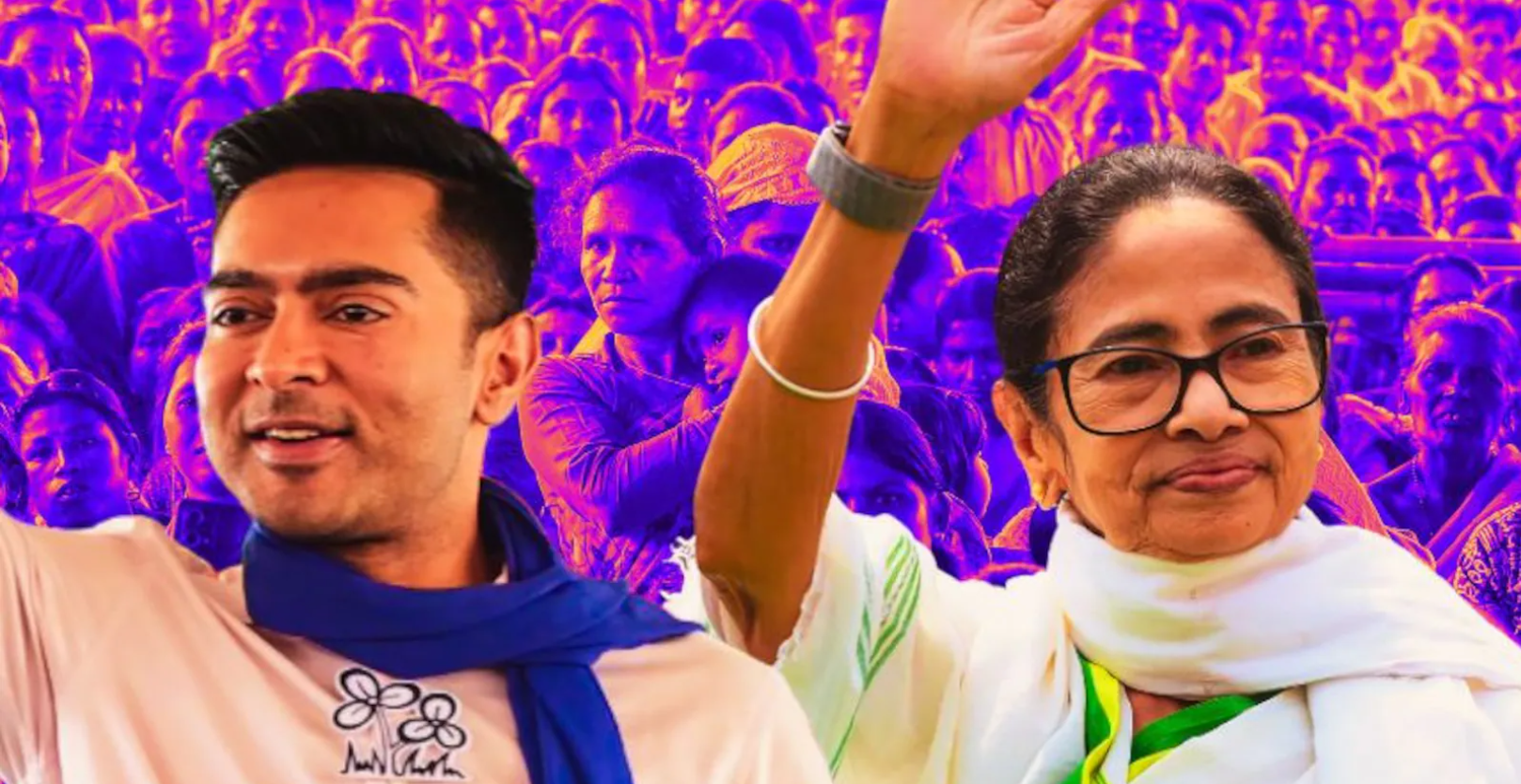


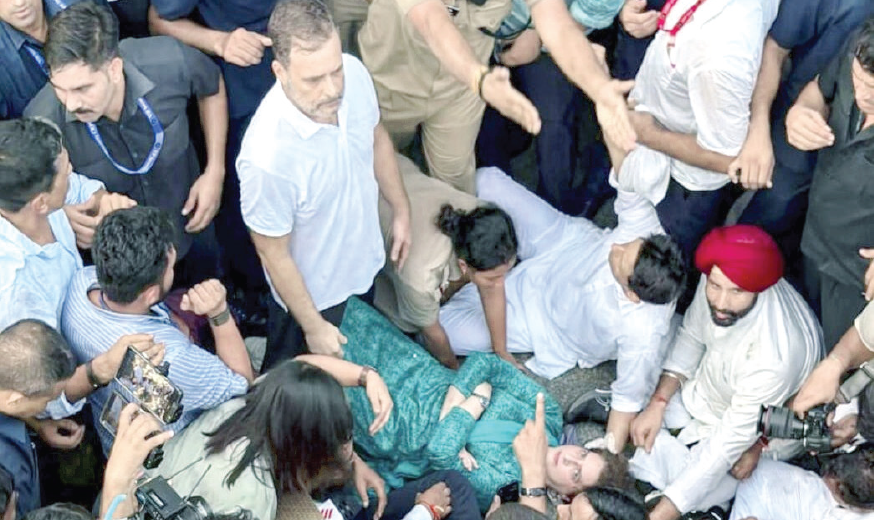
The sudden, tectonic shift within the Trinamool Congress (TMC)—where a 20-strong rebel faction of Lok Sabha MPs has engineered a merger with a little-known, Tripura-based outfit to leap into the National Democratic Alliance (NDA)—is more than just a localised mutiny. Led by veteran Kakoli Ghosh Dastidar and backed by seasoned faces like Sudip Bandyopadhyay, this splintering offers a masterclass in modern political survival. More profoundly, however, it serves as a glaring obituary for ideological consistency in contemporary governance. 
 

We have firmly entered the era of post-ideological politics, where the alphabet soup of party names and historical rivalries matters far less than the calculus of leverage. Consider the mechanics of this split. The rebels did not break away to champion a distinct philosophical vision for West Bengal or the nation. Instead, they weaponized the precise arithmetic of the anti-defection law—seeking the cover of a "two-thirds majority" via a tactical alliance with the Nationalist Citizens' Party—solely to secure a safer harbor within the ruling coalition. Yesterday's fierce critics of the Prime Minister’s policies have overnight pledged to "work under his leadership."
 

This is not a crisis peculiar to one party; it is the modern template of political pragmatism. When survival and power become the primary metrics of success, foundational principles become baggage. The rapid organizational reshuffle by Mamata Banerjee’s leadership—elevating Arnab Banerjee and Alifa Ahmed to stem the bleeding—is a standard damage-control exercise, but it highlights a deeper reality: party structures are increasingly treated as transactional vehicles rather than ideological standard-bearer.


Historically, political parties were anchored by competing worldviews—secularism versus nationalism, regional autonomy versus centralized federalism, welfare economics versus free-market capitalism. Today, those boundaries have dissolved into fluid strategies. Defections and mergers are no longer viewed by politicians as existential betrayals of their voters, but as career adjustments. The language of ideology has been replaced by the vocabulary of logistics: "commanding majorities," "separate seating arrangements," and "legal provisions under the 10th Schedule."
 

As Rajya Sabha MP Sagarika Ghose and the TMC leadership gear up for a fierce legal battle over the constitutional validity of this separate group, the courts will inevitably dissect the letter of the law. But the spirit of representative democracy has already taken a hit. When the dust settles in New Delhi and Kolkata, the public is left with a stark reminder: in the theatre of modern politics, ideological convictions  are written in pencil, and power remains the only permanent ink


The Fluidity of Conviction: Trinamool’s Fracture and the Era of Post-Ideological Politics

The sudden, tectonic shift within the Trinamool Congress (TMC)—where a 20-strong rebel faction of Lok Sabha MPs has engineered a merger with a little-known, Tripura-based outfit to leap into the National Democratic Alliance (NDA)—is more than just a localised mutiny. Led by veteran Kakoli Ghosh Dastidar and backed by seasoned faces like Sudip Bandyopadhyay, this splintering offers a masterclass in modern political survival. More profoundly, however, it serves as a glaring obituary for ideological consistency in contemporary governance.

Dinesh Dubey   |  2 days ago

The Wedding Circus: Why is the Bride’s Father Still the Ringmaster's ATM?

Every single girl out there needs to have a checklist. Seriously, write down 10 to 12 hard questions about compatibility before you even think about looking at guys in an arranged marriage setup. Figure out exactly what you want first, so when you ask your questions, they cut straight to the point. I used this strategy recently. There was this guy I had already rejected before, but he came back crawling, asking for "just one chance to prove himself." I thought, fair point, let's see what you’ve got. During our conversation, I dropped one of my standard questions: "Will you take dowry?"

Khushboo Jha   |  2 days, 1 hour ago

India's labour force: The Invisible Hands That Keep India Running

The importance of this acknowledgment cannot be overstated. Every household depends on a wide range of activities that are essential for daily life. Meals have to be prepared, children have to be cared for, elderly family members need support, homes need to be cleaned and maintained, and countless small responsibilities must be managed every day. These tasks consume time, energy, and skill. If families were required to hire separate workers for each of these responsibilities, the financial cost would be enormous. Yet when these same services are provided by a homemaker, society often assumes they have no economic value simply because no money changes hands. This contradiction has allowed one of the largest forms of labour in the country to remain hidden in plain sight.

Samridhi   |  2 days, 1 hour ago

Beyond Tenure: Why Comparing Modi and Nehru Requires Historical Context

For centuries, Eurocentric frameworks dominated intellectual discourse, producing comparisons that subtly reinforced Western superiority. Thus, Kalidasa became the “Shakespeare of India,” while Chanakya was described as the “Indian Machiavelli.” Such characterisations appear flattering, but they implicitly position Western figures as the universal benchmark against which all others must be measured. In reality, Kalidasa and Chanakya emerged from independent civilizational traditions whose significance does not require validation through foreign parallels.

Seema Joshi   |  2 days, 2 hours ago

Modi’s Record Tenure as Prime Minister

Narendra Modi’s upcoming milestone on June 10, which will mark 4,399 consecutive days in office and surpass Jawaharlal Nehru as India's longest-serving democratically elected leader, raises a fundamental question: does political longevity guarantee effective governance?

Hasnain Naqvi   |  1 week ago

The Politics of Pedestals!

India is a diverse country. We have different religions, different cultures, different languages, and different ways of life. Yet there is one thing that seems remarkably common across all of them our tendency to place women, mothers, daughters, rivers, and even the land itself on a divine pedestal while simultaneously taking them for granted in everyday life.

Khushboo Jha   |  1 week, 4 days ago

Comments

YOU MIGHT ALSO LIKE

View More

By Hasnain Naqvi   |   1 week ago
Modi’s Record Tenure as Prime Minister
By Khushboo Jha   |   1 week, 4 days ago
The Politics of Pedestals!
By VK Bahuguna   |   2 weeks ago
Delhi Gymkhana Club: The flashpoint of dispute