Faith, Accountability, and the Missing Ornaments: Time for Transparency in Religious Governance

 3 months, 2 weeks ago
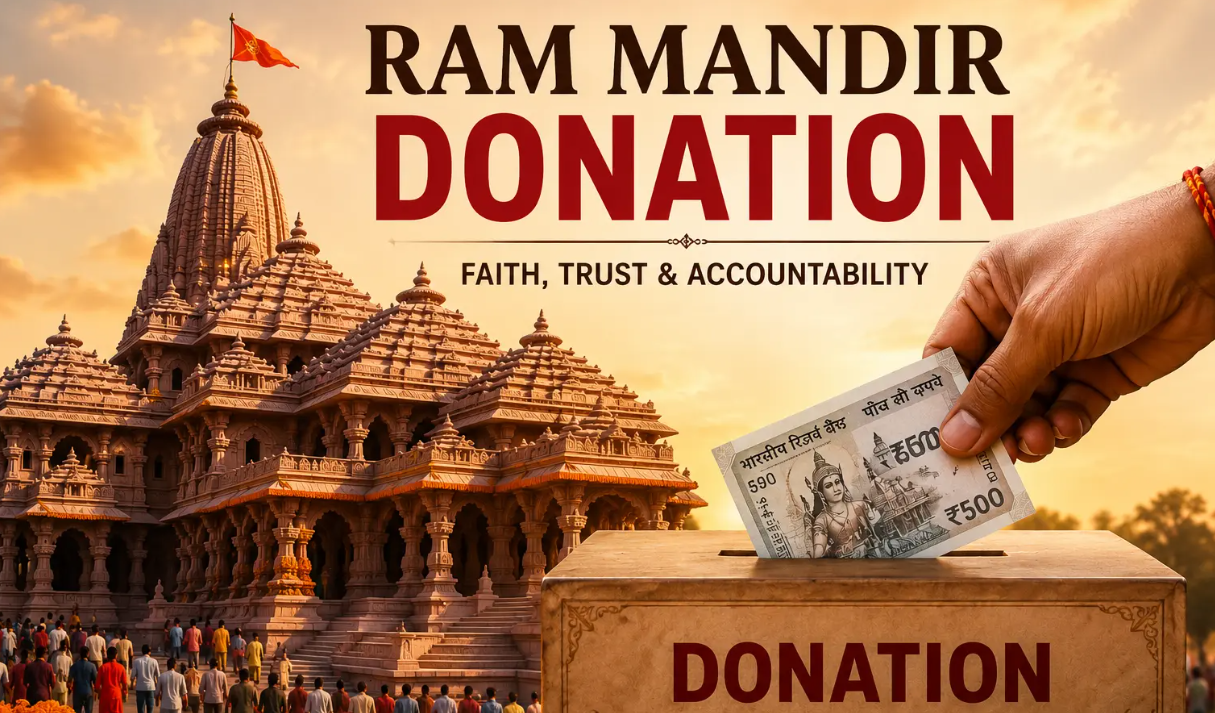
Recent discussions around missing ornaments—such as the charan paduka or jewellery associated with Ram Lalla—have once again brought into focus a sensitive yet necessary question: how are the assets of our temples being managed?
This is not about doubting faith. It is about protecting it.
Across India—from Ayodhya to Tirupati, Shirdi to Vaishno Devi Vrindavan to Varanasi —temples receive offerings worth crores in cash, gold, and precious ornaments. Devotees do not donate these as mere material objects; they offer them as expressions of devotion, surrender, and spiritual connection. When even a whisper emerges that something may be unaccounted for, the issue transcends financial loss—it strikes at the very foundation of trust.
The uncomfortable truth is this: while temples have evolved in scale and wealth, their systems of governance have often not. Many continue to rely on traditional, trust-based management structures that lack modern safeguards. In today’s context, that is no longer sufficient.
The Problem Is Not Theft—It Is Opacity
Even in the absence of wrongdoing, the lack of transparent systems creates doubt. And in matters of faith, perception can be as damaging as reality. When records are unclear, inventories are not digitised, and audits are irregular, suspicion finds space to grow.
This is not an isolated concern. It is a systemic issue across major religious institutions in the country.
A Way Forward: Bringing Systems into Sacred Spaces
Temples must now embrace accountability with the same seriousness with which devotees offer faith. This does not dilute sanctity—it strengthens it.
A robust and uniform mechanism should include:
• Digital Inventory of Ornaments: Every ornament—crown, necklace, anklet, charan paduka—must be catalogued with photographs, weight, description, and a unique identification number. High-value items should be RFID or QR tagged.
• Daily or Weekly Reconciliation: Items used in rituals must be logged at issuance and return, with dual verification to eliminate unchecked control.
• Independent Audits: Regular external audits, including surprise inspections, must be mandatory. Internal systems alone are not enough.
• Public Disclosure: Without compromising security, temples should publish periodic summaries of assets and donations. Transparency builds confidence.
• Surveillance and Documentation: Storage areas must be under CCTV monitoring, and movement of high-value items must be properly recorded.
• Uniform SOPs: A standardised governance framework across major temples can reduce ambiguity and prevent systemic loopholes.
Beyond Temples: One Framework, Equal Accountability
The question of transparency cannot be selective. If accountability is essential, it must apply across all religious and charitable institutions.
"The governance model of major religious bodies—such as Hindu Devasthanam Boards, Muslim Waqf Boards, and Sikh Gurdwara Parbandhak Committees, Church’s, Buddhist Math’s etc. —should be structurally unified and decentralized. The jurisdiction and legal scope of these overarching management frameworks must be expanded to the grassroots level. This ensures that every local temple, gurdwara, church, mosque, shrine (mazar), and neighbourhood religious trust operates under a standardized, accountable statutory umbrella."
Faith may differ. Accountability cannot.
Professional Oversight Is No Longer Optional
Managing offerings worth crores cannot remain an informal exercise. There must be mandatory involvement of professionals:
• Chartered Accountants (CAs) for financial audits
• Company Secretaries (CSs) for governance and compliance
• Legal oversight to ensure adherence to statutory obligations
Religious institutions today function at a scale comparable to large public bodies. Their governance must reflect that reality.
Time for a National Regulatory Authority
India needs an independent statutory authority—similar in spirit to SEBI or NFRA—to regulate religious and charitable institutions across faiths.
Such an authority could ensure:
• Registration and classification of institutions
• Standardised accounting and reporting norms
• Regular audits and surprise inspections
• Transparent public disclosures
• Grievance redressal mechanisms
• Penalties for non-compliance and misconduct
This is not about state interference in religion. It is about institutional integrity in public-facing entities that handle public faith and public resources.
Faith Does Not Fear Transparency
It must be stated clearly: no devotee questions Bhagwan Shri Ram or any deity. The divine is beyond scrutiny.
But institutions run by humans must always remain open to it.
Accountability is not disrespect—it is responsibility. Asking questions is not an act of doubt; it is an act of protection. If everything is in order, transparency will only reinforce credibility. If there are gaps, they must be addressed—not ignored.
A Personal Note
The writer is a devotee of Hanuman ji and holds unwavering faith in Bhagwan Shri Ram. There is no question of doubting the divine. However, systems managed by humans—including trusts and administrative bodies—must be questioned wherever discrepancies arise.
Because in the end, safeguarding faith requires more than devotion—it requires integrity.
(Ms Joshi, a former AICC member, is a well-recognised lawyer-campaigner for female rights, and has authored “Breaking the Silence: A Handbook on the PoSH Act”.)









[[comment.comment_text]]