Delhi Gymkhana Club: The flashpoint of dispute
 4 months, 1 week ago
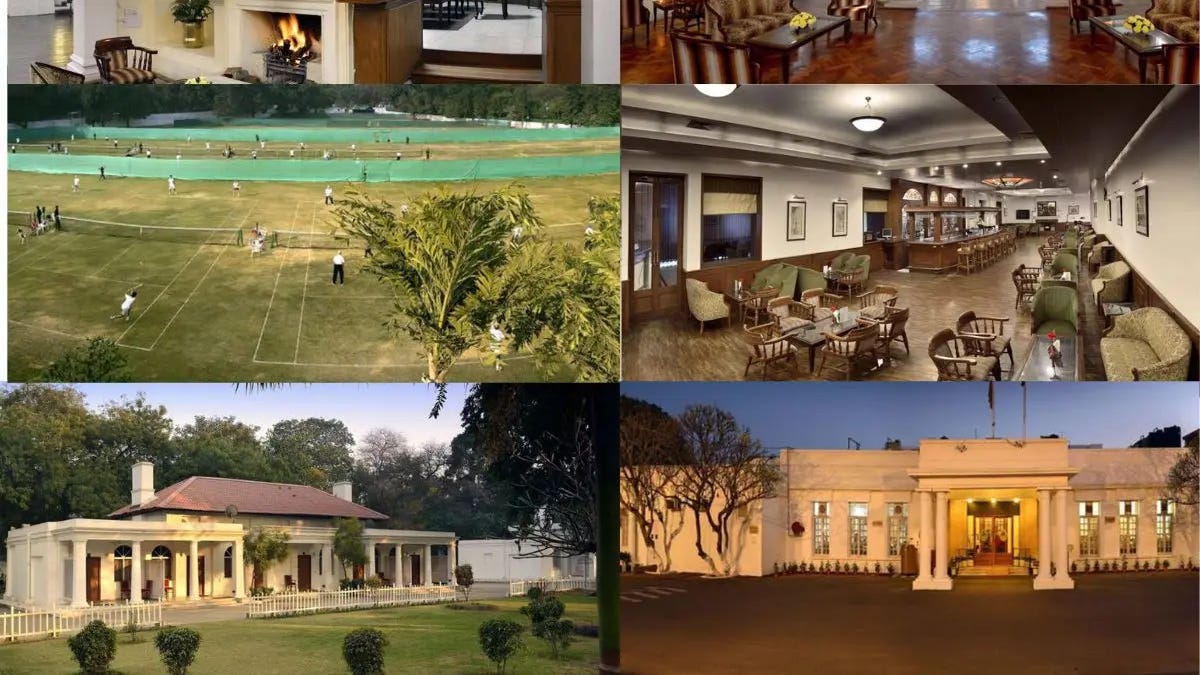
The Delhi Gymkhana Club situated in the heart of Lutyens’Delhi over the sprawling 27.3 acre of land not far from the Prime Minister’s residence is in the news in media due to the Ministry of Urban affairs land management department asking it to hand over the possession of the club back to the government by 5th June 2026. The order, issued by the Land and Development Office (L&DO) under the Ministry of Housing and Urban Affairs, cites urgent needs for defence infrastructure, public security and for strategic reasons. The club was established on the government land leased out to it and has over the years became a very exclusive club of the Delhi’s Chatterati classes occupying the prime government land at 2, Safdarjung Road on perpetual lease granted in 1928, for which it pays a nominal annual rent of around Rs 1,000.
The club has extensive facilities, including sports grounds, lawns, buildings, and a membership that has historically included top bureaucrats, politicians, industrialists, and their families. Critics have long described it as a "caucus" or closed elite network, with a decades-long waiting list, high non-refundable application fees allegedly collecting crores, and allegations of hereditary membership practices, financial irregularities, and misuse of public land. The government has previously intervened due to violation of lease deed through the National Company Law Tribunal appointing administrators and citing issues like nepotism and an oppressive management.
The government in its orders made it clear that the premises is required for strengthening and securing defence infrastructure and other public purposes. The order has triggered strong reactions from club members, who view it as an attack on a heritage institution with over 14,000 members and 500+ employees. The club members have approached the Delhi High Court challenging the directive. Senior advocates, including Abhisek Manu Singhvi, are representing them. During hearings, the Solicitor General assured no forcible eviction by June 5 and mentioned possibilities of due process or alternative arrangements. On the other hand many people have welcomed the government decision against entrenched privileges in Lutyens' Delhi. The Gymkhana episode highlights tensions between historical legacies, private clubs on prime public land, and futuristic priorities of national security and public interest.
Legally the government is perfectly right in reclaiming this huge prime land. This low rents on high-value land, exclusivity, governance lapses, and underutilisation for broader public benefit are some of the points to ponder over the government decision. Now the question is how to balance out the tension especially about the risk of around 500 staff losing their livelihood and around 1400 people losing their recreation spot if the club is abruptly taken over. At the same time the government's invocation of lease Clause 4 for strategic public purposes like defence, security, infrastructureis legally robust, critics rightly point to the "old boys' club" dynamics: opaque/hereditary-style membership, long waiting lists, high fees, past governance issues addressed via NCLT intervention, and nominal rents on land worth thousands of crores. Therefore, a pragmatic solution within the remits of law is needed.
First think that comes to the mind of this writer is why after all this 27.3 huge land is needed for the entertainment for the members when other elite clubs like Civil Services officers Institute (CSOI) is run in a much smaller area that too in the centre of Delhi. CSOI efficiently operates in only over 4 Acres of land. CSOI’s primary modern facility at Vinay Marg, Chanakyapuri, was allotted approximately 4.23 acres by the Ministry of Urban Development around 2002. It also operates a secondary site at KG Marg Kasturba Gandhi Marg in a multi-storey apartment setup. CSOI offers banquet halls, a rear lawn for up to 250 guests, restaurants, bar, library, sports facilities etc., auditorium, accommodation, and event spaces. It functions efficiently for civil services officers and families on a no-profit-no-loss basis. The socio-economic profile of both the CSOI and the Gymkhana club is more or less similar except that CSOI is limited to only government/ Public Sector Unit officers.
The government therefore, need to find a middle path and can either sanction an alternative land in some other area for the club considering loss of job by the people working there and to cater to the social interaction needs of its members. Gymkhana’s is having roughly 6–7 times larger area than CSOI’s main plot. Much of the area consists of expansive lawns and grounds that critics rightfully argue are underutilised relative to core club activities, especially given reports of heavier focus on events, dining, and social networking over intensive sports. Therefore, Gymkhana can certainly operate its essential functions clubhouse, main sports facilities, dining on a scaled-down 4–6 acre parcel of land. The excess land of 20 acres should be taken over for strategic public/defence use. It will solve the problem without destroying the institutions.
We must understand that CSOI represents a post-Independence, efficient model on institutional land at market-linked or subsidised rates. Gymkhana reflects colonial-era over-allocation with perpetual low-rent privileges that no longer align with today’s land scarcity and security needs in Lutyens’ Delhi. Retaining vast acreage for one club perpetuates "old boys’ club" perceptions and subsidised elitism and there is no transparency in its functioning. The government should run the reformed Gymkhana club with transparency by overhauling its management and make it more reflective of modern India’s vision of social life, equality and justice. Let the mandarins of Gymkhana club learn from Mahatma Gandhi’s word “that socializing and communal living should be rooted in service, simplicity, and shared moral principles, rather than mere indulgence”.
(The writer, a former IFS officer, currently chairs the Centre for Resource Management and Environment.)





[[comment.comment_text]]