Aadhaar Clears Voter’s Hurdle in Bihar

 1 year, 2 months ago
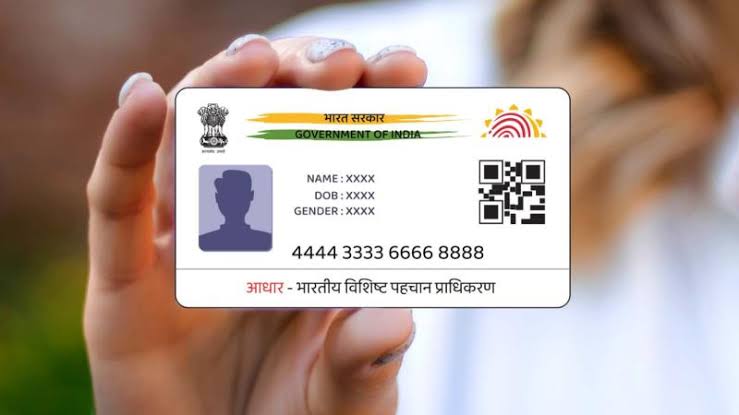
The Supreme Court’s recent recommendation to treat Aadhaar, EPIC, and ration cards as valid proofs of identity for voter registration marks a significant and timely step to protect the foundations of India’s democracy. As Bihar prepares for its assembly elections, this intervention could be the difference between widespread disenfranchisement and meaningful electoral participation.
The right to vote is not merely a procedural formality—it is the cornerstone of a representative system. The Election Commission of India (ECI) bears the constitutional responsibility of ensuring that every eligible Indian citizen is included on the electoral rolls and that no ineligible person is permitted to vote. Achieving this delicate balance demands continuous revision of the rolls and rigorous verification. Yet, as Bihar’s Special Intensive Revision process has shown, rigid application of limited identity criteria can have unintended and damaging consequences.
Opposition parties and civil society groups have rightly sounded the alarm that a large segment of Bihar’s population could be excluded under the current verification rules. Their apprehensions are supported by both official statistics and extensive reporting. Structural deficiencies in Bihar’s administrative and civic infrastructure have left many residents without traditional forms of documentation, like birth certificates, educational records, or government employment IDs.
Consider the stark reality: only 26.2 percent of births in Bihar were officially registered in 2007—the cutoff year for eligibility to vote in the 2025 election cycle. Educational attainment remains low, with merely 23 percent of adults having completed school, according to the 2011 Census. Additionally, government employment, which could have provided identity or service records, covers less than 5 percent of the population. These numbers point to a systemic gap that simple rule enforcement cannot bridge.
By contrast, documents like Aadhaar and ration cards have reached nearly every household. As of July 2025, nearly 114 million Aadhaar numbers have been issued in Bihar, out of an estimated population of 130 million. Ration cards cover about 83 million residents. For millions of citizens—especially women, daily wage laborers, and migrant workers—these are the only forms of identity they have ever possessed. Excluding these documents as proof of eligibility risks silencing their voices in the democratic process.
The Supreme Court’s pragmatic suggestion to expand the list of acceptable documents recognizes this reality and attempts to reconcile two equally important objectives: protecting the integrity of elections and ensuring broad-based participation. Without such an approach, voter rolls would inevitably skew in favor of better-off, better-documented citizens, while marginalizing those who are already economically and socially disadvantaged.
Understandably, there are concerns about overreliance on Aadhaar, particularly around issues of data privacy, duplication, and biometric errors. In the past, errors in Aadhaar authentication have led to denial of welfare benefits and other services. These risks must be taken seriously. However, they do not justify outright rejection of Aadhaar as a valid proof of identity—especially when it is combined with EPIC and ration card data to create a more comprehensive and cross-verified framework.
To translate this inclusive vision into practice, the ECI must take proactive steps. First, it must update its guidelines to explicitly incorporate these documents and widely communicate the new criteria to voters. Information campaigns through print, television, radio, and digital media will be crucial to ensure citizens know what documents they need and where they can register.
Second, practical support systems should be established. Special help centers and mobile registration units can reach remote and underserved areas where documentation gaps are most severe. Field officers must be trained to process applications sensitively and efficiently, rather than turning people away due to confusion or incomplete paperwork.
Third, grievance redressal must be transparent and accessible. Voters who find their names missing or face other procedural barriers should be able to appeal and have their cases reviewed promptly. Timely resolution of such issues is essential to prevent last-minute chaos and loss of faith in the electoral process.
Ultimately, Bihar’s case highlights the fundamental question every democracy must confront: Can the integrity of the electoral process be protected without making participation inaccessible? The answer lies in policies that are both rigorous and humane. The Supreme Court’s guidance is an example of the judiciary stepping in to ensure that constitutional ideals are not undermined by administrative constraints.
As the world’s largest democracy, India’s credibility rests not just on holding elections, but on ensuring that every eligible citizen has an equal opportunity to exercise their franchise. The real test of any electoral system is whether it can be both fair and inclusive—guarding against fraud while welcoming all who have the right to vote.
The Supreme Court has opened a window of opportunity to make this principle a reality. It is now up to the Election Commission, the Bihar government, and civic institutions to act swiftly and decisively. The health of India’s democracy depends on ensuring no citizen is left unheard simply because they lack a piece of paper.
(Author is a well-recognised bilingual commentator on socio-political and cultural affairs issues. Views are personal.)





[[comment.comment_text]]