Sachin Tendulkar: The Presence That Transcends Cricket

 19 minutes ago
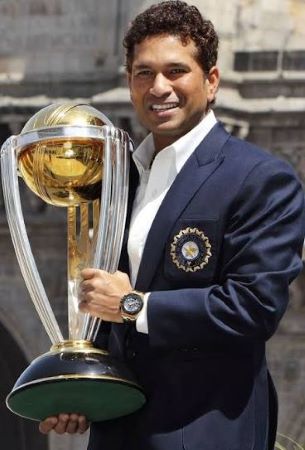
That great sportsperson transcends the boundaries of nations is a fact. The likes of Mohammad Ali, Sachin Tendulkar and Carl Lewis belong to all. As far as Sachin Tendulkar is concerned, he was never merely a batsman walking out to the crease; he was a source of hope, excitement and collective pride. Indian descent author from Trinidad and Tobago Clifford Narinesingh’s The Presence of Tendulkar takes up this larger idea of Tendulkar’s place in public life and offers readers an exploration of the man, his achievements and his influence beyond the boundary.
The title is particularly meaningful. It points not simply to the physical presence of a celebrated cricketer, but to the way his name, image and performances came to occupy the imagination of people across generations. Tendulkar’s arrival at the crease could change the mood of a stadium and bring millions of television viewers to a standstill. Narinesingh recognises that this extraordinary connection is central to understanding the phenomenon of Sachin.
One of the book’s strengths is its attempt to look at Tendulkar through more than one lens. He is presented as a gifted sportsman whose extraordinary talent was matched by discipline, commitment and an enduring appetite for the game. At the same time, the author considers the public figure who emerged as his achievements accumulated. Tendulkar became a national hero and a global sporting name, but his significance cannot be explained by statistics alone.
Tendulkar’s journey makes this examination especially compelling. From his youthful promise to the defining moments of an exceptionally long career, he grew in the public eye while continuing to carry the expectations of an increasingly demanding audience. The pressure on him was immense. Yet he repeatedly returned to the crease with the focus of a professional who understood that reputation has to be renewed through performance. Narinesingh’s exploration of this journey helps readers appreciate not only the scale of the achievement but also the sustained effort behind it.
The book is also valuable for acknowledging that a great career is not made up exclusively of triumphs. Its description points to a critical consideration of both the brilliant flashes and the less luminous aspects of Tendulkar’s career. This willingness to look beyond uncomplicated praise gives the subject greater depth. No sportsperson can be expected to produce perfection in every match, and Tendulkar’s greatness does not depend on pretending otherwise. The more interesting portrait is of a human being who experienced difficult periods, faced scrutiny and continued to meet the demands of a remarkably high standard.
There is another important dimension to Tendulkar’s story: the relationship between an individual athlete and the society that embraces him. His career unfolded during a period when television, sponsorship and the expanding reach of international sport were transforming cricket. As his fame grew, Tendulkar came to represent aspiration, reliability and excellence to audiences far removed from the cricket ground. For many Indians, his performances offered moments of unity in a country of many languages, regions and differences. The book’s attention to his global impact makes this wider cultural significance an important part of the discussion.
Narinesingh deserves credit for taking on a subject about whom so much has already been written and said. Writing about an icon of Tendulkar’s stature is not an easy assignment. The author has to negotiate the weight of public admiration, the abundance of statistics and the danger of repeating familiar tributes. The effort to examine personality, achievement and influence together gives the book a clear purpose. That ambition is commendable, and it reflects a serious engagement with the subject.
The author’s approach is particularly relevant to readers who remember the excitement of following Tendulkar’s career as it happened. Younger readers, who may know him chiefly through records and highlights, can use it as a way of understanding why his name carries such resonance. It also offers a reminder that sporting history is about more than numbers on a scorecard. It is shaped by memory, context, expectations and the bond between a player and those who watch him.
Its appeal lies in the opportunity it offers to pause and place individual achievements in perspective. A celebrated innings is exciting in itself, but its meaning becomes richer when viewed against the expectations of the time, the opposition and the larger story of Indian cricket. By focusing on Tendulkar’s presence as well as his performance, Narinesingh opens up that wider conversation for readers.
A book on Tendulkar inevitably raises the question of what makes a legend. Is it the volume of runs, the longevity, the milestones or the ability to inspire? Tendulkar’s records provide the measurable evidence of his greatness, but his place in the hearts of people gives that greatness its human dimension. Narinesingh’s book is engaging because it addresses this broader presence and encourages readers to think about the meaning of sporting icons in contemporary society.
The Presence of Tendulkar is therefore a welcome addition to the literature surrounding one of cricket’s most remarkable figures. Its subject is familiar, but the central idea remains rich and worth exploring: how one player came to mean so much to so many. Clifford Narinesingh’s effort to bring together Tendulkar’s personality, achievements and global impact deserves appreciation. The book will appeal to devoted cricket followers, readers interested in sporting culture and anyone curious about the making of a modern national hero. Tendulkar’s greatest achievement may not be captured by any single record. It is the lasting presence he created in the lives and memories of people.
(Author is a senior Delhi-based journalist and commentator on culture, diversity, and pluralism.)








[[comment.comment_text]]