When Faith Turns Fatal: The Hidden Cost of the Char Dham Rush

 3 months, 2 weeks ago
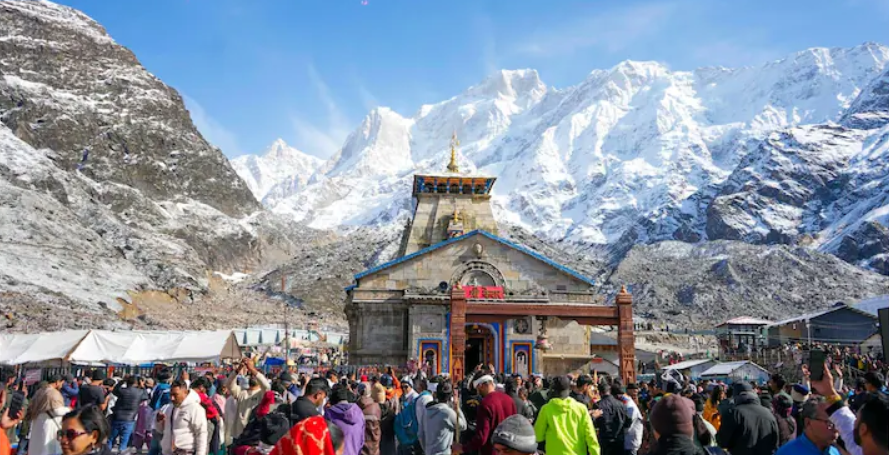
In the high silence of the Himalayas, a grim pattern has become tragically routine. This year alone, more than 200 pilgrims have died along the Char Dham circuit within just over two months—a toll that is no longer shocking, only expected. These are not isolated misfortunes. They are the predictable outcome of systemic failure: weak regulation, inadequate medical safeguards, and a governance approach that mistakes capacity expansion for safety.
The usual explanations—landslides, narrow roads, sudden weather shifts—are valid, but incomplete. Medical records and field reports across successive yatras reveal a more uncomfortable truth. A significant number of deaths result from cardiac arrests, high-altitude sickness, respiratory distress, and the worsening of pre-existing conditions.
The Himalayas are physiologically unforgiving. At elevations above 3,000 metres, oxygen levels fall sharply, temperatures fluctuate unpredictably, and physical exertion can overwhelm even moderately fit individuals. Yet thousands undertake this journey without medical screening, without acclimatisation, and with a dangerous assumption: that faith alone will protect them.
Faith is not the problem. Uninformed faith is.
The essence of pilgrimage has shifted from a discipline of spiritual self-denial into a performative life milestone.
Historically, this journey was undertaken exclusively by elders who had completed their worldly duties. Today, social media has converted private devotion into a public spectacle. The modern pilgrimage is a packaged consumer experience, compressed into weekend itineraries and facilitated by helicopter shortcuts. Ultimately, the profound internal transformation of the past has been replaced by curated online reels and images.
The result is a surge-driven model of devotion—lakhs arriving within days—placing unbearable strain on fragile ecosystems and limited infrastructure. Elderly pilgrims, often with underlying health conditions, are pushed into high-risk zones without preparation. Helicopter services, instead of being a regulated necessity, have become symbols of convenience—allowing rapid ascent without physiological readiness.
This is not spirituality. It is logistical recklessness wrapped in religious sentiment.
There is another dimension that remains largely ignored: the exploitation of animals. Horses and mules, essential to the yatra ecosystem, are routinely overworked, underfed, and pushed beyond endurance limits. Many are denied adequate rest, proper nutrition, or veterinary care—because feeding them or allowing recovery time reduces profit margins. Their suffering is not incidental; it is systemic. A pilgrimage that overlooks cruelty in the name of devotion contradicts its own moral foundation.
Equally troubling is the rise of “reel culture” on pilgrimage routes. Treacherous paths have become backdrops for social media content. Pilgrims pause in dangerous zones to film videos, obstruct movement, and increase congestion. The mountains are treated not as sacred spaces, but as stages. This distraction is not harmless—it contributes to delays, accidents, and a dilution of the very purpose of the journey.
Authorities have made visible interventions—road widening, helipad expansion, temporary medical camps, and traffic control systems. These are necessary, but insufficient. Infrastructure cannot compensate for the absence of regulation. When numbers exceed safe limits, even the best systems collapse.
The policy gaps are clear:
• Medical screening is superficial and easily bypassed.
• There are no enforceable daily caps based on scientific carrying capacity.
• Helicopter operations lack stringent health protocols.
• Acclimatisation remains advisory, not mandatory.
• Animal welfare regulations are poorly enforced.
• Social media misuse remains completely unregulated.
• Post-death audits lack transparency and accountability.
From a legal standpoint, this raises serious concerns. When risks are known, documented, and repeated, failure to act is no longer mere oversight—it approaches institutional negligence. The state, having facilitated and encouraged these pilgrimages, carries a duty of care that cannot be discharged through advisories alone.
What must change is both immediate and structural.
First, enforceable medical fitness certification. This must involve standardized testing for cardiac, pulmonary, and high-risk conditions, digitally verified and strictly enforced. Denial of travel, where necessary, must not be negotiable.
Secondly, scientifically determined carrying-capacity limits. Daily pilgrim numbers must be capped based on terrain, medical capacity, evacuation feasibility, and environmental sustainability. These limits must be legally binding and insulated from political pressure.
Thirdly, mandatory acclimatisation protocols. Pilgrims must undergo staged travel with compulsory rest periods. Helicopter passengers, in particular, should be required to undergo oxygen monitoring before onward movement.
Fourthly, strict regulation of helicopter services. Pre-boarding health checks, passenger limits, and integration into emergency medical systems must be mandatory.
Fifthly, animal welfare enforcement. Mandatory feeding schedules, load limits, rest cycles, and veterinary checks must be monitored through on-ground inspections and digital tracking. Violations should result in immediate suspension of licenses.
Sixthly, regulation of mobile phone usage. From the point of ascent, unrestricted phone use should be prohibited. Pilgrims may be required to deposit smartphones at designated checkpoints. For safety, basic communication devices can be issued or emergency communication points at intervals. This is not an overreach—it is a necessary step to reduce distraction, crowding, and risk-taking behaviour driven by social media.
Seventhly, prohibition of reel-making and commercial filming on sensitive stretches. The pilgrimage route is not a content creation zone. Enforcement must be real, not symbolic.
Eighthly, real-time monitoring systems. GPS tracking of pilgrim clusters, oxygen stations, and permanently equipped emergency response units must be established.
Finally, transparent death audits. Every fatality must trigger an independent, time-bound inquiry to determine cause, accountability, and preventive measures. These reports must be made public.
The legal framework to implement these measures already exists—within public health law, disaster management regulations, and administrative powers. What is missing is not authority, but intent.
There will be resistance. Local economies depend on high volumes. Operators profit from speed and scale. Political narratives favour visible success over uncomfortable restraint. But governance is not about maximising numbers—it is about minimising harm. Pilgrimage is not a commercial throughput exercise. It is an act of devotion that demands discipline—from individuals and from the state.
The human cost is already visible. A son losing his father to breathlessness in a queue. An elderly couple airlifted too late. A medical worker forced to choose who receives limited oxygen. These are not unavoidable tragedies. They are policy failures.
Faith does not demand crowds. It demands respect—for the journey, for nature, and for life itself.
If the state cannot guarantee medical safeguards, enforce limits, prevent exploitation—of both humans and animals—and curb reckless behaviour amplified by social media, then the moral cost of this pilgrimage becomes unacceptable. These deaths are not inevitable. They are preventable. And prevention is not a matter of devotion—it is a matter of governance.
Ultimately, rewriting the script of the Char Dham yatra requires a profound cultural unlearning. The Himalayas are not an amusement park, nor is a pilgrimage a bucket-list item to be checked off with maximum speed and minimum effort. True devotion must encompass ecological mindfulness; to worship the divine manifest in these mountains while simultaneously choking them with plastic, overcrowding, and noise is a profound spiritual paradox. Pilgrims must re-embrace the ancient ethos of patience and restraint, understanding that a journey deferred due to health or environmental capacity is not a failure of faith, but an act of higher wisdom.
The choice before the state is stark: continue managing the yatra as a high-volume tourism engine, or pioneer a model of sustainable, regulated spiritual tourism that respects both human life and fragile geography. Implementing these structural reforms will undoubtedly cause short-term economic and political friction, but it is the only path toward long-term preservation. If governance fails to step in, the sacred trails will continue to be overshadowed by preventable grief. The true measure of a successful pilgrimage season cannot be calculated by the millions who arrived, but by the safety, dignity, and reverence with which they were guided home.
(Ms Joshi, a former AICC member, is a well-recognised lawyer-campaigner for female rights, and has authored “Breaking the Silence: A Handbook on the PoSH Act”.)




[[comment.comment_text]]