Trial by Timeline

 3 months, 2 weeks ago
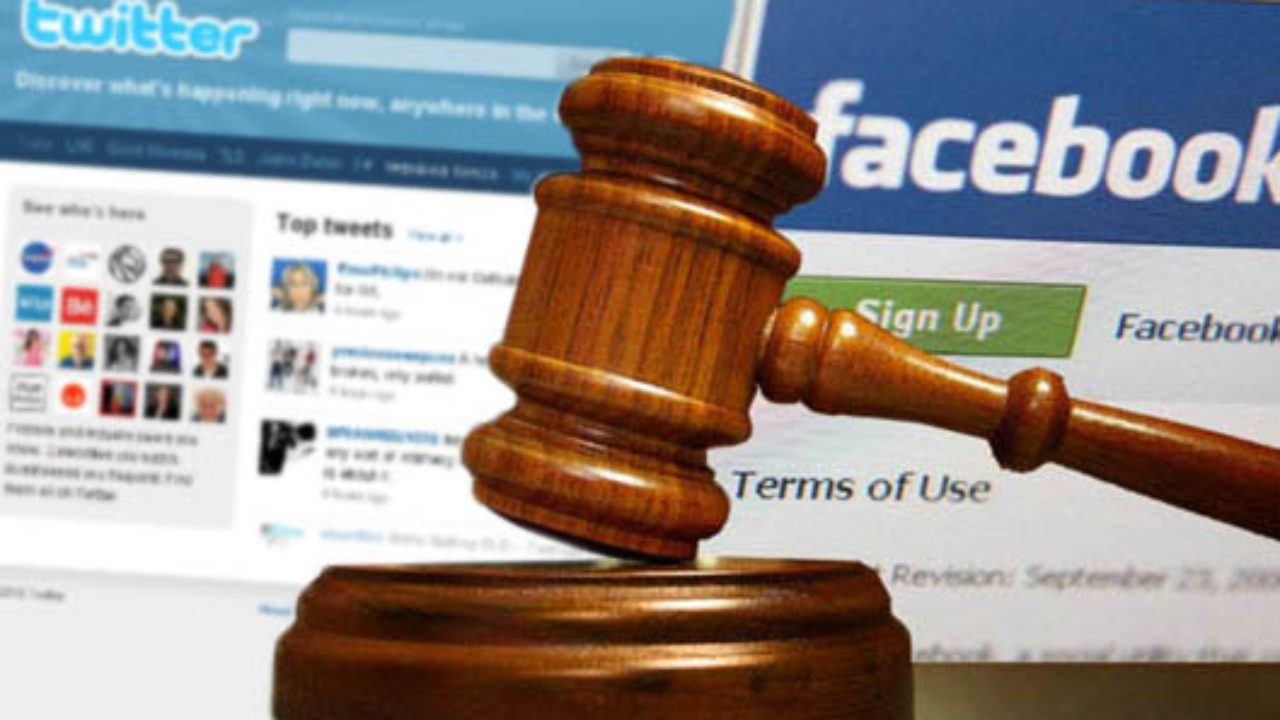
The first courtroom of the twenty-first century is no longer a court of law—it is the smartphone screen. Before investigators reach the scene, before forensic evidence is collected, before a chargesheet is filed and long before a judge examines the facts, millions of people have already delivered their verdict on social media. A short video clip, an anonymous post, an edited document, a political allegation or an emotional hashtag is often enough to transform ordinary citizens into investigators, prosecutors, defence lawyers, judges and jurors. Within hours, reputations are elevated or destroyed, institutions are condemned or defended, and public opinion hardens into certainty. In this digital ecosystem, speed has replaced scrutiny, emotion has overtaken evidence, and virality is frequently mistaken for truth. While social media has undoubtedly democratized communication and empowered citizens to question authority, it has also created an unprecedented culture of trial by public opinion, where accusations are routinely treated as convictions and narratives often become more influential than facts. The greatest danger is not merely misinformation; it is the growing belief that justice can be delivered through trending hashtags rather than constitutional institutions.
India's constitutional framework rests upon a simple yet profound legal principle: every individual is presumed innocent until proven guilty through a fair judicial process. Article 21 of the Constitution guarantees not merely life and personal liberty but also the right to dignity, reputation and a fair trial. Article 19(1)(a) protects freedom of speech and expression, making public debate an indispensable feature of democracy. Neither of these constitutional guarantees exists in isolation. Freedom of expression cannot become a licence to pronounce guilt before evidence is examined, just as the protection of reputation cannot become an excuse to suppress legitimate public scrutiny. The challenge before every democracy is to preserve both values simultaneously. Unfortunately, social media increasingly blurs this constitutional balance. Public discourse frequently moves from allegation to conviction without pausing for investigation, evidence or due process.
Recent public debates surrounding allegations relating to donations and financial transactions connected with the Shri Ram Janmabhoomi Temple Trust illustrate this dilemma. Political leaders, activists and numerous social media accounts circulated claims suggesting financial irregularities in the handling of donations. The allegations spread rapidly across digital platforms, generating intense public debate and polarised reactions. Supporters of the allegations treated them as established facts, while supporters of the Trust dismissed them outright as politically motivated attacks. The Trust publicly rejected the allegations and offered explanations regarding its financial processes. Whatever the eventual legal or factual position may be, the episode demonstrates an important constitutional principle: raising questions regarding public institutions, charitable trusts or financial transparency is entirely legitimate in a democracy. Public accountability strengthens democratic governance. However, asking questions is fundamentally different from declaring guilt. When allegations are converted into verdicts before competent authorities have completed any investigation, public discourse ceases to be democratic accountability and begins resembling a digital courtroom operating without rules of evidence or procedural safeguards.
Political life provides countless examples of this phenomenon. Every election season witnesses accusations of corruption, abuse of power, financial misconduct, communal politics or institutional bias. Governments accuse opposition parties; opposition parties accuse governments. Such exchanges are intrinsic to competitive democracy. Political allegations are intended to trigger public debate and institutional scrutiny, not to replace judicial determination. Yet social media often collapses these distinctions. A press conference, selectively edited video or leaked document may generate millions of impressions within hours, creating an impression that guilt has already been established. If every political allegation were accepted as conclusive proof, investigative agencies, independent regulators and courts would become largely redundant. Democracies function because allegations invite investigation, not because allegations themselves constitute evidence.
The architecture of digital platforms aggravates this problem. Algorithms reward content that provokes outrage, fear, anger and emotional engagement. Nuanced legal analysis rarely competes successfully with sensational claims. Five minutes of context are reduced to fifteen seconds of viral footage. A single page of a lengthy document circulates without explanation. Old videos are repackaged as current events. Artificial intelligence has further complicated matters through deepfakes and convincingly manipulated audiovisual material. The economic incentives of digital platforms reinforce these tendencies because engagement translates into advertising revenue. Outrage has become commercially profitable, while caution attracts comparatively little attention. Consequently, public opinion is increasingly shaped not by verified information but by whichever narrative achieves maximum visibility.
The consequences extend far beyond online arguments. Individuals accused of wrongdoing frequently experience irreversible reputational damage even before any investigation concludes. Employers suspend employees, institutions distance themselves from controversy and families become collateral victims of public condemnation. Witnesses may unconsciously absorb dominant online narratives. Investigating agencies face enormous public pressure to make arrests or announce conclusions prematurely. Judges themselves must function in an environment where public expectations have already been shaped by relentless media campaigns. Even if courts ultimately acquit the accused, digital records preserve accusations indefinitely. Legal innocence often fails to restore social reputation.
The Indian judiciary has repeatedly acknowledged these concerns. In Sahara India Real Estate Corporation Ltd. v. Securities and Exchange Board of India (2012), the Supreme Court recognised that unrestricted publicity in certain situations may prejudice the administration of justice and held that courts possess limited authority to postpone publication where necessary to protect fair trial rights. The judgment affirmed that freedom of expression and the right to a fair trial are equally important constitutional values requiring careful balancing. In R.K. Anand v. Delhi High Court (2009), the Supreme Court emphasised that interference with the administration of justice cannot be tolerated. Across multiple decisions, Indian courts have consistently reaffirmed the foundational criminal law principle that an accused remains innocent until guilt is established through due process. These judicial observations underscore that constitutional justice cannot coexist comfortably with parallel verdicts delivered through social media.
Several high-profile cases demonstrate how premature public narratives may diverge from eventual legal outcomes. The Aarushi Talwar murder case became a textbook illustration of speculative reporting and public assumptions that evolved significantly as judicial proceedings unfolded. Following the death of actor Sushant Singh Rajput, television debates and social media campaigns frequently portrayed individuals as culpable before investigative agencies had reached definitive conclusions. Similarly, public reactions following Aryan Khan's arrest often exceeded the available evidence, while subsequent legal developments raised important questions regarding the gap between initial public perception and procedural outcomes. These examples should not be interpreted as commentary on the merits of individual cases. Rather, they illustrate a broader institutional reality: allegations, public suspicion and media narratives do not necessarily correspond with judicial findings.
At the same time, dismissing social media entirely would ignore its democratic contribution. Citizen journalism has exposed police brutality, corruption, environmental violations and administrative negligence that might otherwise have escaped public attention. The #MeToo movement enabled numerous survivors to share experiences when conventional institutional mechanisms appeared inaccessible or ineffective. Viral videos have prompted official investigations, disciplinary proceedings and policy reforms. Social media has therefore become an important instrument of accountability. The problem emerges only when it abandons its role as a platform for information and public participation and assumes the role of a court of final judgment.
This reality imposes greater responsibility upon professional journalism than ever before. The distinction between verified fact, allegation and opinion must remain inviolable. Responsible reporting requires presenting the response of every affected party, clearly identifying allegations as allegations, avoiding sensational headlines that imply guilt and resisting commercial pressures that reward speculation over verification. Ethical journalism demands patience precisely when public emotion demands haste. Credibility depends not upon publishing first but upon publishing accurately.
Ultimately, the question is not whether citizens should question governments, religious institutions, corporations or public figures. Democratic societies require exactly such scrutiny. Transparency, accountability and public debate are indispensable safeguards against abuse of power. The real question is whether public debate should replace legal adjudication. If social media becomes the final arbiter of guilt, constitutional guarantees lose much of their practical meaning. A democratic republic cannot permit the number of reposts, likes or trending hashtags to determine criminal responsibility. Courts exist because evidence must be tested, witnesses examined, competing arguments heard and legal standards applied impartially. Digital popularity cannot substitute for judicial reasoning.
The health of any constitutional democracy depends upon preserving the distinction between suspicion and proof, allegation and conviction, public debate and judicial determination. Social media has become one of the greatest democratic tools of our age, but it becomes equally dangerous when it transforms itself into a parallel judiciary unconstrained by evidence, procedure or accountability. Citizens have every right to ask difficult questions, journalists have every duty to investigate them and institutions have every obligation to answer them. Yet the final verdict must always belong to the rule of law, not to the rule of the algorithm. Public opinion may influence democracy, but only justice, grounded in evidence and constitutional process, can legitimately determine guilt.










[[comment.comment_text]]