The Promise and the Peril - The State of Children’s Rights in India

 an hour ago
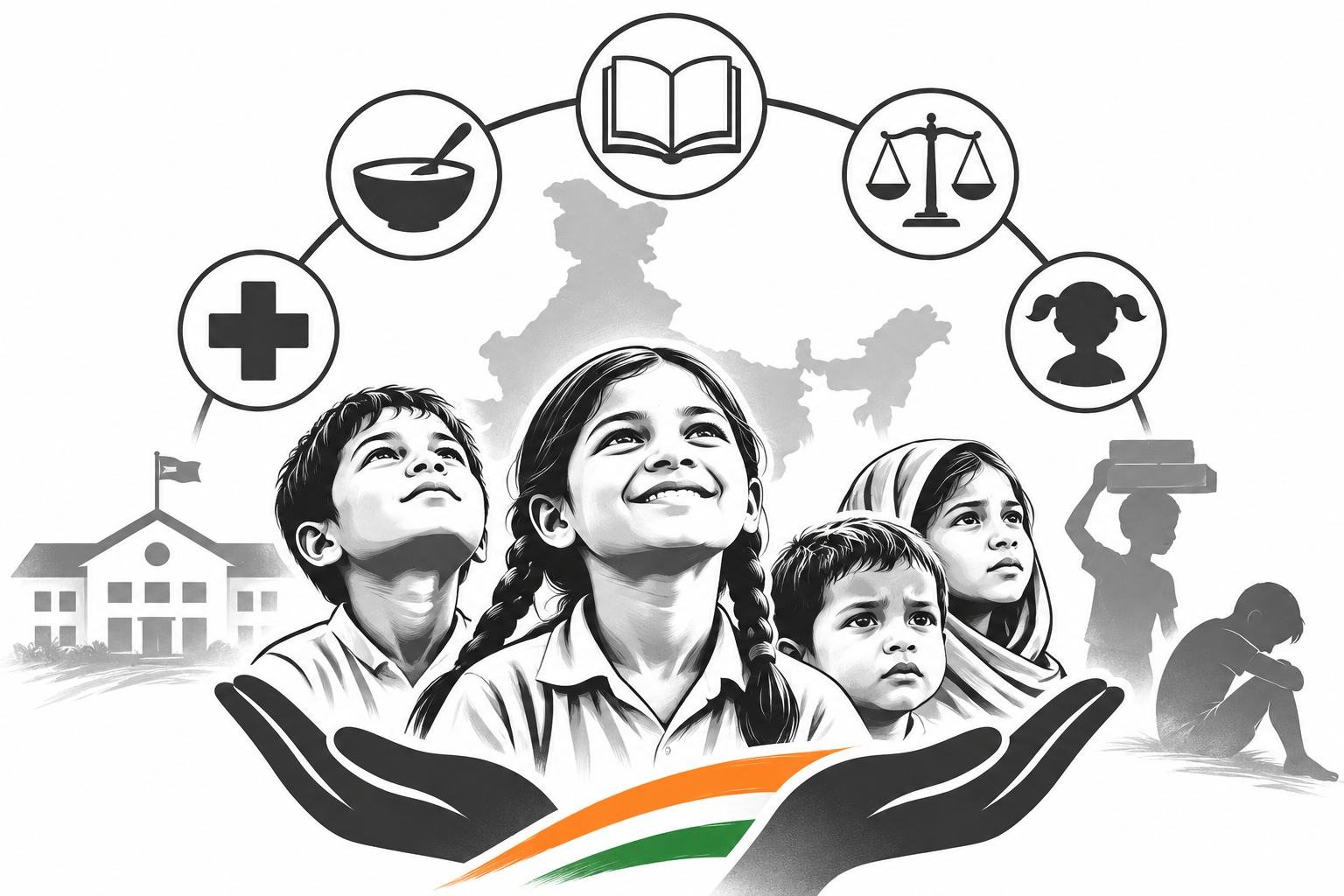
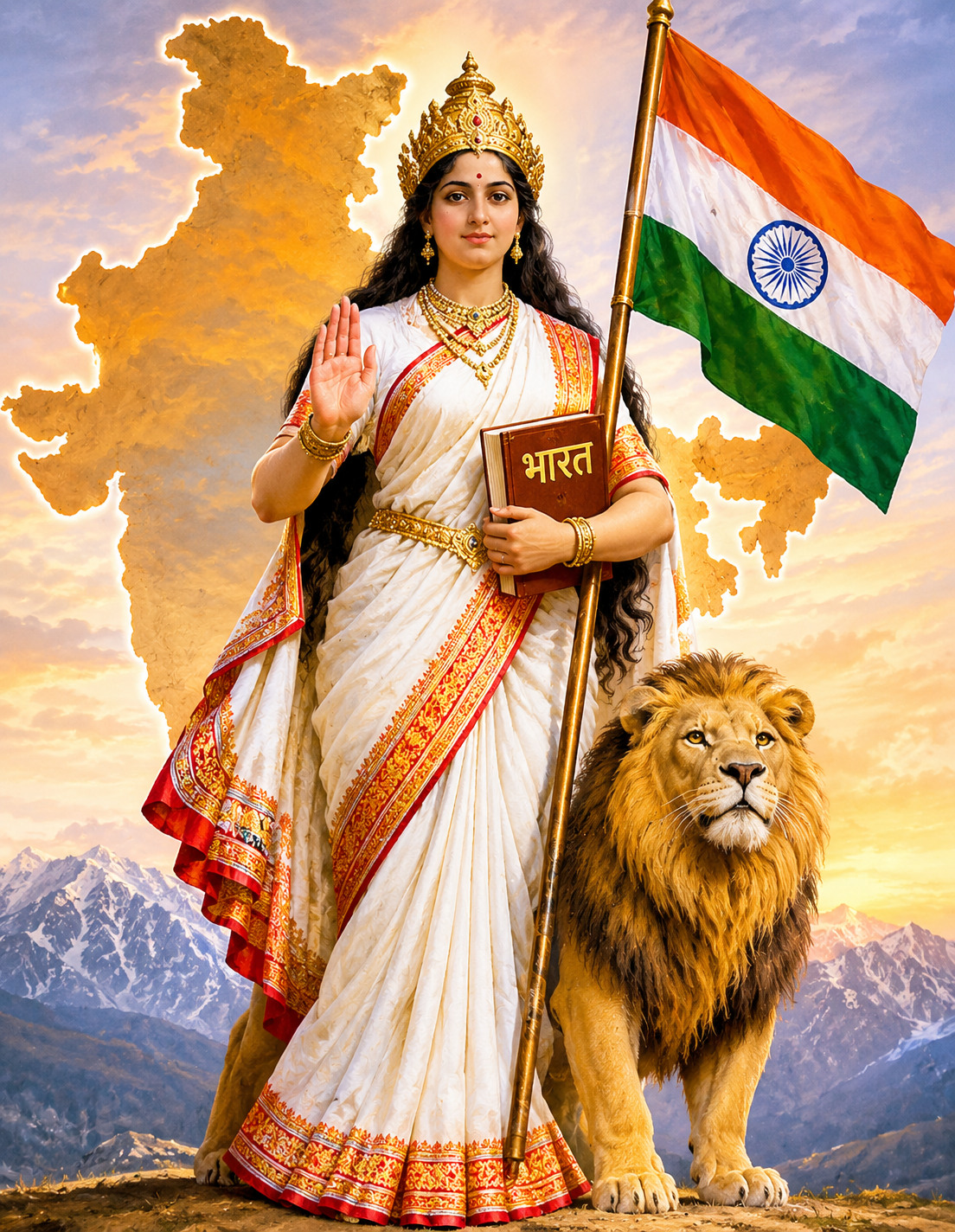
India’s trajectory as the world’s fastest-growing major economy and fourth-largest military power, supported by advanced space and defence infrastructure, often obscures the lived realities of its children, who constitute nearly 40 per cent of the country’s total population. While macroeconomic indicators and India’s edge in IT and BPM capabilities project geopolitical strength, persistent child malnutrition, high school dropout rates, rising crimes against children, systemic gender bias and shrinking budgetary allocations remain serious causes for concern. Hence, Bal Diwas (Children’s Day), observed on November 14, is an appropriate occasion to revisit the state of children in India.
CHILD POPULATION
India has nearly 437 million children under the age of 18, constituting approximately 39 per cent of the country’s total population. According to UNICEF and Census data, roughly 24 per cent of India’s population is below the age of 15, including about 13 per cent in the 0–5 age group, while adolescents aged 15–17 comprise nearly 6 per cent. This massive cohort requires urgent policy attention, particularly in the areas of early childhood nutrition, universal quality education and adolescent skill development, to secure the country’s demographic dividend.
RIGHTS OF THE CHILD AND INDIAN LAWS
India ratified the United Nations Convention on the Rights of the Child (UNCRC) in December 1992. The Convention defines a child as every human being below the age of 18 years. Its articles outline a comprehensive range of rights and policy guidelines for member states. Children’s rights are commonly grouped into four broad categories:
Right to Survival: Access to basic necessities for life, including adequate nutrition, shelter, water and medical care.
Right to Development: Opportunities to reach their full potential through education, play, leisure, cultural activities and access to information.
Right to Protection: Safety from all forms of violence, abuse, neglect, exploitation, hazardous child labour and harmful substances.
Right to Participation: Freedom of thought, expression and association, along with the ability to participate in decisions that affect their lives.
The Indian Constitution encompasses many of the rights included in the UNCRC as fundamental rights. India has also enacted child-protection legislation, including the Protection of Children from Sexual Offences (POCSO) Act, 2012; the Juvenile Justice Act, 2015; and the Child Labour Amendment Act, 2016, which prohibited the employment of children below 14 years and regulated the working conditions of adolescents.
Several constitutional provisions incorporate the principles of the UNCRC. Article 21A guarantees free and compulsory education for children aged 6 to 14, while Article 24 prohibits the employment of children below 14 in hazardous occupations. Article 39 directs the State to ensure that children are provided opportunities to develop in a healthy manner and in conditions of freedom and dignity.
DISSECTING THE SITUATION
Economists frequently cite India’s young population as an automatic engine of future economic growth. In reality, a demographic dividend is not guaranteed; it depends entirely on investments in early childhood health, nutrition and quality education.
An unvarnished and critical analysis of children’s rights in India reveals a wide and troubling gap between a remarkably progressive legal framework and its faltering implementation on the ground.
CHILD MALNUTRITION AND POVERTY
Despite record food grain production and flagship welfare schemes, undernutrition remains one of India’s most persistent developmental failures. According to National Family Health Survey-6 (NFHS-6) data released in May 2026, 29.3 per cent of Indian children under five are stunted (low height-for-age), 31.8 per cent are underweight (low weight-for-age), and 19 per cent experience wasting (low weight-for-height). The three Indian states with the highest overall burden of child malnutrition are Madhya Pradesh, Jharkhand and Bihar.
UNICEF has warned that the current global food crisis, accompanied by escalating food inflation, has placed more than 150 million children in India at risk of becoming malnourished.
Malnutrition is not merely a humanitarian issue; it is an economic time bomb. Stunting during early childhood can cause irreversible damage to brain development. Children deprived of essential micronutrients during the first 1,000 days of life face poorer learning outcomes in school and significantly reduced lifetime earning potential.
While government programmes such as POSHAN Abhiyaan and the Integrated Child Development Services (ICDS) have made measurable progress in reducing severe acute malnutrition and improving sanitation, the pace of improvement remains too slow to fully prepare the workforce of the 2030s.
Child poverty extends beyond household income to include deprivation of clean water, sanitation, housing and healthcare. More than 20.6 crore children in India still lack access to at least one essential service, while 6.2 crore face two or more overlapping deprivations.
THE EDUCATIONAL FUNNEL: ACCESS WITHOUT EQUITY
Over the past two decades, India has achieved near-universal enrolment at the primary school level. Yet, the education system continues to function as a steep funnel, pushing millions of adolescents out before they complete their schooling.
School dropout rates remain a serious concern. According to UDISE 2025–26 data, the dropout rate at the Preparatory Stage (Grades 3–5) is 1.8 per cent, at the Middle Stage (Grades 6–8) it is 3.6 per cent, and at the Secondary Stage (Grades 9–10) it is 7 per cent. At the secondary level, the overall retention rate in 2025–26 stands at just 51.9 per cent. Nearly half of the children who enter Class 1 do not make it through Class 10.
Even among children who remain enrolled, gaps in foundational literacy and numeracy mean that years spent in classrooms often fail to translate into employable skills. Annual Status of Education Report (ASER) findings have repeatedly highlighted that classroom attendance does not necessarily translate into basic learning competencies. A significant number of children in upper-primary classes continue to struggle with basic reading and arithmetic.
More than 4.6 crore children aged 6 to 17 remain outside the formal schooling system.
The post-pandemic shift also exposed deep structural inequalities. Children from economically weaker sections, marginalised castes and remote tribal areas lacked access to digital devices and internet connectivity, temporarily turning education into a privilege largely available to urban and affluent families.
PROTECTION FAILURES
The Right to Protection faces some of the most serious and persistent violations. Despite stringent legal prohibitions, India has more than 10 million child workers, a figure believed to be an underestimation because of the hidden nature of domestic work, employment in informal roadside eateries and work in home-based micro-enterprises.
The 2016 amendment to the Child Labour Act drew fierce criticism from child rights activists for permitting children to work in family enterprises outside school hours. Critics argue that this provision institutionalised traditional labour under the guise of familial skill-sharing. It is a loophole that blurs the distinction between legitimate socialisation and economic exploitation.
The legal framework governing child protection in India, anchored by the Protection of Children from Sexual Offences (POCSO) Act, 2012, is among the strictest in the world. However, official crime data underscores a severe crisis in prevention and judicial delivery.
According to the National Crime Records Bureau (NCRB), overall crimes against children rose by 6 per cent in 2024 compared to the previous year, reaching 1.87 lakh registered cases. More than 69,191 cases were registered under the POCSO Act, involving over 70,000 child victims. Furthermore, the proliferation of digital platforms has introduced new threats, including online child sexual exploitation and abuse material (CSEAM).
THE GIRL CHILD
Deep-rooted patriarchal norms continue to penalise female children from before birth through adolescence, undermining legislative prohibitions and awareness campaigns.
Despite the Pre-Conception and Pre-Natal Diagnostic Techniques (PCPNDT) Act, an entrenched preference for sons—driven by dowry practices, inheritance norms and expectations of support in old age—continues to skew sex ratios at birth in several states.
Female foeticide in India remains an alarming crisis. Millions of girls have been selectively aborted because of son preference and dowry-related considerations, severely distorting sex ratios and fuelling gender-based discrimination and violence. According to the UNFPA State of World Population Report, India accounts for 45.8 million of the world’s 142.6 million “missing females” over the past 50 years.
Roughly 460,000 girls went missing at birth every year in India between 2013 and 2017. About two-thirds of this deficit is attributed directly to prenatal sex-selective abortions.
Where a girl child is perceived as an economic burden rather than an asset, discrimination manifests in both subtle and overt forms.
THE MISSING PILLAR: CHILD PARTICIPATION
Under the UNCRC framework, participation means giving children the right to express their opinions and be heard in decisions that affect them. In India, children are traditionally viewed as passive beneficiaries of charity, welfare programmes or state benevolence rather than as active stakeholders in society.
The Right to Play, recognised under Article 31 of the UNCRC, faces several challenges in India, including child labour, academic pressure and shrinking urban green spaces. While government initiatives such as Khelo India promote sports, equitable access to playgrounds remains limited, particularly for children from marginalised communities.
Despite policies such as the Right to Education (RTE) Act, 2009, and the UNCRC framework, the right to play remains restricted for many Indian children. More than 23 per cent of Indian schools lack playgrounds, while the National Education Policy (NEP) 2020 relaxes campus requirements. Practical barriers such as intense academic pressure, rapid urbanisation, unsafe streets, poverty, child labour, screen addiction and gender disparities further deprive children of opportunities for outdoor play.
SHRINKING BUDGETARY PRIORITIES
The clearest measure of policy prioritisation is public finance. While absolute rupee allocations for child-centric schemes have increased alongside the expansion of the overall Union Budget, the relative share dedicated to children has steadily declined.
An analysis of Union Budgets by child rights organisations shows that the share of the “Budget for Children” fell from 4.76 per cent of total Union expenditure in 2012–13 to 2.29 per cent in 2025–26. It edged up only marginally to 2.47 per cent, amounting to ₹1,32,296.85 crore, in 2026–27.
Total central spending on children remains around 0.34 per cent of GDP—a fraction of the 4–6 per cent benchmark recommended by child welfare experts and policy frameworks.
Children’s Day in India cannot remain an annual exercise in sentimental rhetoric, cultural performances and ministerial photo opportunities. Making India great requires moving beyond passive symbolism and confronting uncomfortable structural realities. Public expenditure on child-specific healthcare, nutrition and education must be scaled up significantly, moving from token allocations to genuine priorities in Union and State budgets.
True child rights protection begins at the village panchayat and municipal ward levels through active social auditing, ensuring that welfare schemes reach the most marginalised Dalit, Adivasi, migrant and disabled children.
India’s current developmental trajectory illustrates a classic policy imbalance: prioritising physical infrastructure, capital expenditure and geopolitical hard power over social infrastructure and human capital.
Over the next decade, India will almost certainly achieve the external trappings of a superpower: a multi-trillion-dollar economy, a seat at major global forums, cutting-edge space and digital capabilities, and formidable military strength.
Yet, true greatness cannot coexist with widespread hunger and wasted human potential. A nation cannot stand tall on the world stage while millions of its children are stunted in growth, deprived of classrooms and robbed of their childhoods.
India’s destiny will not be decided solely in the boardrooms of Mumbai, the technology parks of Bengaluru or the diplomatic corridors of New Delhi. It will be decided in its rural health centres, primary school classrooms and, above all, in the lives of its children. If India invests in its youngest citizens with the same vigour that it invests in highways and rockets, its rise as a global superpower will not merely be rapid—it will be unstoppable.
(Joseph Anthony Gathia is a senior journalist and author of field-based books on children in India. He has served as a children’s rights media trainer with the International Federation of Journalists (IFJ), Brussels, and is a former member of the World Organisation Against Torture (OMCT), Geneva.)


[[comment.comment_text]]