Chhath Puja: A Celebration of Faith, Nature and the Enduring Spirit of Indian Culture

 an hour ago
India is a land of festivals, where traditions are not merely celebrated but experienced through generations. Every festival reflects the beliefs, values and collective memories of society. Among these celebrations, Chhath Puja holds a distinctive place in India's cultural and spiritual landscape. Deeply rooted in the traditions of Bihar, Jharkhand, eastern Uttar Pradesh and the Mithila region of Nepal, Chhath is much more than a religious festival. It is an expression of faith, gratitude towards nature, family values, social harmony and cultural identity. Its simplicity, discipline and ecological significance make it one of the most meaningful festivals of Indian society.
Chhath is dedicated to the worship of the Sun God, Surya, and Chhathi Maiya. The Sun is the ultimate source of energy and life on Earth. It sustains agriculture, maintains ecological balance and makes the existence of living organisms possible. Through the ritual of offering Arghya to the setting and rising Sun, devotees express their gratitude for the natural forces that sustain life. What makes this tradition particularly meaningful is that it recognises the importance of nature in human existence. At a time when the world is facing climate change, environmental degradation and water scarcity, the underlying philosophy of Chhath deserves wider appreciation.
The festival is traditionally observed over four days, beginning with Nahay-Khay, followed by Kharna, the evening offering to the setting Sun and, finally, the morning Arghya to the rising Sun. Each stage reflects discipline, purity, devotion and self-restraint. Devotees, particularly those observing the fast, follow strict dietary practices and undertake rigorous fasting, often without water. Their dedication reflects remarkable determination and spiritual commitment. These practices also remind us of the importance of patience, self-discipline and control over material desires in contemporary life.
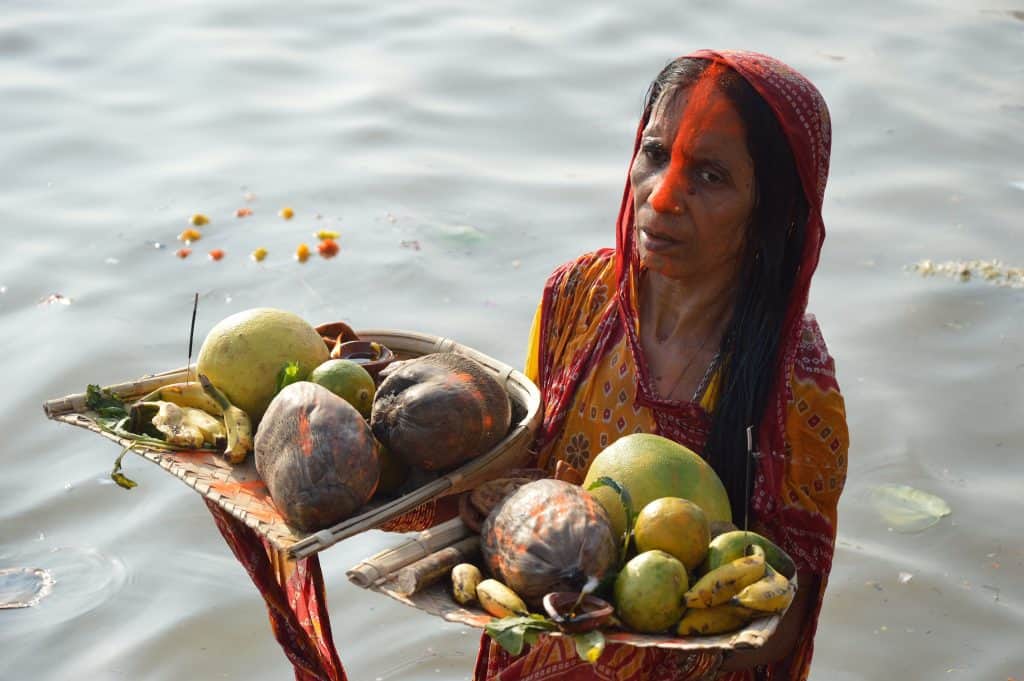
One of the most beautiful aspects of Chhath is its extraordinary simplicity. There is no emphasis on elaborate temple arrangements or expensive offerings. Fruits, sugarcane, coconuts, thekua and other seasonal agricultural products form the principal offerings. Traditionally arranged in bamboo baskets and soop, these items represent the close relationship between the festival, rural life and local craftsmanship. The celebration also supports farmers, fruit sellers, bamboo artisans, potters and small traders, generating considerable economic activity at the grassroots level. Thus, Chhath has cultural as well as economic significance.
The folk songs associated with Chhath are among the most precious expressions of Bihar's cultural heritage. They give the festival its emotional depth and distinctive identity. These songs express devotion, family affection, the aspirations of ordinary people and their intimate relationship with nature. Their beauty lies in their simplicity and their ability to communicate profound emotions through familiar words and melodies.
The legendary folk singer Sharda Sinha, popularly known as the Bihar Kokila, played an extraordinary role in bringing the folk traditions of Bihar to national and international audiences. Her soulful voice gave Chhath songs a unique identity and helped preserve the region's musical heritage. Her celebrated compositions, including "केलवा के पात पर उगेलन सूरजमल झाँके-झुके", "पहिले-पहिल छठी मईया" and "हो दीनानाथ", continue to evoke deep emotions among devotees. Her singing was not merely an artistic performance; it was a heartfelt representation of the cultural soul of Bihar.
Another much-loved traditional composition, "काँच ही बाँस के बहंगिया, बहंगी लचकत जाए", captures the simplicity and devotion associated with the preparation of Chhath offerings. Similarly, the familiar folk expression "उग हो सूरज देव, भइल अरघ के बेर" reflects the anticipation and devotion of worshippers waiting for the rising Sun. These songs are deeply connected with the everyday experiences of rural households and have been passed from one generation to another. They preserve not only musical traditions but also the language, emotions and collective memories of the region.
The cultural importance of Chhath extends beyond religious observance. It is a festival that strengthens family relationships and community participation. People working in distant cities and abroad often return to their native villages and towns to celebrate it with their families. Neighbours cooperate in cleaning roads, decorating ghats and organising arrangements for the rituals. The festival creates an atmosphere of collective responsibility, mutual assistance and social harmony. It brings together people from different economic and social backgrounds, reinforcing the idea that nature's blessings are available to everyone equally.
The contribution of women in preserving this tradition deserves special recognition. For generations, women have played a leading role in observing the rituals, maintaining traditional practices and transmitting cultural values to younger generations. Their dedication, patience and discipline give the festival much of its emotional strength. At the same time, Chhath is a collective celebration in which men, women, children and elderly people participate with equal enthusiasm.
Perhaps the most significant message of Chhath is its deep respect for nature. The festival is celebrated on the banks of rivers, ponds and other water bodies. Water, sunlight, soil and agricultural produce are integral to its rituals. This association makes Chhath particularly relevant to contemporary environmental concerns. Unfortunately, many rivers and traditional water bodies are increasingly affected by pollution, encroachment and irresponsible human activities.
It is important to understand that worshipping rivers and water bodies during a festival must also inspire us to protect them throughout the year. The true spirit of Chhath should encourage cleanliness, water conservation, reduced plastic consumption and responsible waste disposal. Local administrations, educational institutions, social organisations and citizens must work together to ensure clean and safe ghats. Eco-friendly celebrations should become an integral part of the festival rather than a temporary arrangement.
Chhath also represents the cultural identity of Bihar. For millions of people, it is an emotional connection with their ancestral homes, native language and traditional way of life. The fragrance of thekua, the sound of folk songs, the bamboo baskets, the decorated ghats and the collective prayers create an atmosphere that is difficult to describe in words. For migrant families, the festival becomes a means of preserving their cultural roots and introducing younger generations to their heritage.
Over the years, Chhath has gradually crossed geographical boundaries. Today, it is celebrated with enthusiasm in Delhi, Mumbai, Kolkata, Bengaluru and several other metropolitan cities. Indian communities living abroad have also adopted this tradition with devotion. This growing recognition demonstrates how a regional cultural practice can acquire national and international significance without losing its original character. Chhath has become an important expression of India's cultural diversity and the strength of its living traditions.
Educational institutions and universities can contribute to preserving this heritage by encouraging research on folk literature, traditional music, social practices and the environmental dimensions of Chhath. Documentation of folk songs and regional traditions is particularly important because much of this cultural knowledge has been transmitted orally. The legacy of artists like Sharda Sinha reminds us that folk music is not merely entertainment; it is an important medium of cultural preservation and social expression.
Chhath also offers a broader lesson about the meaning of development. Economic progress is essential, but it must remain compatible with environmental sustainability, social inclusion and cultural preservation. A society cannot claim to be truly developed if its rivers are polluted, its traditional knowledge is neglected and its community relationships are weakened. The values reflected in Chhath encourage a balanced approach to development in which modern aspirations coexist with traditional wisdom.
The offering of Arghya to the setting Sun carries a particularly beautiful philosophical message. It teaches us to respect both the rising and setting phases of life. The setting Sun is worshipped with the same devotion as the rising Sun. This symbolism reminds us that every stage of life has its own dignity and significance. It also conveys the importance of gratitude, humility and acceptance.
Ultimately, Chhath Puja is not confined to rituals, fasting and prayers. It represents a way of life founded on faith, simplicity, discipline, environmental responsibility and collective harmony. The soulful folk songs of Sharda Sinha, the devotion of millions of worshippers and the collective participation of communities have made this festival an enduring symbol of Bihar's cultural heritage.
The true significance of Chhath lies in carrying its spirit beyond the festival days: respecting nature, protecting rivers, preserving folk traditions, strengthening social relationships and practising gratitude in everyday life. Chhath is not merely a celebration of the Sun; it is a celebration of life, humanity and our timeless bond with nature.
(The authot, a former Vice-Chancellor of Dr. Shyama Prasad Mukherjee University, Ranchi, Jharkhand, is currently serving as the Principal of T.P.S. College, Patna.)









[[comment.comment_text]]