The Politics of Pedestals!
 4 months ago
India is a diverse country. We have different religions, different cultures, different languages, and different ways of life. Yet there is one thing that seems remarkably common across all of them our tendency to place women, mothers, daughters, rivers, and even the land itself on a divine pedestal while simultaneously taking them for granted in everyday life.
I have a theory about this.
The more divinity people assign to you, the more forgiveness they expect from you. Think about it. We call women goddesses. We call mothers "Maa." We call daughters "Lakshmi." We call little girls "Kanjaks." We call our country "Bharat Mata." We call our rivers "Mata." Everywhere you look, there is a divine title waiting to be attached to something feminine. It sounds beautiful, respectful even. But I often wonder whether this obsession with divinity is actually a form of respect or merely a convenient way of escaping accountability. Because what happens once someone becomes a goddess? What happens once someone becomes Maa? Suddenly, they are expected to forgive endlessly, sacrifice endlessly, understand endlessly, and tolerate endlessly. After all, how can a goddess get angry? How can a mother say no? How can Maa put herself first? How can Lakshmi have boundaries? The divine image becomes a burden. The pedestal becomes a cage.
A mother is worshipped in speeches and social media posts, yet she often remains the most exhausted person in the household. She is the first one to wake up and the last one to sleep. Her labor is expected rather than appreciated. Her sacrifices are celebrated but rarely reduced. Every Indian has heard some version of the sentence, "Agar maa nahi samjhegi toh kaun samjhega?" If mother won't understand, then who will? Hidden inside that seemingly innocent sentence is an expectation that mothers should endlessly adjust, endlessly forgive, and endlessly carry everyone else's emotional and physical burdens. Somehow, the title of Maa becomes a reason to demand more from her rather than give more to her. The same contradiction appears online every single day. Some of the most abusive comments directed at women often come from profiles proudly displaying religious identities. Their bios are filled with words like "Sanatani," "Radhe Radhe," "Jai Shri Ram," or other declarations of devotion. Their profile pictures contain gods and temples. Their timelines are filled with religious quotes.
Yet underneath a woman's post, they will casually use language so degrading that most people would hesitate to say it aloud in public. It is almost as if some people believe that displaying religion publicly gives them a moral certificate that excuses their behavior privately. As though faith itself becomes a shield against accountability. If anything you do does not please them, they feel entitled to insult, harass, threaten, or shame you because, in their minds, they are standing on the side of righteousness. But no religion teaches harassment. No faith teaches cruelty. No god asks followers to humiliate strangers on the internet. What is being defended in these moments is not religion, it is entitlement. Religion simply becomes the costume worn by entitlement.
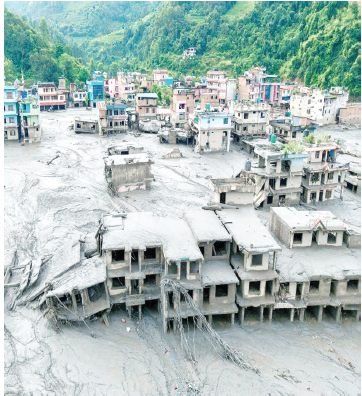
Perhaps the greatest example of this hypocrisy is how we treat our rivers. We call them sacred. We call them mothers. We perform rituals in their honor. We offer prayers to them. We bow before them. Yet many of these same rivers continue to struggle under enormous levels of pollution. Untreated sewage, industrial waste, plastic, and garbage continue to enter major Indian rivers despite countless awareness campaigns and conservation efforts. The same river that is worshipped as Mata often becomes the destination for everything we no longer want. We dump our waste into it.
We immerse non-biodegradable materials into it. We literally wash away our sins in it and then convince ourselves that we have become pure while the river bears the consequences. The irony is difficult to ignore. Countries that simply treat rivers as rivers often maintain waterways clean enough to see through. They do not necessarily worship them. They protect them. They regulate them. They maintain them. They understand that responsibility matters more than symbolism. The river does not need another prayer if the prayer is followed by pollution. The river does not need another title if the title is not followed by care.And that, perhaps, is the larger problem. We have become very comfortable with symbolic respect because symbolic respect costs nothing.
Calling a woman a goddess, Calling your mother Maa, Calling a river Mata costs nothing. Posting devotional messages costs nothing. Sharing festival greetings costs nothing. Real respect, however, is expensive because it demands action. Real respect requires sharing household labor. Real respect requires respecting consent. Real respect requires listening to women even when what they say is uncomfortable. Real respect requires refusing to tolerate abuse, even when it comes from someone who appears religious. Real respect requires protecting rivers instead of worshipping them while destroying them.
What fascinates me most is how often the person pointing out these contradictions becomes the villain. The person throwing garbage into the river is not questioned. The person asking why the river is polluted Is. The individual calling women names online is not questioned. The woman speaking against harassment is. The person behaving irresponsibly is not labelled a sinner, but the person demanding accountability often is. Suddenly, the individual asking difficult questions becomes the "paapi." The troublemaker. The disrespectful one. The anti-cultural one. The anti-religious one. And even anti- national .It is as though acknowledging reality itself has become offensive.
But problems do not disappear because we refuse to talk about them. Ignorance may feel comfortable, but it fixes nothing. Silence protects systems, not people. And accountability cannot begin until we are willing to look honestly at our contradictions.Maybe the deeper problem begins the moment we stop seeing people as people and start seeing them as symbols. The moment we put someone on a pedestal, we stop allowing them to be human. We stop allowing them to have flaws, boundaries, anger, exhaustion, bad days, mistakes, and imperfections. We expect them to become larger than life because that expectation serves us. It allows us to demand unlimited patience from mothers, unlimited sacrifice from women, unlimited forgiveness from daughters, and unlimited tolerance from anyone we have conveniently labelled divine. Years ago, I wrote a quote that said, "People are the miniatures of their mistakes." Human beings make mistakes. That is not a flaw in the system, that is the system. Mistakes are evidence of humanity. Every person you admire, every person you love, every person you worship has made mistakes and will continue to make them. The difference between maturity and immaturity is not whether mistakes happen.
The difference is accountability. The people who take accountability for their actions are often the most mature people in the room because they are willing to change, evolve, learn, and grow. They understand that being wrong is not the end of the world. Refusing to learn from being wrong Is. But accountability becomes nearly impossible when someone is placed on a pedestal. A goddess cannot fail. A saint cannot be flawed. A Mata cannot say no. A divine figure cannot disappoint anyone. The burden of perfection eventually replaces the freedom to be human. Ironically, the very people who place others on these pedestals are often the first ones to exploit the endless forgiveness that comes with them. The pedestal becomes less about respect and more about convenience. If I call you divine, then perhaps I can expect you to tolerate what I would never tolerate from anyone else.And perhaps this is where the conversation becomes uncomfortable.
Because if the people who claim to understand religion the most, the people who claim to be the protectors of culture, tradition, and faith, are right in their methods, then we are giving extremists everywhere the designation they have always wanted, the protector of religion. After all, that is the argument every religious extremist in history has made. That they are not controlling people they are protecting faith. That they are not restricting dignity, they are preserving culture. That they are not silencing others, they are defending religion.
If preserving religion means controlling women, policing their choices, harassing them for speaking up, humiliating them for disagreeing, or treating them as lesser human beings, then we need to ask ourselves an uncomfortable question-how different is that mindset from the one that groups like the Taliban proudly claim for themselves? They too call themselves protectors of religion. They too justify restrictions in the name of faith. They too believe that preserving a system is more important than preserving individual dignity. The names may be different. The scale may be different. The context may be different. But the question remains the same, when does protecting religion stop being about faith and start becoming about power? Because the moment religion becomes a justification for exploiting, controlling, humiliating, harassing, or silencing another human being, something has gone terribly wrong. And if, in the name of religion, politics, culture, tradition, or the system, people start exploiting human beings, then perhaps it is time to remind every self-appointed guardian of faith of something they conveniently forget.
Even Shri Krishna knew that there comes a point where enough is enough.
The Mahabharata was not fought because someone questioned authority. It was not fought because someone refused blind obedience. At its heart was a lesson about justice, dignity, and accountability. An entire court witnessed the humiliation of Draupadi. Powerful men sat in silence. Rules were quoted. Traditions were cited. Positions were protected. The system kept functioning exactly as it was designed to function. And yet it was wrong.Profoundly wrong. The lesson was never that systems must be preserved at all costs. The lesson was that no system, no politics, no tradition, and no interpretation of religion can be allowed to stand above human dignity. Because the moment dignity is sacrificed to protect power, religion loses its soul.
The moment a woman is expected to tolerate humiliation so that society can preserve its comfort, religion loses its purpose. The moment accountability disappears and entitlement takes its place, faith becomes performance. Perhaps the real question is not who is protecting religion. The real question is whether religion is protecting what it was meant to protect in the first place-humanity, dignity, compassion, and justice. Because no title, no tradition, no culture, no scripture, and no system should ever become a license to exploit another human being. And if they do, then maybe the most religious thing a society can do is stand up and say- enough is enough. Maybe that is why we need fewer pedestals and more honesty. Stop making people divine for selfish reasons.
Stop assigning holiness where basic humanity would do. Stop expecting endless understanding because you have given someone a title. Stop confusing worship with respect. Stop confusing symbolism with responsibility. Women do not need to be goddesses to deserve dignity. Mothers do not need to be saints to deserve care. Daughters do not need to be Lakshmi to deserve respect. Rivers do not need to be Mata to deserve protection. They simply need to be treated as what they already are. Human beings and living ecosystems worthy of consideration, responsibility, and accountability.
Because accountability begins where symbolism ends. The river does not need another title. The mother does not need another slogan. The woman does not need another pedestal. They need responsibility. They need respect. And most importantly, they need us to stop confusing worship with care.



[[comment.comment_text]]