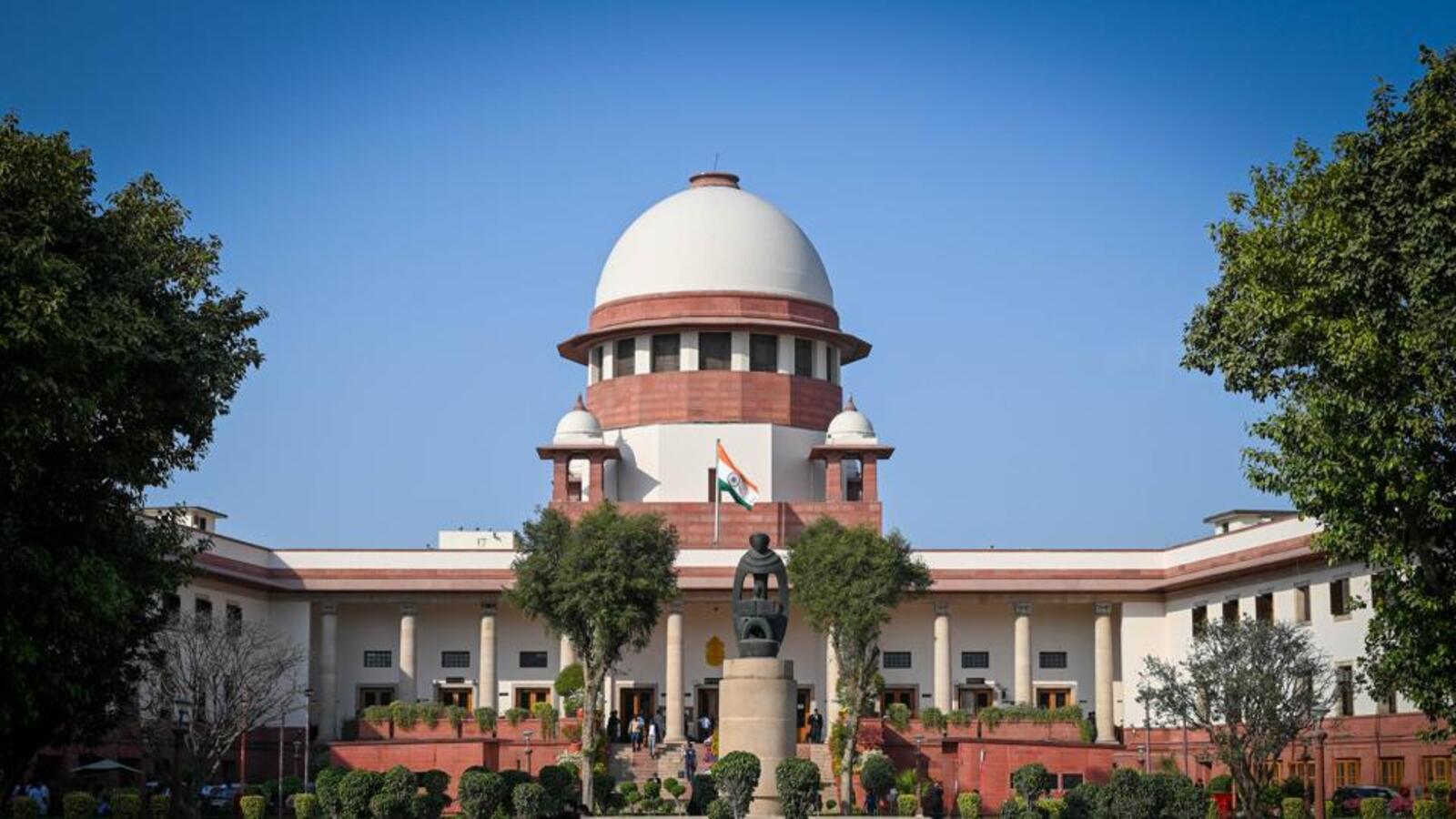
Balancing Protection and Fairness: Supreme Court Flags Misuse of Criminal Law in Matrimonial Disputes

 4 months, 1 week ago
Marriage, in its ideal form, is a partnership built on trust, dignity and mutual respect. Yet, when relationships fracture, the fallout often extends far beyond the personal sphere, spilling into courtrooms and police stations. In India, matrimonial disputes have increasingly taken on a criminal dimension, transforming private discord into public litigation. It is in this context that the Supreme Court has recently expressed concern over a growing trend — the use of criminal law as a pressure tactic in family disputes.
The Court’s concern is not directed at the existence or necessity of protective laws. Statutes dealing with dowry harassment, domestic violence, and child protection were enacted to address deep-rooted social evils. They remain indispensable safeguards for vulnerable individuals, particularly women and children. However, the misuse of these provisions in the heat of matrimonial conflict risks distorting their purpose and undermining the justice system itself.
Across courts in India, it is now common to see matrimonial disputes accompanied by a parallel stream of criminal complaints. Allegations under anti-dowry laws, domestic violence legislation, and even serious offences are sometimes invoked at moments of marital breakdown — during divorce proceedings, custody battles, or financial negotiations. The Supreme Court has noted that in certain cases, these complaints are drafted in broad, omnibus terms, lacking specific details or credible supporting material.
The consequences of such allegations are immediate and severe. Criminal law, by its very nature, carries coercive power. Arrests, reputational damage, professional setbacks, and psychological stress often follow even before the allegations are tested in court. For the accused, the process itself becomes punishment. At the same time, the justice system is burdened with cases that may not meet the threshold of criminal prosecution, diverting valuable time and resources away from genuine grievances.
The Court has carefully drawn a distinction that must not be lost in public discourse. It is not discouraging victims from coming forward. Rather, it is cautioning against the instrumental use of criminal proceedings as a bargaining tool — a means of exerting pressure for settlement, extracting financial concessions, or gaining an advantage in custody disputes. Such “arm-twisting,” as judicial observations have described it, creates a dual harm: it exposes individuals to unwarranted criminal prosecution and weakens the credibility of laws designed to protect real victims.
At the constitutional level, the issue strikes at the heart of fundamental rights. Article 21 guarantees personal liberty, while Article 14 ensures equality before the law. These protections extend equally to complainants and the accused. Criminal jurisprudence rests on foundational principles — presumption of innocence, fair investigation, and proof beyond reasonable doubt. When courts emphasise the need for scrutiny before acting on allegations, they are reaffirming these basic safeguards.
Yet, the balance is delicate. Over-correction can be as dangerous as misuse. Excessive scepticism or procedural hurdles may deter genuine victims from seeking justice, particularly in a society where stigma, fear and social pressure already discourage reporting of abuse. The challenge, therefore, is not to dilute protective laws but to refine their implementation.
This tension becomes even more pronounced in cases involving children. Allegations under child protection laws in the backdrop of matrimonial disputes place courts in a difficult position. On one hand, the law must respond swiftly and sensitively to protect minors. On the other, false or exaggerated allegations can irreparably damage lives. Judicial prudence in such cases demands a careful blend of empathy and evidentiary discipline.
Similar complexities arise in cases under anti-cruelty provisions and domestic violence legislation. These laws were enacted to address systemic injustices — dowry-related abuse, domestic oppression, and gender-based violence. They have provided critical remedies to countless women. However, instances of misuse, though not the norm, are significant enough to warrant institutional introspection.
The real impact of frivolous or malicious litigation in matrimonial disputes is far-reaching. For individuals, it leads to emotional distress, financial strain, and social stigma. For the judiciary, it contributes to mounting pendency and delays in adjudication. For society at large, it erodes trust — both in the legal system and in the narratives of genuine victims. In a country where underreporting of abuse remains a serious concern, any erosion of credibility is a step backward.
What, then, is the way forward?
The answer lies not in weakening the law but in strengthening its processes.
First, investigations must be professional, impartial and evidence-driven. Police officers must be trained to distinguish between genuine complaints and those motivated by collateral objectives. Early-stage scrutiny, if conducted carefully, can prevent unnecessary criminalisation without discouraging legitimate grievances.
Second, courts must exercise their gatekeeping role effectively. Where allegations are vague, exaggerated or inherently improbable, early judicial intervention can prevent misuse of process. This does not mean denying access to justice; it means ensuring that criminal law is invoked responsibly.
Third, adherence to principles of natural justice is essential across all forums — from trial courts to family courts and quasi-judicial bodies. Decisions must be based on evidence and reasoned analysis, not assumptions or societal biases.
Fourth, there must be accountability for demonstrably malicious complaints. The legal framework already distinguishes between cases that fail for lack of proof and those that are intentionally false. Enforcing this distinction in practice will act as a deterrent against misuse while protecting bona fide complainants.
Fifth, the systemic delays in matrimonial and family disputes must be addressed. Lengthy proceedings often incentivise parties to resort to criminal law as a shortcut to expedite outcomes or force settlements. Faster resolution of divorce, maintenance and custody matters can significantly reduce this tendency.
Finally, institutional capacity-building is critical. Judges, police personnel, and other stakeholders must be equipped with the skills and sensitivity required to handle matrimonial disputes that straddle civil and criminal dimensions.
Interestingly, workplace jurisprudence under the sexual harassment framework offers a useful parallel. The emphasis there is no evidence-based inquiry, adherence to natural justice, and a clear distinction between unproven and malicious complaints. This balanced approach ensures that genuine grievances are addressed while safeguarding against misuse — a model worth emulating in matrimonial contexts.
At its core, the Supreme Court’s message is one of balance. Protecting victims and safeguarding the rights of the accused are not mutually exclusive objectives. They are complementary pillars of a just legal system. Matrimonial disputes, with their emotional intensity and complex dynamics, require a particularly nuanced approach.
The law must remain a shield for those who need protection, not a weapon for those seeking leverage. Ensuring this balance is not merely a judicial responsibility; it is a collective obligation of investigators, lawyers, policymakers and society at large.
In the final analysis, justice cannot be one-sided. A system that is overly punitive risks injustice; a system that is overly sceptical risks silence. The path forward lies in strengthening processes, refining institutional responses, and preserving the integrity of laws that serve as lifelines for the vulnerable. Only then can the legal system inspire confidence — as an instrument of fairness, not as a tool of coercion.
(The author, a well-recognised lawyer and campaigner for female rights, has authored “Breaking the Silence: A Handbook on the PoSH Act”. She is a prominent Internal Committee Member of NALSA and INSA.)







[[comment.comment_text]]