India's labour force: The Invisible Hands That Keep India Running

 2 days, 2 hours ago
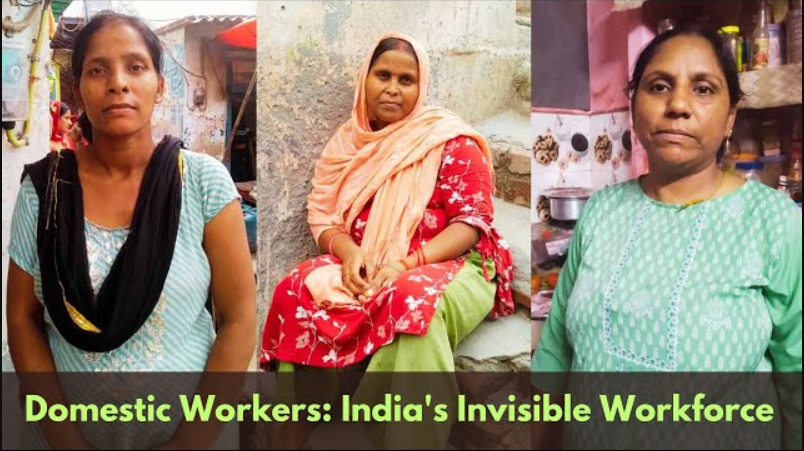
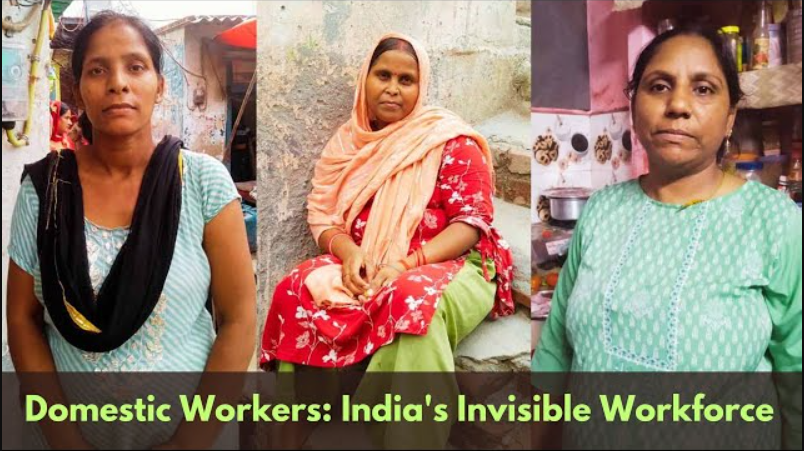
For centuries, societies across the world have measured value through wages, salaries, profits, and productivity figures. A person who works in a factory, an office, a farm, or a shop receives a pay check, and that pay check becomes proof of the value of their labour. Yet there exists another form of work that is performed every day, often from dawn until late at night, without holidays, promotions, pensions, or salaries. It is the work performed inside homes, largely by women, and despite being indispensable to families and society, it has remained invisible in economic calculations and public discourse. The recent observation by the Supreme Court of India, which assessed the value of a deceased homemaker's contribution at ₹30,000 per month while deciding compensation in a road accident case, has once again brought attention to a reality that millions of women have lived with for generations. The judgment is significant because it does not merely determine compensation in a legal dispute; it challenges a deeply ingrained social mindset that has long treated domestic labour as something natural, expected, and therefore unworthy of economic recognition.
The importance of this acknowledgment cannot be overstated. Every household depends on a wide range of activities that are essential for daily life. Meals have to be prepared, children have to be cared for, elderly family members need support, homes need to be cleaned and maintained, and countless small responsibilities must be managed every day. These tasks consume time, energy, and skill. If families were required to hire separate workers for each of these responsibilities, the financial cost would be enormous. Yet when these same services are provided by a homemaker, society often assumes they have no economic value simply because no money changes hands. This contradiction has allowed one of the largest forms of labour in the country to remain hidden in plain sight.
The irony is that the evidence proving the economic significance of domestic work has existed for years. India's Time Use Surveys conducted by the National Statistics Office have repeatedly shown that women spend far more time than men performing unpaid household and caregiving activities. The latest findings indicate that women devote nearly eight times as much time to these responsibilities as men. This statistic alone reveals the scale of the imbalance. It also helps explain why women continue to face challenges in participating fully in the formal economy. Time is a limited resource. Every hour spent caring for children, preparing food, washing clothes, or looking after elderly relatives is an hour that cannot be spent earning an income, acquiring new skills, pursuing higher education, or building a career.
This reality is reflected in India's labour force statistics. Despite improvements in education and growing awareness about women's rights, female participation in the workforce remains significantly lower than that of men. According to recent labour force data, only around one-third of women are employed or actively seeking employment, while the corresponding figure for men is nearly double. While factors such as safety concerns, lack of employment opportunities, and social norms all play a role, unpaid domestic work remains one of the most significant barriers preventing women from entering or remaining in the workforce.
Perhaps the most striking aspect of this issue is that the burden of unpaid labour often increases at the very stage in life when many women should be experiencing greater economic independence. Research conducted by economists at Azim Premji University has found a strong connection between marriage and women's withdrawal from paid employment. In many households, marriage still comes with the expectation that women will assume primary responsibility for domestic duties. Professional ambitions frequently become secondary to family obligations. Even highly educated women often find themselves reducing work hours, accepting lower-paying jobs with greater flexibility, or leaving the workforce altogether because the demands of unpaid caregiving leave them with little choice.
This pattern represents a loss not only for individual women but also for the broader economy. Every woman who leaves the workforce due to unpaid domestic responsibilities represents lost productivity, unrealized talent, and diminished economic potential. India has made remarkable progress in expanding educational opportunities for girls and women over the past few decades. More women are attending universities, acquiring professional qualifications, and entering fields that were once dominated by men. Yet education alone cannot guarantee empowerment if social structures continue to place disproportionate caregiving responsibilities on women.
The consequences extend beyond questions of fairness and equality. They have direct implications for India's economic future. Economists have long argued that increasing female labour force participation is one of the most effective ways to accelerate economic growth. When more women participate in the workforce, household incomes rise, poverty declines, consumer spending increases, and overall productivity improves. Countries that have successfully integrated women into the economy have generally experienced stronger and more inclusive growth. India's struggle to achieve higher levels of female workforce participation therefore represents not just a social challenge but an economic one as well.
Comparisons with other countries highlight this reality. While economic development depends on many factors, nations that have managed to create conditions allowing women to balance work and family responsibilities often enjoy higher levels of prosperity. India's economic ambitions require the full utilization of its human capital, and that cannot happen when a large proportion of women remain excluded from productive economic activity due to unpaid domestic obligations. The country's demographic dividend will yield limited benefits if half of the population continues to face structural barriers to employment.
Yet it would be a mistake to interpret the Supreme Court's judgment solely through an economic lens. The issue is fundamentally about recognition and dignity. For decades, homemakers have occupied a paradoxical position in society. Their contributions are essential to the functioning of families and communities, yet they are often described as "not working." This phrase reveals the extent to which society has equated work exclusively with paid employment. A woman who spends twelve hours a day managing a household may be told she does not work, while someone who spends eight hours in an office is recognized as economically productive. Such distinctions ignore the reality that domestic labour creates immense social and economic value.
Changing this mindset will require more than judicial observations. It will require a broader societal transformation. Governments can contribute by expanding childcare facilities, strengthening social support systems, and creating policies that make it easier for women to balance family and professional responsibilities. Employers can adopt flexible work arrangements that acknowledge caregiving responsibilities. Educational institutions can encourage more equitable attitudes toward household responsibilities. Most importantly, families themselves must challenge the assumption that domestic work is exclusively a woman's responsibility.
Men have an equally important role to play in this transformation. Greater participation by men in household tasks and caregiving responsibilities would not only reduce the burden on women but also create a more balanced and equitable family structure. Genuine gender equality cannot be achieved solely through legal reforms or government programs. It must begin within households where responsibilities, opportunities, and expectations are shared more fairly.
The Supreme Court's valuation of a homemaker's contribution at ₹30,000 per month is therefore more than a legal calculation. It is a symbolic recognition of labour that has long been overlooked. It acknowledges that the countless hours spent caring, nurturing, organizing, and supporting families have value even if they do not generate a paycheck. Yet recognition is only the first step. The larger challenge lies in creating a society where women are not forced to choose between family responsibilities and economic independence, where domestic work is respected rather than dismissed, and where the contributions of homemakers are acknowledged not only after tragedy strikes but throughout their lives.
India has taken an important step by recognizing the value of unpaid domestic labour. The task now is to ensure that this recognition leads to meaningful change. Only then can the invisible hands that keep households running finally receive the respect, dignity, and opportunities they have long deserved.
(Author, a masters in psychology, is a regular TEW columnist.)







[[comment.comment_text]]