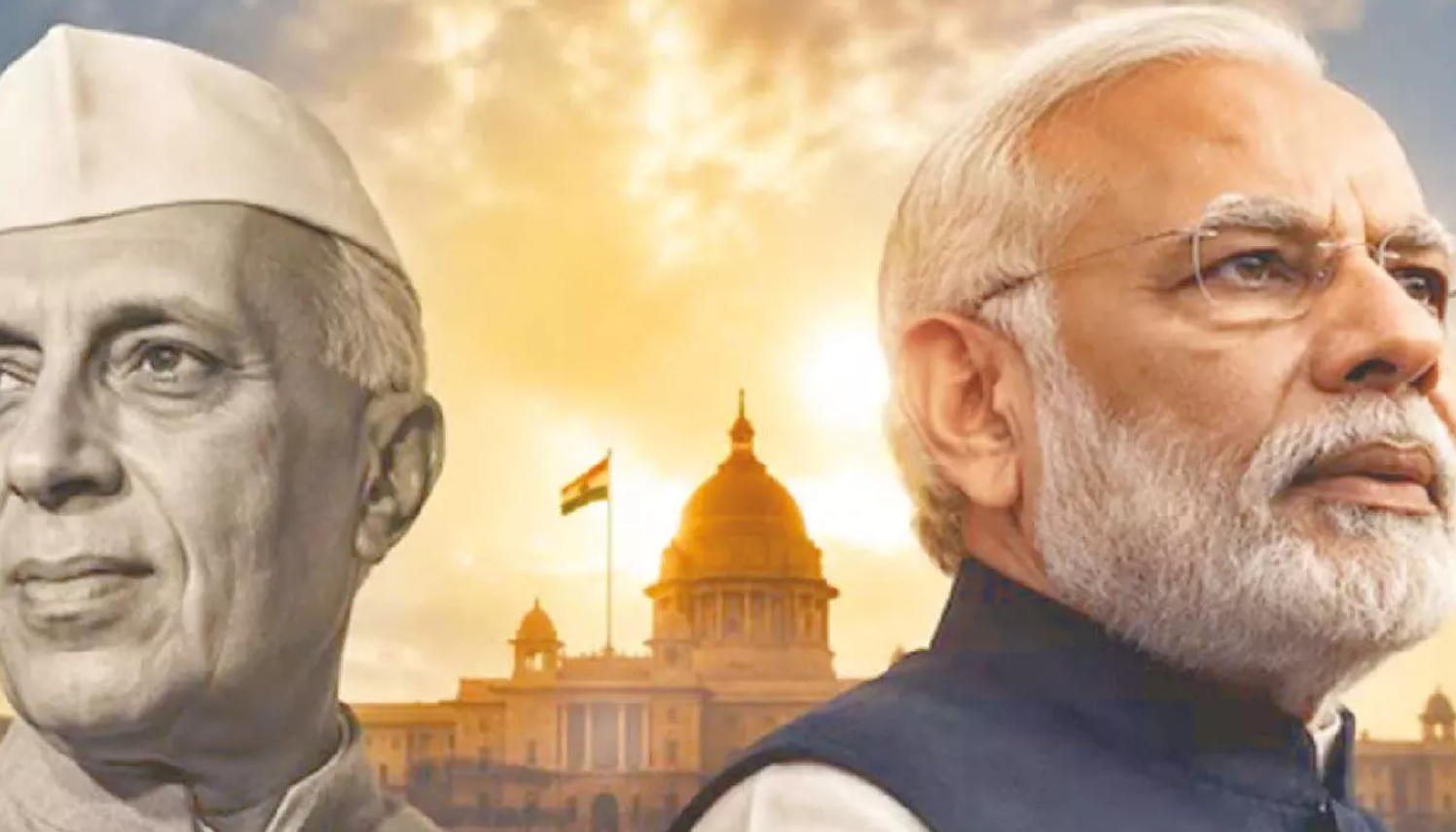
Beyond Tenure: Why Comparing Modi and Nehru Requires Historical Context
 2 days, 2 hours ago
Comparison is deeply ingrained in human nature. It helps societies evaluate achievements, measure performance, and understand relative strengths and weaknesses. Yet history demonstrates that comparisons are rarely neutral. More often than not, they are shaped by prevailing power structures and cultural hierarchies.
For centuries, Eurocentric frameworks dominated intellectual discourse, producing comparisons that subtly reinforced Western superiority. Thus, Kalidasa became the “Shakespeare of India,” while Chanakya was described as the “Indian Machiavelli.” Such characterisations appear flattering, but they implicitly position Western figures as the universal benchmark against which all others must be measured. In reality, Kalidasa and Chanakya emerged from independent civilizational traditions whose significance does not require validation through foreign parallels.
The same principle applies to architecture and cultural heritage. The Taj Mahal, the Qutub Minar, and the diverse temple traditions of North and South India cannot be meaningfully ranked against one another through simplistic comparisons. Their value lies in their unique historical, cultural, and artistic contexts. Once removed from those contexts and placed within a competitive hierarchy, understanding gives way to distortion.
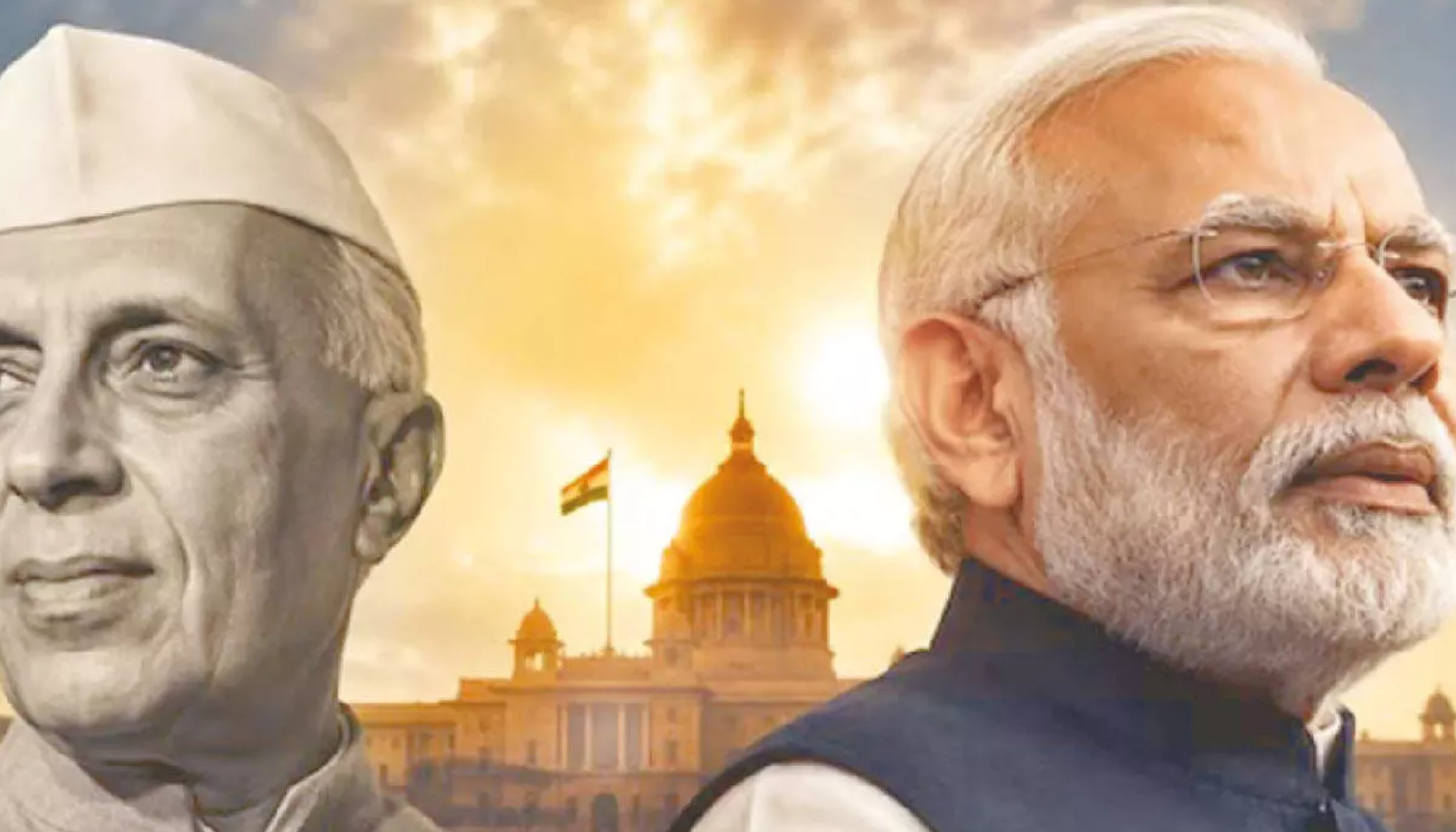
This tendency toward oversimplified comparison is equally visible in contemporary political discourse, particularly in attempts to compare Prime Minister Narendra Modi and India’s first Prime Minister, Jawaharlal Nehru. Such comparisons often rely on a single metric—length of tenure—while ignoring the vastly different historical circumstances, challenges, and governing philosophies that shaped their respective eras.
The Debate Over Longevity
In recent years, a recurring political claim has gained prominence: that Narendra Modi is India’s “longest-serving Prime Minister.” The slogan is politically effective, but its accuracy depends heavily on how the term is defined.
A crucial distinction exists between continuous tenure and total tenure.
Jawaharlal Nehru served as Prime Minister for 16 years and 286 days, making him India’s longest-serving Prime Minister in terms of total duration in office. Narendra Modi, as of June 2026, has completed approximately 12 years in office. Even if one counts only the period after the Constitution came into force on 26 January 1950, Nehru’s tenure remains longer.
What Modi has achieved is the distinction of becoming India’s longest continuously serving elected Prime Minister in the multi-party democratic era after Nehru. This is a significant political accomplishment. However, presenting it as an absolute historical record without qualification risks replacing historical precision with political messaging.
In a democracy, precision matters.
Two Prime Ministers, Two Different Indias
Any meaningful comparison between Nehru and Modi must begin with a recognition that they governed fundamentally different nations.
Nehru inherited a newly independent country scarred by Partition, widespread poverty, weak institutions, and deep social divisions. His primary responsibility was not merely administration but nation-building. He had to create systems, institutions, and frameworks that did not yet exist.
Modi inherited a vastly different India—an established democracy with functioning institutions, a diversified economy, global integration, and decades of accumulated state capacity. His challenge has been one of expansion, modernization, and acceleration rather than foundational construction.
The distinction is not incidental; it is central to understanding their respective legacies.
Nehru and the Architecture of Modern India
Nehru’s most enduring contribution lies in institution-building.
Under his leadership, India established institutions that would shape its future trajectory: the IITs, AIIMS, the Planning Commission, major public sector enterprises such as ONGC, LIC, and the State Bank of India, as well as the foundations of India’s scientific, statistical, atomic energy, and space programmes.
Equally important was his commitment to democratic norms. Parliamentary debate, civil liberties, and institutional autonomy became defining features of the early republic. Critics challenged him openly, and opposition voices were allowed space within the democratic framework.
This is not to suggest that Nehru was without flaws. His handling of relations with China and the disastrous 1962 war exposed significant strategic miscalculations. His economic model eventually evolved into a restrictive licence-permit regime that later governments sought to dismantle.
Yet history often remembers not only successes and failures but also how leaders responded to them. Nehru confronted criticism publicly, answered questions in Parliament, and accepted responsibility for policy setbacks.
Modi and the Politics of Scale
Narendra Modi’s governance has been defined by scale, visibility, and centralized execution.
His government has overseen substantial infrastructure expansion, accelerated digital transformation, implemented the Goods and Services Tax, promoted the start-up ecosystem, expanded welfare delivery through technology, and enhanced India’s global profile. His administration has also projected a more assertive national security posture and cultivated a strong international presence.
These achievements have contributed significantly to his electoral popularity.
However, debates surrounding Modi’s tenure extend beyond policy outcomes to questions of accountability and public communication.
Demonetisation, announced as a decisive measure against black money, ultimately saw most currency return to the banking system, prompting questions about its effectiveness. Promises regarding employment generation, farmers’ incomes, and major infrastructure timelines have faced scrutiny and varying degrees of fulfilment.
Critics also point to instances where public claims have later been challenged by official data, historical records, or subsequent clarifications. While no political leader is immune from error, repeated discrepancies can affect public trust and create concerns about the quality of democratic discourse.
Institutions and the Question of Power
Perhaps the most significant difference between Nehru and Modi lies in their relationship with institutions.
Nehru viewed institutions as enduring pillars of the republic and often allowed them operational autonomy even when they challenged the government.
Modi’s supporters argue that stronger executive leadership has enabled faster decision-making and more effective governance. Critics, however, contend that increasing centralization has diminished institutional independence and narrowed the space for dissent.
This debate goes beyond personalities. It concerns the broader balance between executive authority and institutional autonomy—a defining question for every democracy.
Why the Comparison Persists
The persistent comparison between Nehru and Modi is not merely historical; it is political.
Nehru occupies a unique place in India’s national narrative as the principal architect of the post-independence state. To symbolically surpass him is to claim not only electoral success but also ideological and historical pre-eminence.
Yet historical stature cannot be established through selective metrics alone.
Longevity may reflect political success, but it does not automatically determine historical significance. Legacies are ultimately judged by outcomes, institutions, ideas, and the long-term impact of leadership on a nation’s trajectory.
The Importance of Historical Accuracy
The debate over Modi and Nehru is ultimately not about two individuals. It is about how democracies remember their past.
When records are selectively framed, when context is omitted, and when repetition substitutes for precision, public memory gradually becomes vulnerable to political narratives.
A mature democracy requires distinctions between:
- Continuous tenure and total tenure.
- Achievement and projection.
- Governance and political messaging.
- Accountability and narrative control.
These distinctions are not semantic. They are essential to informed citizenship.
Conclusion: History Demands Context
Narendra Modi’s tenure represents one of the most significant periods of electoral dominance in independent India’s history. His sustained popularity and repeated electoral victories are undeniable political achievements deserving recognition.
At the same time, Jawaharlal Nehru remains India’s longest-serving Prime Minister—a fact established by historical record, not political interpretation.
The larger question, however, is not who occupied office for a longer period.
The question that history will ultimately ask is far more consequential: What did their years in power contribute to the making of India?
That answer cannot be found in slogans, statistics, or selective comparisons alone. It will emerge from the long arc of history—a judge far more patient, and far more demanding, than politics.
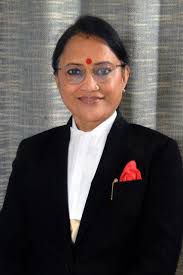
(Ms Joshi, a former AICC member, is a well-recognised lawyer-campaigner for female rights, and has authored “Breaking the Silence: A Handbook on the PoSH Act”.)

[[comment.comment_text]]