Securing the Peace: How Tactful Posturing Reshaped the Persian Gulf Order

 3 months, 3 weeks ago
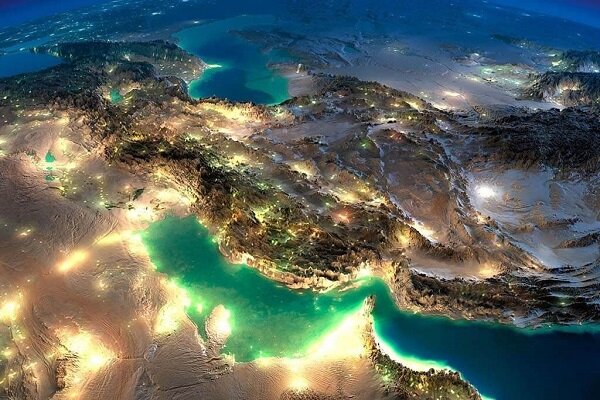
The setting could not have been more saturated with historical irony, nor more profoundly inverted. It was at the Palace of Versailles—the very hall where a century of European rivalries once ended in a fragile, punitive peace—that US President Donald Trump sat down during his visit to France for the G-7 summit to sign a document that history will record as a watershed victory for stability in the Persian Gulf. Across the globe, Iranian President Masoud Pezeshkian put pen to paper on the same 14-point framework from Tehran. Where Versailles once came to symbolize the tragic prelude to further conflict, this quiet, synchronized act of diplomacy achieved the opposite: the definitive cooling of a volatile region and a rare, vital triumph for enduring peace over the brinkmanship of war.
Formally unveiled to the world to be enacted at Geneva, Switzerland, on June 19, 2026 (reportedly postponed amid logistical complications), the Islamabad Memorandum of Understanding (MoU) marks the end of a brutal, 100-day war of attrition.
It also marks a stunning realignment of global power. Years ago, on January 3, 2020, Donald Trump famously took to Twitter to declare that “Iran never won a war, but never lost a negotiation”.
By signing this sweeping peace deal out of sheer strategic desperation, Trump has inadvertently rewritten his own axiom. He has engineered a reality where Iran has managed to do both: outlast the world's most formidable military machine on the battlefield and outmanoeuvre it completely at the diplomatic table.
The Spiritual Anatomy of Asymmetric Triumph
Has the United States, the ultimate global military and economic leviathan, truly capitulated to the Islamic Republic? To the Washington establishment, the pill is bitter to swallow. But a sober analysis of the Islamabad Memorandum leaves room for little else.
The 100-day conflict—characterized by a relentless US naval blockade, cyber warfare, and targeted strikes intended to trigger a Western-engineered regime change—failed entirely to fracture Iran. Instead, it exposed the absolute limits of Western military coercion when matched against a civilizational strategy of asymmetric endurance.
To understand Iran’s triumph, one must look beyond the contemporary metrics of telemetry and throw-weight. Tehran’s strategic culture is deeply informed by a profound historical and theological memory stretching back to the Battle of Karbala in 680 CE. For centuries, the martyrdom of Imam Hussain ibn Ali on the Iraqi plains has served as the ultimate moral blueprint for resistance against tyranny and injustice. In the calculations of the Pentagon and Tel Aviv, Iran was expected to collapse after intense military strikes and attempts at targeted leadership decapitation.
Instead, the leadership and the populace viewed the conflict through the lens of Karbala, framing their struggle as a righteous defence against a modern-day Yazid. This culture of defiance transformed what the West intended as a quick campaign of shock and awe into an exhausting war of attrition. By blocking the Strait of Hormuz and demonstrating a relentless capacity for asymmetric retaliation, Iran weaponized time itself, leaving Washington with no choice but to sue for peace.
Echoes of 1904: The Mechanics of an Underdog Victory
While the spiritual ethos of Karbala provided the psychological armour, the structural dynamics of the 2026 war mirror one of the greatest geopolitical upsets in modern history: the Russo-Japanese War of 1904–05. Historians and strategic analysts point to striking parallels in how both conflicts shattered the illusion of an unassailable superpower. Just as Imperial Japan began its war with a surprise night-time torpedo attack on the Russian fleet at Port Arthur before a formal declaration, the US-Israel coalition initiated this war with a massive, sudden joint bombing campaign. This opening salvo targeted critical military infrastructure and successfully assassinated Iranian Supreme Leader Ali Khamenei, a decapitation strike intended to trigger an immediate regime collapse.
Yet, much like the Tsarist empire in 1904, Washington and Tel Aviv severely underestimated their opponent, suffering from poor political planning, shifting timelines, and muddy war goals that left international scholars viewing their legal justifications as flimsy. What was meant to be a swift reordering of the Middle East's "spheres of influence"—aimed at dismantling Iran's "Axis of Resistance"—instead ran aground.
Furthermore, just as the 1904 conflict introduced rapid-fire artillery and steel warships as the dawn of industrial warfare, the 2026 war served as a technological turning point, defined by advanced air dominance that integrated stealth fighter jets with AI-driven drone fleets capable of bypassing traditional air defense systems.
Crucially, the backroom support of global titans tilted the scales. While Great Britain quietly backed Japan from the sidelines in 1904, the 2026 conflict saw Russia playing a masterful shadow role. To shield its own economy, Moscow avoided direct military entry, but heavily assisted Iran by providing real-time satellite intelligence on US and Israeli warship movements. This intelligence pipeline effectively blinded the coalition's naval blockade and turned the tide of the war.
The $300 Billion Verdict
Perhaps the most glaring evidence of American retreat lies buried in the financial fine print of the document. Point 6 of the memorandum stipulates that the United States, alongside its regional partners, will develop a comprehensive plan ensuring at least $300 billion for the rehabilitation and economic development of Iran.
While State Department spin-doctors will undoubtedly market this as a benevolent stabilization fund designed to incentivize Iranian compliance, the Global South sees it for what it truly is: war damages and reparations. Washington did not volunteer nearly a third of a trillion dollars out of a sudden burst of altruism. This massive financial commitment is a penalty paid to lift the siege, a material acknowledgement of the destruction wrought by an illegal blockade, and the steep price required to restore stability to global energy markets.
Inside the Beltway Panic: A Diplomatic Inversion
The shockwaves from Versailles have reverberated deeply within the American political establishment. John Bolton, Trump's former National Security Advisor and a perennial hawk, has led the chorus of condemnation, lambasting the deal as an absolute political surrender by the US government. Bolton and a chorus of regional analysts have categorically stated that this memorandum represents a far worse outcome for Washington than President Barack Obama’s 2015 Joint Comprehensive Plan of Action (JCPOA).
When viewed through a hawkish lens, this panic is not entirely unfounded, as a direct comparison between the two agreements reveals a complete collapse of American diplomatic leverage.
Back in 2015, the Obama administration negotiated from a position of relative strength, backed by an internationally enforced multilateral sanctions regime. The resulting JCPOA offered only conditional, heavily phased sanctions relief in exchange for the physical dismantling and strict capping of Iran's enrichment infrastructure, while frozen assets were meted out only as compliance was verified.
In stark contrast, the 2026 Islamabad Memorandum sees Washington negotiating from a position of profound exhaustion, its naval blockade effectively broken and global energy markets severely destabilized.
Under these terms, the transactional dynamic has been completely inverted. The US Treasury must immediately issue sweeping waivers for Iranian crude oil, petrochemicals, and banking services, alongside an explicit commitment to completely terminate all primary and secondary sanctions. Rather than demanding the dismantling of nuclear facilities, Washington has accepted a mere preservation of the current status quo pending future talks, all while unlocking Iran’s frozen assets and guaranteeing the staggering $300 billion reconstruction fund.
What makes this shift even more remarkable is that Iran’s moratorium on its nuclear advancement is hardly a massive concession wrung from Tehran. Iran’s commitment to a non-military nuclear programme is simply a continuation of its long-standing state policy, rooted in the decades-old fatwa issued by the late Ayatollah Ali Khamenei against the production of nuclear weapons. Iran did not trade away its nuclear potential; it merely restated its own religious jurisprudence in exchange for the total collapse of the Western sanctions regime.
A Deal Under Fire in Washington
The agreement is facing criticism not only from Iran’s adversaries but also from President Trump’s own political camp. Many Republican hawks who previously supported maximum pressure against Tehran have questioned why a conflict that began with demands for Iranian capitulation has ended with promises of sanctions relief, asset releases and economic rehabilitation. Former officials and conservative commentators have openly compared the arrangement unfavourably with the 2015 nuclear agreement negotiated under President Obama.
The White House, however, has defended the framework as a strategic success, arguing that it prevents nuclear weaponization while restoring freedom of navigation through the Strait of Hormuz and reducing the risk of a wider regional war. The administration has formally transmitted the agreement to Congress, signaling confidence that the process will continue despite political opposition. The debate itself reveals the extent to which the agreement has reshaped political assumptions in Washington. Only months ago, discussions centered on defeating Iran. Today, the argument is over the terms on which peace should be pursued.
West Asia’s New Geopolitical Gravity
The signing of this memorandum codifies a reality that has been quietly solidifying for months: Iran has emerged as the undisputed regional heavyweight of West Asia. Throughout the 100-day war, the behavior of the Persian Gulf monarchies was telling. Rather than enthusiastically joining the US-Israeli coalition, states like Saudi Arabia and the UAE adopted a posture of intense caution.
Recognizing that an open conflict would invite devastating missile retaliation, disrupt energy infrastructure, and set their own economic transformations ablaze, leaders across the Gulf chose diplomatic distance over American alignment. By refusing to act as Washington's staging grounds, the Gulf states signalled an implicit recognition of Iran’s asymmetric power. With the MoU guaranteeing Iran's central role in the future administration of the Strait of Hormuz, the architecture of global energy security has been permanently decentralized.
The Lebanon Question
One of the least discussed but potentially most explosive aspects of the memorandum concerns Lebanon. The agreement explicitly links the cessation of hostilities to all fronts of the conflict, including Lebanon. Yet Israeli military operations and exchanges involving Hezbollah have continued to generate tensions, raising questions about whether every actor involved in the broader confrontation shares the same commitment to de-escalation.
This is the central contradiction confronting the peace process. Washington and Tehran may have concluded that the costs of continued confrontation outweigh the benefits. Israel may calculate differently. Should the Lebanese front remain active, the entire architecture of the agreement could be placed under strain. A single major escalation could easily derail negotiations before the sixty-day window reaches its conclusion. For this reason, the future of the agreement may ultimately be decided not in Geneva or Washington, but in southern Lebanon.
Tel Aviv’s Meltdown: The Spoiler in the Shadows
While Washington and Tehran prepare their diplomatic delegations for the 60-day final treaty window, a dark cloud hangs over the entire enterprise: Israel. The government in Tel Aviv is currently experiencing a profound strategic meltdown. Having pushed for decades to drag the United States into a terminal war with Iran, Israel now finds itself isolated, watching its primary benefactor sign a peace treaty with its arch-nemesis.
The question is no longer whether Israel approves of the deal—it clearly does not—but how far it will go to sabotage it. The ceasefire explicitly mandates a permanent termination of hostilities on all fronts, emphasizing the territorial integrity and sovereignty of Lebanon. However, Israel's political leadership is deeply tethered to perpetual conflict for its own survival. The risk of Israeli defiance remains dangerously high. By continuing to launch unilateral provocations in Lebanon or executing covert operations inside Iran, Tel Aviv may attempt to deliberately provoke an Iranian reaction, hoping to break the fragile truce and force Trump to abandon his diplomatic exit strategy.
The Geneva Setback
If the memorandum was intended to mark the beginning of a new chapter, its first test has arrived sooner than expected. The much-anticipated Geneva meeting scheduled for 19 June has reportedly been postponed amid logistical complications, uncertainty regarding Iran’s participation, and growing disputes over implementation. Tehran has insisted that visible American compliance with the agreement must precede substantive negotiations, while Washington has sought to move quickly into technical discussions on sanctions relief, maritime security and nuclear issues.
The delay does not necessarily signal the collapse of the agreement. Framework agreements often encounter difficulties in their earliest stages. Yet it demonstrates how fragile the current understanding remains. Perhaps more importantly, the postponement underscores an uncomfortable reality: signing a peace framework is easier than translating it into a durable political settlement. The real negotiations have only just begun.
The Verdict of History
Ultimately, the Islamabad Memorandum proves that military behemoths can build vast bases and deploy carrier strike groups, but they cannot bomb a civilizational memory out of existence. Iran's victory was forged in the crucible of endurance—the grit to survive under the crushing weight of siege until the oppressor exhausted their own options. Trump went into this conflict promising a swift, crushing blow to achieve regime change; he left it signing oil waivers at a French palace. In trying to bring Tehran to its knees, Washington instead found itself signing the terms of its own regional retirement.
Yet the story remains unfinished. The postponement of the Geneva talks, continuing instability in Lebanon, and resistance from hardliners in Washington, Tehran and Tel Aviv demonstrate that the path from ceasefire to lasting peace remains uncertain. The memorandum has opened a diplomatic door, but it has not yet guaranteed what lies beyond it.
Nevertheless, the broader political reality remains unchanged. The United States entered the conflict seeking to constrain Iran’s power. Iran entered the conflict seeking to survive overwhelming pressure. As negotiations begin, it is the Islamic Republic that appears to be negotiating from a position of renewed confidence, while Washington faces accusations of having conceded too much.
That is why critics call the arrangement a surrender. That is why supporters call it peace. And that is why, from Tehran to Beirut and beyond, many continue to see in this moment the enduring shadow of Karbala: the belief that steadfastness can sometimes achieve what force cannot.
In the end, Iran may not have won every battle. But even before the final agreement is written, it has already altered the political landscape of West Asia—and perhaps the global balance of power itself.
(Author is a former member of the history faculty at St. Xavier’s College, Mumbai.)






[[comment.comment_text]]