Langar: A Plate of Democracy
 23 minutes ago
Where Humanity Sits Above Identity
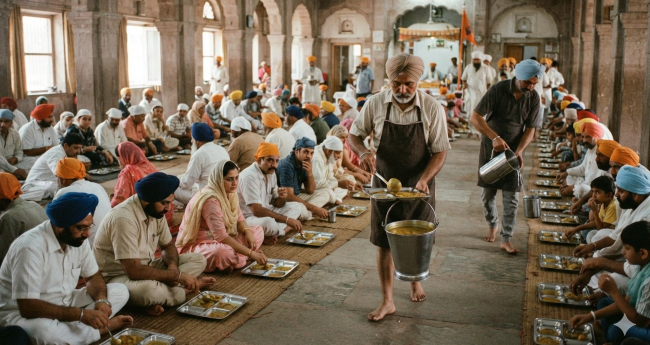
Human dignity has been elevated to the maximum level by constitutions, democracies have guarantyd equal rights, and civilisations have promoted equality. However, the barriers of social hierarchy continue to stand. Humans are still divided by caste, religion, class, social identity, and economic standing. Despite all its progressive boasts, modern society has failed to completely embrace a centuries-old institution that continues to teach humanity a lesson in an era so severely divided by these divisions. It is a table where no one is questioned about their caste, no one is assessed based on their religious beliefs, and no one's value is determined by their level of riches or poverty. The rich and the poor, strangers and friends, and elites and commoners are seated next to each other. Everybody is treated with equal dignity and gets the same food. Langar is this age-old custom.
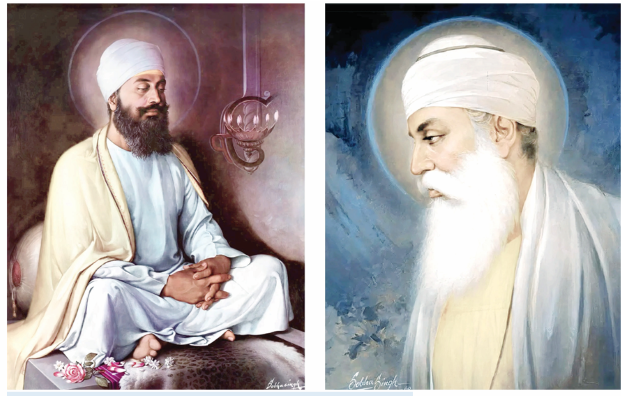
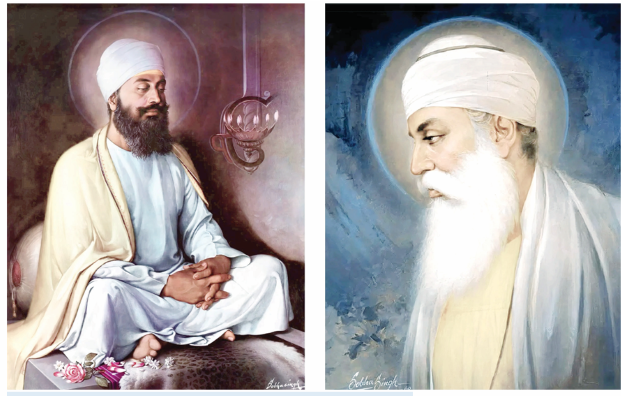
Langar's deep social philosophy would be diminished if it were only seen as a communal kitchen that provides food for the hungry. It offers a chance to put human equality into practice rather than just acknowledging it. Its greatest strength is that equality in this context is neither a favour nor an act of charity. It is an acknowledgement of each person's inherent right and dignity. According to Guru Nanak Dev Ji, a person's value is based on their humanity and deeds rather than their birth, religion, or material belongings. Langar is a living embodiment of that philosophy—a place where no identity is superior to humanity, food is served without prejudice, and service is devoid of haughtiness.
Breaking Barriers, Serving Equality
Caste hierarchy, untouchability, religious rigidity, and social inequality were all deeply ingrained in Indian society during the fifteenth and sixteenth centuries. Even who one could eat with and sit next to depended on their social standing. Guru Nanak Dev Ji's idea of Sangat and Pangat was much more than a religious custom in opposition to this extremely repressive social structure; it was a quiet uprising against generations of hereditary privilege and social superiority. Pangat provided people with a concrete experience of social equality, whereas Sangat drew people together in spiritual fellowship.A system that dictated human dignity and rank by birth was directly challenged when people sat in a single row to share a meal.
The core of this ideology is formed by the three guiding principles of Guru Nanak Dev Ji: NaamJapo, KiratKaro, and VandChhako. Keep the Divine in mind, work hard to make a decent life, and give back to others. The living social embodiment of these ideas is langar. Here, even the line between giver and recipient vanishes. The grain is contributed by one person, the dinner is prepared by another, served by a third, and the utensils are cleaned by a fourth. Every labour deed is deserving of appreciation. Here, serving is an exercise in letting go of one's ego rather than a way to gain reputation.
The real strength of Langar is found in the fact that it brings people together at the same table to experience equality rather than preaching it. Here, humanity assumes its proper position in the forefront, while caste takes a backseat.
When Langar Becomes a Lifeline
The fact that Langar's compassion goes well beyond the custom of delivering food is its greatest asset. This communal kitchen becomes much more than just a source of food when people are deprived of their homes, livelihoods, and basic necessities of life due to natural catastrophes, pandemics, conflicts, or displacement. The Sikh tradition of selfless service has frequently surfaced as a source of comfort and hope, whether in areas devastated by floods, villages devastated by earthquakes, disaster-affected areas, or communities engulfed in a crisis. Gurudwara kitchens and committed volunteers serve as a lifeline for the vulnerable during times when government aid takes time to reach those in need and families struggle to obtain even their next meal.
An outstanding illustration of this spirit was provided by the COVID-19 epidemic. Gurudwaras across volunteered to supply meals through Langar during the lockdown, when millions of migratory workers and low-income families faced a severe food crisis. Volunteers brought meals to impoverished communities, hospitals, and relief camps. Disaster-affected populations in India and beyond received food, water, and other necessities from organisations like Khalsa Aid. The fact that no class or religious identity prevented service was what made these efforts especially important.
In fact, langar provides concrete form for a humanity concept that we frequently extol in our sermons but conveniently forget in real life during times of crises. No one who asks for help is questioned about their nationality, religion, caste, or ideology. Their identity is defined solely by their need. Religion doesn't matter when hunger is at the door, and caste doesn't matter when life is at risk.
The real power of Langar lies in the fact that it offers more than just food—it reinstates hope in the idea that mankind does not give up on itself, even in the most dire circumstances.
An Open Kitchen, A United Humanity
Despite broad claims of economic growth and technical advancement, caste, religion, class, and economic standing continue to be unseen barriers dividing society today. In this context, the shared rows of Langar and the open doors of a Gurudwara transmit a remarkable social message. The irony is that religion, which ought to unite people, is frequently used as a tool for divisiveness and identity politics. Langar reminds us that hunger has nothing to do with caste, religion, social standing, or prestige.
Everyone who enters a Gurudwara is greeted with equal affection, regardless of their faith, community, nationality, or economic status. Nobody is required to reveal their identity, provide evidence of their eligibility, or consent to a different arrangement based on their social status. Sitting in the same row and sharing the same meal are the rich and the poor, the privileged and the common, the pious and the unbelievers. Everyone is handled with decency and is never made to feel obligated for a favour. The fact that Langar fosters a broader culture of involvement, camaraderie, and equality rather than just charity and compassion may be its most notable trait.
The open kitchen of a Gurudwara serves as a reminder that eating a meal from the same plate is still the first step toward humanity, even in a time when the world is busy erecting walls between people.
Equality Beyond the Ballot
The Langar institution has a strong connection to contemporary democratic and welfare state ideas. Ensuring that every person has equal dignity, respect, and opportunity is the essential meaning of democracy; it is not just about voting or choosing political representatives. Although equality is a fundamental right guaranteed by the Constitution, it is also our collective duty to put this promise into practice in day-to-day social interactions. This spirit is exactly what Langar portrays. It does not take the role of the law; rather, it symbolises the social consciousness that is necessary for the Constitution's guarantee of equality.
Langar's importance in the modern era goes well beyond just giving away free meals. It directly addresses some of the most important issues of our day, including human dignity, community involvement, food security, and the right to eat. It represents society's moral duty rather than relieving the welfare state of its obligations. Institutions can mobilise resources, and governments can create welfare programs, but society must have the empathy to sit next to a starving person and directly feed them.
Guru Nanak’sLegacy: A Lesson in Humanity
TheLangar tradition should not be limited to commemorating a religious ritual on the anniversary of Guru Nanak Dev Ji's birth. It should also prompt us to reflect: Have we really come to regard all people as equals? Do our religious convictions increase our empathy for those in need? Can we acknowledge that others have a legitimate share in our success and the resources we have to meet society's needs?
The most important lesson from Langar is that our value as human beings is determined not only by how long we bend down to God but also by how easily we reach out to a starving person. Here, bread fractures the ego in addition to nourishing the body; the communal meal not only unites people but also breaks centuries-old societal walls that have kept them apart.
Maybe that's why Langar is the world's most exquisite example of democracy. Here, there is neither a dominant party nor an opposition, nor is there a superior or inferior. Everybody has the same meal, the same hunger, and the same dignity.
Guru Nanak Dev Ji's Langar tradition serves as a reminder that the simplest approach to bring people together is to satisfy their hunger before attempting to gain access to their hearts, especially in a time when the world is more involved in dividing people along identity lines. Because humanity never goes hungry in places where bread is served equally.
(Author a doctorate in laws, is a senior lawyer, columnist, and civil society activist.)




[[comment.comment_text]]