A New Blueprint for Rural India

 3 months, 1 week ago
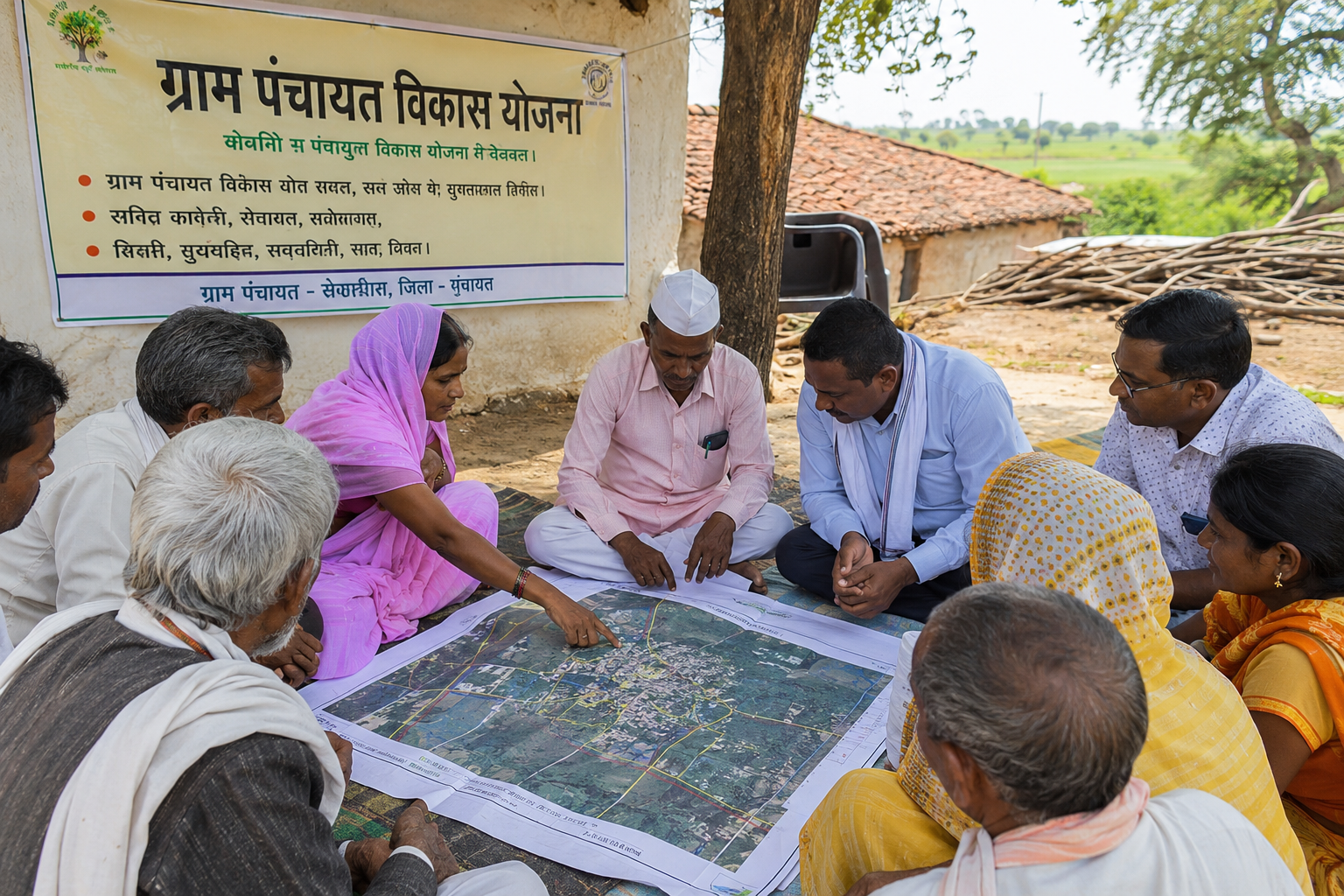
For decades, it has been said that India's future lies in its villages. In today's rapidly changing economic and environmental landscape, that statement carries even greater significance. The country's aspiration to become a developed nation cannot be realised unless rural India evolves from being a beneficiary of government programmes into an active architect of its own development. The Centre's newly unveiled Viksit Gram Panchayat Plan (VGPP) under the Viksit Bharat – Guarantee for Rozgar and Ajeevika Mission, Gramin (VB-GRAMG) reflects precisely such an attempt. It is not merely another rural development scheme; it represents a fundamental shift in how villages are expected to plan, prioritise and shape their future.
Scheduled to come into force from July 1, 2026, the new framework replaces the rural employment guarantee law that has served as India's largest social protection programme for nearly two decades. While the guarantee of 125 days of employment remains a major feature, the larger significance of the reform lies elsewhere. The government is seeking to redefine employment as a means to build productive assets, restore natural resources and strengthen rural livelihoods rather than simply providing temporary wage support.
The most striking aspect of the framework is its emphasis on scientific planning. Traditionally, village development plans have often been driven by immediate demands, administrative convenience or political priorities. Under the new system, Gram Panchayats will prepare development plans based on geospatial data, groundwater assessments and infrastructure mapping using platforms such as PM Gati Shakti, India-WRIS, Bhuvan and the Yuktdhara Planning Portal. Instead of preparing a list of desirable works, local governments will first analyse what their villages actually need.
This represents a significant evolution in governance. Development planning based on evidence rather than assumptions has long been advocated by policy experts. If implemented effectively, it could make public spending more efficient, transparent and accountable.
Among all the priorities identified in the framework, none is more important than water security. The decision to mandate that over-exploited groundwater blocks spend at least 65 per cent of their allocated resources on water-related works demonstrates a clear understanding of India's emerging ecological realities. Groundwater depletion has become one of the most serious threats to rural livelihoods, agriculture and food security. Similar expenditure thresholds for semi-critical and safe blocks further reinforce the government's intention to place water conservation at the centre of village development.
The logic is compelling. Sustainable agriculture cannot exist without sustainable water resources. Every investment in groundwater recharge, watershed development, rainwater harvesting or water conservation is ultimately an investment in rural economic resilience.
Yet policy intent alone cannot solve India's water crisis. Effective implementation will require technical expertise, proper planning and continuous maintenance. Water conservation projects have often suffered from poor design, inadequate monitoring and weak institutional capacity. Unless these issues are addressed, mandatory expenditure targets may produce spending without necessarily delivering meaningful outcomes.
Equally significant is the framework's shift from activity-based planning to outcome-based governance. For decades, the success of rural development programmes has largely been measured through physical outputs—roads built, ponds excavated or person-days of employment generated. While these indicators remain relevant, they rarely capture whether public investments have genuinely improved people's lives.
The new framework attempts to change this perspective. Success is expected to be measured by improvements in groundwater availability, stronger livelihood resilience and greater preparedness for climate-related risks. This reflects a more mature understanding of public policy, where outcomes matter more than outputs. However, measuring long-term developmental outcomes is considerably more complex than counting completed projects. It requires reliable data, institutional capacity and continuous evaluation—areas where many local governments still face considerable limitations.
Another welcome feature is the integration of climate resilience into mainstream rural planning. India is increasingly witnessing prolonged heatwaves, erratic rainfall, floods and droughts. Climate adaptation is no longer an environmental concern alone; it has become an economic necessity. The inclusion of afforestation, rooftop rainwater harvesting, disaster-resilient infrastructure and natural resource management within village planning acknowledges this new reality.
The framework also places welcome emphasis on inclusive development. By prioritising Scheduled Castes, Scheduled Tribes, women-headed households and persons with disabilities in livelihood asset creation, it recognises that economic growth must be accompanied by social justice. Rural development cannot be considered successful if its benefits fail to reach those who need them most.
Equally noteworthy is the effort to integrate village planning with the PM Gati Shakti National Master Plan. Rural infrastructure has often evolved independently of larger transport and logistics networks. A common geospatial planning architecture could significantly improve coordination, reduce duplication and ensure that investments at different levels of government complement one another.
At the same time, technology must remain an enabler rather than a substitute for democratic participation. The framework rightly requires every Gram Panchayat Plan to receive approval from the Gram Sabha before being uploaded to the Yuktdhara portal. This safeguard preserves the constitutional spirit of decentralised governance while ensuring that local communities continue to shape their own development priorities.
The proposal to create the Viksit Bharat National Rural Infrastructure Stack (VB-NRIS) also deserves attention. A nationwide digital database of rural infrastructure and development assets could become a powerful policy tool for resource allocation, monitoring and long-term planning. However, like any digital governance initiative, its effectiveness will ultimately depend on the quality and accuracy of the data that feeds it.
This brings us to the most important challenge facing the new framework—capacity.
A large number of Gram Panchayats continue to operate with limited technical manpower, inadequate digital infrastructure and insufficient planning expertise. Preparing geospatial development plans, conducting water budgeting and interpreting scientific datasets are highly specialised tasks. Unless the government invests substantially in capacity building alongside digital infrastructure, the gap between policy ambition and implementation may remain significant.
Ultimately, the Viksit Gram Panchayat Plan is not merely about redesigning a rural employment programme. It reflects a broader vision that seeks to integrate employment generation, environmental sustainability, infrastructure development, climate adaptation and digital governance within a single planning framework. The direction is both timely and necessary.
However, India has never lacked ambitious policies. The real challenge has always been execution. The success of this initiative will not be determined by the sophistication of its digital platforms or the comprehensiveness of its guidelines. It will depend on whether Gram Panchayats receive the institutional support, technical expertise and administrative autonomy needed to transform these ideas into measurable improvements in people's lives.
Rural India today needs far more than employment guarantees. It needs resilient livelihoods, sustainable natural resources and empowered local institutions. The Viksit Gram Panchayat Plan offers a promising roadmap towards that objective. Whether it becomes a landmark reform or another well-intentioned policy will depend entirely on how effectively it is implemented where it matters most—in India's villages.






[[comment.comment_text]]