UN Declaration to Protect Statehood of Submersed Islands

 2 hours ago
The average rise in sea level due to the warming of the planet has been 3.8 mm per year between 1999 and 2012, and 4.2 mm per year between 2012 and 2025. According to the 10th edition of Copernicus Ocean state report, oceans have absorbed one-third of Carbon dioxide the humanity has spewed and nearly 90% of the extra heat greenhouse gases have trapped in earth’s system. The report added that the Sea has warmed by .32 degrees Celsius per decade. Last year alone, 23 zettajoules (1 zettajoule = a billion trillion joules) of heat has been trapped by world’s oceans, which is 40 times the total energy used in the world annually.
Europe is warming twice as fast as the global average; Mediterranean and Black Seas have caused record breaking marine heat waves this year. Hot coastal waters exacerbate heatwaves on land by adding heat during nights and preventing lands to cool down. As a result, western Europe experienced unusually warm temperature, wildfires that devastated nearly one million-hectare forests and caused depletion of flow of water in the rivers making the transportation of goods costlier and also suppressing the generation of nuclear power. Air-conditioners were used in residences and businesses, resulting in a surge in power consumption and the fossil fuel burning.
Himalayas, which are also warming twice as fast, had a glacial lake burst on 26th August that flooded River Boti Koshi in Nepal and devastated roads, bridges, power houses and washed away over six thousand humans. Bhutan, too, experienced a glacial lake burst in higher Himalayas damaging buildings, roads, bridges and power houses, confirming the scientific findings that Himalayas are warming at twice the pace, the average global temperature is rising. Scientists have been warning to cut the consumption of coal, oil and gas and transition to renewable energy like solar, wind, nuclear etc. World leaders continue to step up fossil fuels consumption for the growth and development of the economy. US President Trump has not recognized the advises from the Scientists and is unperturbed of climatic disruptions. He is on oil fields capture spree. He has captured in Venezuela and Iraq and now wants to have a control on Iranian oil. Although US troops are leaving Iraq, but its control on Iraqi oil continues. His attack is not to prevent Iran going nuclear, but to access the oil and gas.
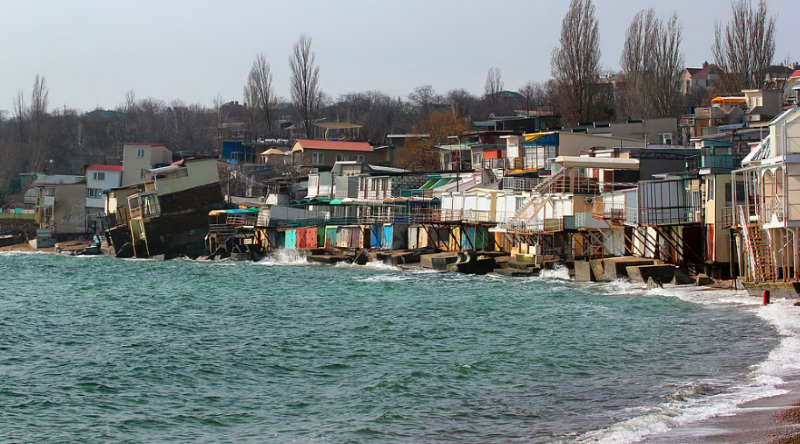
On 24th September 2026, in 81st Session of United Nations General Assembly, a declaration on Sea level rise has been adopted with all members states including US agreed on a common text. The island nations threatened by rising seas do not automatically lose their statehood, if a portion of the territory is submerged. The declaration also supports the territorial integrity of established maritime zones despite changes in coastlines. The irony is that US has supported the declaration, but Trump does not support the cause of the action. The accelerating consumption of fossil fuels has brought us to a situation where sea level rise is threatening the existence of coastal communities. Since when Trump cared for UN or any statutory authority in US? He goes on imposing sanctions on Iran, without any legitimate UN approval. His attack on Iran is also not approved by US Congress.
World leaders had agreed to cut the emissions by pledging nationally determined contributions in Paris climate Accord in 2015. Maybe it was done when Obama was US President. Trump in his first term had junked the accord. All positive actions by Biden in setting standards for EVs, not opening wildlife areas for oil drilling and mineral exploration etc. were undone by Trump in his second term. On the contrary, he has expanded oil drilling program, saying that it will bring down the prices enabling industries and the economy to grow at faster pace.
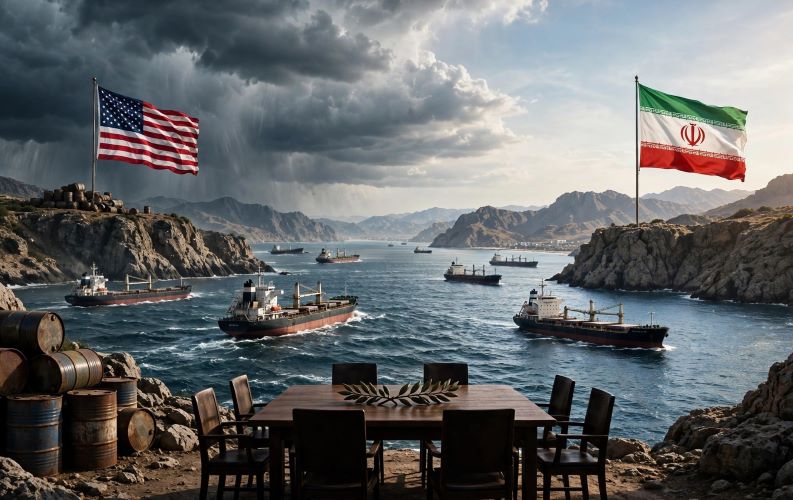
In the process of gaining control over oil fields, he has attacked Iran. The response has been unfavorable for Trump, as the Strait of Hormuz and Bab El Mandeb have been choked and the prices of crude oil and refined products have surged. Democrats have taken control over US Senate as well as House of Representatives, as voters have delivered a blistering rebuke to Trump. The election has entirely witnessed a blue wave. It indicates that US voters are dissatisfied with Trump and the republicans who have backed his agenda. Trump is not likely to change his stand to mitigate environmental actions even after he received jolt in US mid-term election.
The ongoing wars between Russia and Ukraine and also in gulf have poisoned soil and water and is bound to impact the agricultural productivity and aquatic life. Ukraine is attacking on Russian energy infrastructures and oil refineries. Houthis, too, are attacking Saudis gas pipelines and refineries. We see brown and violet color plumes spiraling into the sky and emitting poisonous gases in the atmosphere. All these are accelerating warming and rise in sea level.
UN declaration ensures that the coastal belt going under water will remain with the same country. The communities after being relocated elsewhere/ may be on some other islands will lose all interest on submerged piece of coastal lands. The island nation can hold ownership on the portion lost in water as well as on its minerals and aquatic life, but will the fishermen come from far off places to exercise their right? Governments may also find it expensive to tap other oceanic resources.
Small island nations have welcomed the agreement but warned that only stronger action to tackle climate change can limit further sea level rise. They also called for financial support for adaptation and transition to cleaner energy. UN should be forthright in ensuring that developed countries adopt a life style dictated by circular economy, the life of conspicuous consumption must cease, they must make drastic reduction in emission and should not race against each other for GDP growth. Preventing disruptions is more important than showing concerns for the ownership of lost territories.
(The author, a former Head of Forest Force of Karnataka, is a regular TEW columnist on wildlife, environment, and governance issues.)









[[comment.comment_text]]