Divided at Home, Diminished Abroad: Global Order After the Midterm Reversal
 2 hours ago
Akbar became Mughal emperor in 1556, at a time when the dynasty was still struggling to secure its position in the Indian subcontinent. During his nearly five-decade reign, he transformed the Mughal state into one of the most powerful and enduring imperial systems in South
From Tehran to Beijing, from Moscow to the Gulf, a weakened president faces a restless world, and India faces its own strategic test.
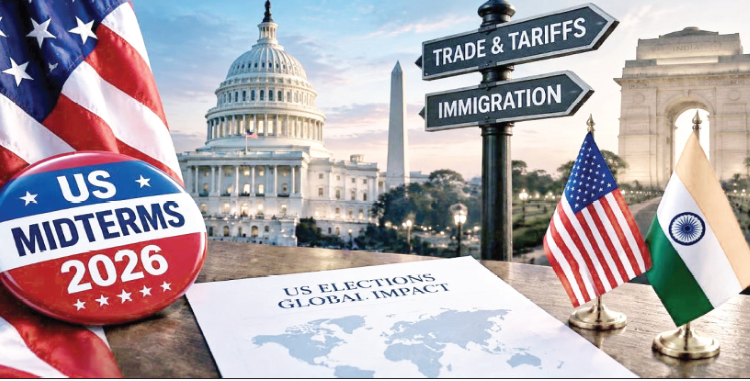
American elections are never only American. When the world’s most powerful democracy changes its mind, capitals from Moscow to Beijing, from Riyadh to New Delhi, recalculate their positions within hours.
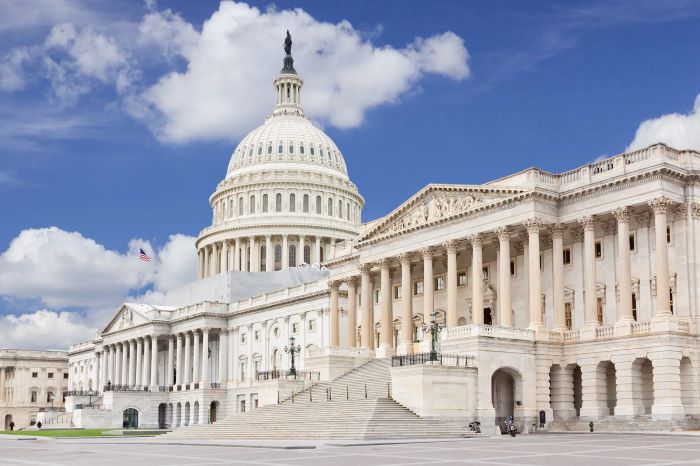
On 3 November, American voters did exactly that. Major networks have projected that the Democratic Party has won both the House of Representatives and the Senate, a result widely read as a rebuke of a president who built his second term on confrontation, tariffs and personal diplomacy. Donald Trump has said he will accept the outcome and has argued that his party lost because he was not on the ballot. Some contests, Alaska’s Senate race among them, were still being counted as this article was written.
The question that matters beyond America’s borders is not whether Mr Trump has been weakened at home, which he plainly has, but whether a wounded president becomes a cautious one or a combative one. History offers both models: leaders who retreat into legacy-building diplomacy after a defeat, and leaders who pursue on the world stage the victories the ballot box denied them. Which Trump will emerge, however, nobody yet knows, and that uncertainty is itself a geopolitical force. Every government that deals with Washington must now plan for two presidents at once. What follows examines how that uncertainty may shape relations with Iran, Russia, China and the Arab world, and what it demands of India.
A Constrained President, Not a Powerless One
Begin with constitutional arithmetic. A Democratic Congress cannot conduct foreign policy, but it can make conducting it harder. It controls appropriations, which shapes how overseas operations are funded, and it can exercise oversight by summoning officials, subpoenaing documents and holding hearings that turn closed-door decisions into public argument. It can also slow appointments and complicate the sanctions and arms-sale machinery on which much of American diplomacy depends. Yet what Congress cannot easily do is take the telephone out of the president’s hand, because the president retains significant executive powers, including wide authority over the deployment of forces, the imposition of many tariffs under existing statutes and the conduct of summit diplomacy. Overriding a veto requires two-thirds of both chambers, a threshold that few oppositions in modern times have comfortably reached.
The likely result is a president whose domestic agenda stalls while his foreign-policy reach remains largely intact. That asymmetry is precisely why the world is watching. A leader who cannot legislate may be tempted to act abroad, where constraints are fewer and headlines larger. And because MrTrump cannot seek another term, he is freed from some of the electoral calculation that disciplines most politicians. Supporters of the president, to be fair, will answer that midterms punish every incumbent, and that his pressure-first approach has forced conversations that his predecessors avoided. That case deserves a hearing. But the coming two years will be defined less by what Congress forbids than by what the president chooses to attempt.
Iran: The First and Hardest Test
No dossier will test the president faster than Iran. The war that began with American and Israeli strikes has entered its ninth month. It has disrupted the Strait of Hormuz, through which, according to the International Energy Agency, around 25 per cent of global seaborne oil trade and nearly 20 per cent of global liquefied natural gas trade normally pass, and it has carried energy prices into the household budgets of countries that have no part in the conflict. It has also been deeply unpopular with American voters, which is why it loomed over the campaign. Before the vote, Mr Trump repeatedly tied the end of the war to the election. In late September, press reports citing American officials said he had rejected an Iranian proposal for a seven-day ceasefire, under which Tehran would reopen Hormuz and resume nuclear talks if Washington lifted its naval blockade and eased oil sanctions, and that he expected bombing to resume once the ballots were counted. These are reported accounts, not independently verifiedagreements, but they describe the fork in the road with unusual clarity.
One path leads to a negotiated settlement. The result removes the argument that concessions would be punished at the polls, and a Congress eager to examine the war’s costs will press for an exit. The other path leads to escalation, a president determined to show that defeat at home has not diminished his resolve abroad. Tehran, for its part, may read Washington’s divisions as leverage and harden its terms. Two sides, each convinced that the other is weaker, make up the classic recipe for miscalculation. Between these two paths, the responsible course is easy to describe and hard to walk: a phased arrangement that reopens the strait, addresses nuclear concerns through verification, and gives Gulf and Asian economies the stability they have been denied. Air campaigns can destroy facilities but cannot settle a political dispute between nations, as more than eight months of conflict have demonstrated.
Russia: Opportunity With a Congressional Asterisk
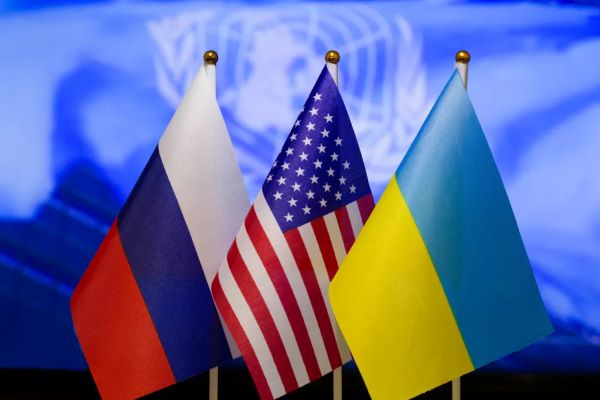
For Vladimir Putin, the American result is both an opening and a complication. Mr Trump has favoured direct, personalised negotiation over the war in Ukraine, a style that has unsettled European allies and many American legislators who fear that aggression is being offered rewards. A Democratic Congress is likely to be less indulgent. Expect hearings on sanctions enforcement, renewed pressure to sustain support for Kyiv, and close scrutiny of any arrangement that loosens restrictions on Russian energy. In response, the Kremlin will weigh two calculations. The first is that a president hungry for a diplomatic trophy may concede much to obtain one, and that Moscow should move before Congress tightens its grip. The second is that any deal Congress regards as capitulation will be delayed, diluted or poisoned in Washington, leaving Russia with promises it cannot bank.
Europe, the silent party to this contest, has the most to gain from a Congress that takes Ukraine seriously and the most to lose from a settlement negotiated over its head. European capitals have spent years learning that their security cannot be outsourced indefinitely. A more assertive Congress buys them breathing space, but it is no substitute for investing in their own defence and speaking with one voice when American attention drifts. Above all, the principle at stake is larger than any of these calculations. A settlement that disregards Ukraine’s sovereignty and territorial integrity might silence the guns for a season, but it would teach every ambitious capital that borders can be redrawn by force and ratified by exhaustion. A durable peace needs terms that Ukrainians, Europeans and Americans can all defend in public, and a president who cannot command Congress will find that only such terms survive.
China: Patience in Beijing
Beijing watches American turbulence with studied patience. Xi Jinping’s government understands that American power rests not only on carriers and capital but on predictability, and that each season of discord and policy reversal lowers the confidence of those who might otherwise align with Washington. A divided capital gives China room to widen its diplomatic and commercial reach across Africa, Asia and the Gulf. Beijing’s message to the developing world will be one of reliability: infrastructure finance, trade access and a promise not to lecture. The pitch has limits, since debt burdens and market-access disputes trouble many partners, but it lands more easily when Washington appears erratic.
Yet Beijing would be mistaken to confuse American discord with American decline. The rivalry runs far beyond tariffs, through artificial intelligence, advanced semiconductors, maritime security, technical standards and the balance of power in the Indo-Pacific. Both economies are too entangled, and both leaderships too cautious, to welcome an uncontrolled rupture. A period of managed competition, with trade truces, open crisis channels and carefully bounded technology controls, is plausible. Indeed, Congress may prove one of the few institutions in Washington with a bipartisan appetite for keeping pressure on China, even as it questions the president’s tariff methods. Even so, Taiwan remains the exception to every optimistic forecast. It is the one issue where miscalculation could turn rhetoric into catastrophe, and where a distracted, divided Washington can least afford ambiguity.
The Arab World: Partnership Becomes Transaction
Nowhere is the lesson of American unpredictability absorbed more attentively than in the Gulf. For decades, the monarchies of the Arabian Peninsula bought security from Washington while building commercial and diplomatic ties elsewhere. The Iran war has tested that bargain at its weakest point: energy infrastructure, shipping lanes, investor confidence and ambitious diversification programmes have all been exposed to a conflict that these states did not choose and cannot end. Against this backdrop, the probable outcome is not a rupture with America but a more transactional relationship. Riyadh, Abu Dhabi and Doha will keep American bases and arms contracts while hedging more openly: urging Washington towards de-escalation, keeping channels to Tehran alive, deepening trade and technology partnerships with Beijing, and courting European and Asian investors.
A Democratic Congress adds another variable. It may question arms sales and press for clearer answers on the region’s unresolved conflicts, and Gulf governments will learn to lobby a legislature as carefully as they court a White House. The deeper question is whether Washington grasps that partnership in the region rests on consultation and respect for local interests, not on pressure alone. Governments that feel consulted stay close, while those that feel commanded begin to diversify.
India: The Delicate Balancing Act
For India, the American verdict arrives at an awkward moment. New Delhi has spent years assembling a foreign policy of multiple alignments: a strategic partnership with Washington, a defence and energy relationship with Moscow, deep economic stakes in the Gulf and a leading voice among Global South nations. Strategic autonomy is the doctrine that holds these together, and the new American landscape will test it in four places.
Trade. Tariffs have been the sharpest irritant in India–US economic ties. A Democratic Congress may scrutiniseunilateral trade measures, giving New Delhi modest negotiating room. But the president keeps substantial authority under existing trade and national-security laws, so India should not mistake a Republican defeat for a guaranteed thaw. A durable agreement must respect Indian farmers and industry as well as American demands for market access.
Russia. Moscow remains central to India’s defence supply chains and is an important energy supplier. Congressional hawkishness on Russia could therefore reach Indian shores through secondary sanctions or pressure on energy purchases. India’s answer is the one it has long given: decisions taken in its own interest and explained candidly to its partners.
Iran and connectivity. Stability in the Gulf is no distant concern for a country that imports most of its oil and depends on the Chabahar port for access to Afghanistan and Central Asia. India has every reason to champion de-escalation, and the credibility to do so in both Washington and Tehran.
The Indo-Pacific. The Quad is a consultative framework rather than an alliance, but it is the most visible expression of shared interests among India, the United States, Japan and Australia. If commercial quarrels were allowed to corrode it, the chief beneficiary would be Beijing. At the same time, India must ensure that closeness to America never hardens into dependence.
Taken together, the lesson for New Delhi is composure. India should neither underestimate American power nor build its strategy around the preferences of any one president. Diversified partnerships, secure energy supplies and an independent voice are the assets that endure whoever governs in Washington.
A Multipolar Moment, Not a Stable One
Behind the individual relationships lies a larger shift. The post-Cold War world was never truly unipolar, but American power was its organising fact. Today China’s technological rise, Russia’s determination to remain consequential, the assertiveness of middle powers and the growing confidence of the Global South are redistributing influence. Brazil, South Africa, Saudi Arabia, Türkiye and India increasingly act as poles of their own, choosing partners by interest rather than by bloc. Importantly, the midterm result did not create this transition and cannot reverse it. At most it accelerates a process already under way, by reinforcing the sense that no single capital’s electoral cycle should dictate the fortunes of everyone else’s economy.
Yet multipolarity is not a synonym for stability. A crowded table can produce balance, or it can produce collision, and the multipolar eras of the past, nineteenth-century Europe among them, ended in catastrophe when rivalry outran rules. The task of this generation is to build institutions, norms and habits of consultation that let many powers coexist without carving the world into spheres of domination.
Conclusion: Trust Is the Scarcest Currency
The midterms leave one lesson for every government. Military strength, economic leverage and political theatre can win moments, but not trust. Washington can remain a leading power if it learns to listen as well as to lead. The world, meanwhile, is not waiting for America’s political divisions to heal. It is already adjusting, and it will judge each of its great powers by a single standard: whether their strength is used to build a common order or to extract advantage from everyone else’s weakness.
(Author, a Kashmiri sociologist, is a writer, -researcher, and columnist. His research Interests Include Kashmir Affairs, South Asian Politics, Human Rights, and Public Policy issues. krasool70@gmail.com)






[[comment.comment_text]]