Reconsidering the Mahatma: A Critical Review of Joseph Lelyveld’s Great Soul
 2 weeks, 6 days ago
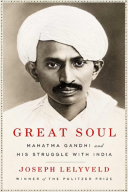
Some biographies become controversial because they launch an assault on an idea or a reputation. Others provoke unease because they compel us to look again, carefully and without the comfort of settled myth, at a figure we believe we already know. Joseph Lelyveld’s Great Soul: Mahatma Gandhi and His Struggle with India belongs firmly to the second category. Published in 2011 by Alfred A. Knopf, the book is not a conventional cradle-to-grave life. Lelyveld, a Pulitzer Prize-winning journalist and former executive editor of The New York Times who reported from both South Africa and India, explicitly frames his work as a selective meditation on Gandhi’s evolving social vision and the friction between that vision and the India that both revered and resisted him. The result is a vivid, nuanced, and frequently unsettling portrait that refuses to fit its subject neatly into the categories of saint or villain.
South Africa as the Making of the Mahatma
Lelyveld divides his attention roughly equally between Gandhi’s two formative decades in South Africa (1893–1914) and the decades after his return to India. South Africa is treated not as mere prologue but as the laboratory in which the future Mahatma was made. Arriving as a 23-year-old British-trained lawyer of the Modh Bania merchant caste, Gandhi initially sought to protect the interests of Indian traders against discriminatory legislation. Lelyveld documents the slow, uneven expansion of his concern from the relatively privileged “free Indians” to the indentured labourers of lower caste and, eventually, to questions of race, caste, and social justice more broadly.
Early statements by Gandhi about Africans make for uncomfortable reading. In one well-known passage written while imprisoned with Zulu convicts, he observed that “Kaffirs are as a rule uncivilized—the convicts even more so. They are troublesome, very dirty and live almost like animals.” Elsewhere he objected to the mixing of Indians and Africans and used language that later readers have rightly described as racist in both context and tone. Lelyveld does not soft-pedal these remarks; he situates them within the hierarchical assumptions Gandhi carried from India and the colonial environment of Natal and the Transvaal. At the same time, he traces the gradual transformation: the same man who once organised stretcher corps for the British during the Boer War and the Zulu rebellion later developed the techniques of satyagraha that would become his signature method of resistance.
By the time of the 1913 campaign against the £3 tax on indentured workers, Gandhi had begun to articulate a more inclusive social vision, even if full identification with African political aspirations still lay far in the future.
The Kallenbach Relationship and the Limits of Interpretation
Central to the South African chapters is Gandhi’s relationship with Hermann Kallenbach, the German-Jewish architect and bodybuilder with whom he shared a close companionship for several years. They lived together for a period, co-founded the communal Tolstoy Farm, and corresponded in language of striking intimacy. Gandhi addressed Kallenbach as “Lower House” while styling himself “Upper House”; he wrote of Kallenbach having “taken possession of my body” and of a love “such as the world has not yet seen.” Kallenbach, for his part, later remarked that they had lived “almost in the same bed.”
Lelyveld presents the surviving letters—Gandhi destroyed most of Kallenbach’s side of the correspondence—and quotes a respected scholar’s characterisation of the bond as “clearly homoerotic” rather than homosexual, meaning a strong mutual attraction short of physical consummation. Both men had taken vows of celibacy; both experimented with diet and the control of appetites. Lelyveld is careful not to claim a sexual relationship. In interviews after publication he insisted that the book does not describe Gandhi as bisexual or homosexual and that the two men were not hypocrites about their principles of abstinence. Historian Sugata Bose, reviewing the book, noted the speculative quality of certain modern readings and cautioned against imposing contemporary categories on a historical relationship that was intense, affectionate, and ambiguous.
The controversy that erupted in India—sparked largely by a hostile review in the Wall Street Journal and subsequent tabloid headlines—led the Gujarat government to ban the book before most Indians had seen it. Lelyveld observed that the ban was a “great favour” to sales, but the episode revealed more about the political uses of Gandhi’s image than about the evidence the book actually presents.
Caste, Ambedkar, and the Struggle within India
The Indian half of Great Soul turns to what Lelyveld calls Gandhi’s “struggle with India”—the effort to impose a moral and social transformation on a society that worshipped him while often ignoring his most radical demands. Nowhere is this tension sharper than in the long confrontation with B. R. Ambedkar. Lelyveld gives Ambedkar the serious attention he has often been denied in popular narratives of the freedom struggle. Ambedkar, the brilliant, Western-educated leader of the Depressed Classes (later Dalits), rejected Gandhi’s paternalistic approach to untouchability. Where Gandhi sought to reform Hindu society from within, renaming the so-called untouchables “Harijans” (children of God) and urging caste Hindus to purify themselves, Ambedkar demanded the annihilation of caste itself and separate political representation.
The clash came to a head in 1932 over the British Communal Award’s provision of separate electorates. Gandhi’s fast unto death forced a compromise—the Poona Pact—that Ambedkar accepted under pressure but never fully trusted. Lelyveld shows both men as complex, sometimes contradictory figures: Gandhi genuinely appalled by the practice of untouchability yet unwilling to abandon the framework of varna; Ambedkar rightly suspicious that symbolic gestures would leave structural injustice intact. The book also records Gandhi’s extraordinary anti-untouchability tours of 1933–34, covering thousands of miles and facing orthodox Hindu hostility, even as the practical results remained limited.
Experiments in Celibacy and the Demands of Brahmacharya
Equally discomforting are the accounts of Gandhi’s later experiments with brahmacharya, or celibacy. After Kasturba’s death in 1944, and especially during the communal violence of 1946–47 in Noakhali and Bihar, the ageing Mahatma tested his self-mastery by sharing his bed with young women, including his grand-niece Manu Gandhi, sometimes with both of them naked. The purpose, as he framed it, was to prove that he had conquered sexual desire so completely that the presence of a naked woman produced no arousal. Several associates, including Nirmal Kumar Bose, resigned or protested. Lelyveld presents these episodes without sensationalism, embedding them in Gandhi’s lifelong preoccupation with the control of the senses as a prerequisite for political and spiritual authority. The practice remains, for many modern readers, one of the most difficult aspects of the historical Gandhi to assimilate.
Beyond Saint and Villain
What distinguishes Great Soul is its refusal of hagiography and of simple debunking. Lelyveld is not writing a hatchet job; Geoffrey Ward, reviewing the book for the New York Times, found it “vivid, nuanced and cleareyed.” Nor is he constructing a new saint. He shows a man who could be politically shrewd and sometimes ruthless, capable of emotional blackmail through fasting, and often exasperating to those closest to him—his wife, his sons, his political allies. He also shows a figure of extraordinary moral ambition whose insistence on non-violence, inter-communal harmony, and the dignity of the poorest left an indelible mark on the twentieth century, even when the India that emerged after 1947 fell far short of his hopes. The tragedy Lelyveld identifies is not the assassination but the recognition, forced upon Gandhi like Lear, of the limits of his power to remake the world according to his vision.
Scholars and biographers have long known many of the materials Lelyveld deploys. The Kallenbach letters had been available for years; the tensions with Ambedkar are part of the documentary record; the brahmacharya experiments appear in contemporary diaries and later memoirs. What Lelyveld achieves is a synthesis that keeps the contradictions in view without resolving them into a single, comfortable narrative. In doing so he joins a tradition of critical engagement that includes the work of historians such as Judith Brown, Ramachandra Guha, and others who have insisted that Gandhi remains more interesting—and more useful—when treated as a historical actor rather than an icon.
Why the Discomfort Matters
For readers accustomed to the filtered image of the Mahatma that circulates in popular culture and official commemorations, Great Soul is not an easy book. It asks us to hold simultaneously the visionary leader who inspired millions, the compassionate human being who identified with the downtrodden, and the complex, sometimes contradictory figure whose personal disciplines and political strategies continue to provoke argument. That discomfort is precisely its value. In an age when historical figures are too readily reduced to heroes or villains for contemporary polemics, Lelyveld’s patient, source-based inquiry models a different approach: one that respects the magnitude of Gandhi’s achievement while refusing to avert its gaze from the human struggles, the evolving prejudices, and the unresolved dilemmas that accompanied it. The book does not diminish the Great Soul. It restores him to the full dimensions of a life lived in the tension between ideal and reality—a tension that remains relevant wherever political movements claim moral authority and wherever societies confront the stubborn legacies of hierarchy, violence, and exclusion.
Final Assessment: Humanizing the Myth
Joseph Lelyveld’s Great Soul: Mahatma Gandhi and His Struggle with India is a masterwork of biographical narrative. It does not fit Gandhi neatly into the polar categories of saint or villain. Instead, it invites the reader to contemplate one of the most influential figures in modern history as a profoundly complex, frequently paradoxical human being: a man of extraordinary courage and moral conviction who mobilised millions against colonial tyranny through non-violent resistance, yet struggled to reform the deeply entrenched social prejudices of his own society; a visionary leader of immense personal charisma who proved tragically unable to prevent the bloody partition of his homeland.
By stripping away the plaster veneer of untouchable sainthood, Lelyveld restores to history a living, breathing Mohandas Gandhi—a leader whose flaws, missteps, and contradictions do not erase his monumental achievements, but rather highlight the terrifying weight of the burdens he chose to carry. For any reader seeking an honest, courageous, and deeply rewarding re-examination of Mahatma Gandhi, Great Soul remains an indispensable read.
(The author, a former history professor at St. Xavier’s College, Mumbai, is a known commentator on democracy, diversity and pluralism in South Asia.)





[[comment.comment_text]]