The Alternative Conundrum: Duty, Religion, and the Search for Vision in Modern Indian Politics

 1 month, 4 weeks ago
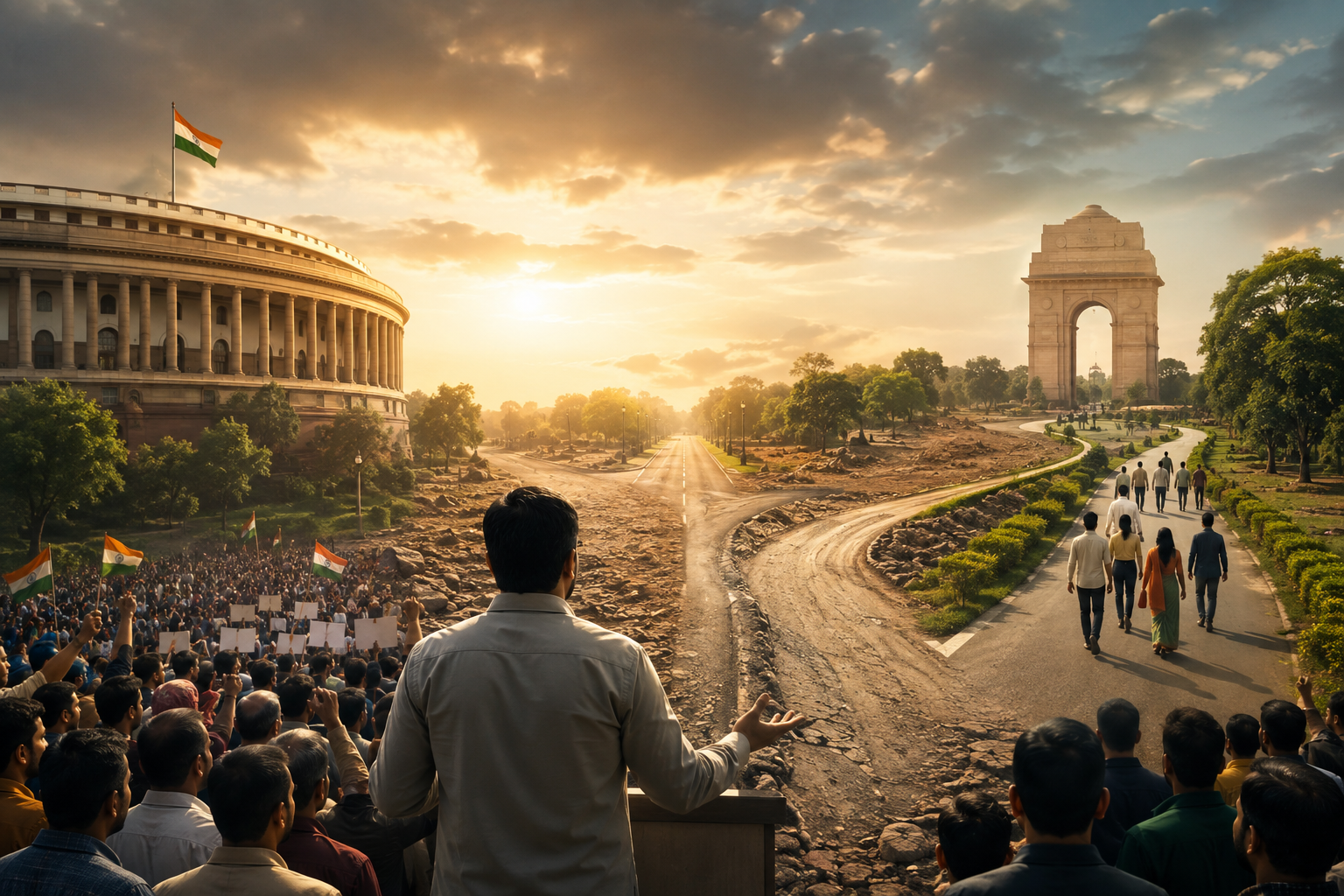
In contemporary Indian political discourse, one central question looms larger than any other: where is the credible, structured alternative to the Ruling Bharatiya Janata Party (BJP)? While opposition forces remain continuously engaged in criticizing the government, their efforts have largely failed to coalesce into a cohesive vision that inspires national confidence. This absence of a formidable counterweight is not merely a tactical shortcoming for opposition parties; it signifies a broader, structural shift in how democracy operates in the country today.
At its core, this impasse stems from a fundamental divergence from the primary mandate of governance. The foundational duty of politics has always been public service—improving livelihoods, upholding institutional integrity, and serving the common citizen. However, modern political strategy has increasingly reduced governance to an unending pursuit of electoral dominance. When victory becomes the sole metric of success, public welfare is relegated to the background, and systemic policy discussions are replaced by zero-sum political maneuvering.
This trend is most visible within the halls of Parliament. Legislative sessions in both the Lok Sabha and Rajya Sabha are routinely marred by persistent disruptions, walkouts, and slogan-shouting. While the governing party bears the responsibility of maintaining transparency and addressing opposition inquiries, the opposition’s role extends far beyond halting legislative proceedings. When parliamentary debates stall, critical policy questions regarding structural unemployment, persistent inflation, agricultural distress, and public healthcare capacity are left unaddressed, depriving the public of meaningful representation.
To build a viable national presence, an opposition must realize that critique alone is insufficient. The electorate may acknowledge current governance failures, yet remain hesitant to embrace change without a clear alternative roadmap. Citizens are increasingly demanding concrete solutions: How will job creation be sustained? What specific reforms will revitalize healthcare and education? How will small businesses and agricultural workers be insulated from economic shocks? Opposition parties must offer actionable policies rather than relying on voters’ potential fatigue with the incumbent administration.
Simultaneously, the nature of political mobilization has undergone a dramatic evolution. A significant portion of contemporary political friction plays out across social media platforms, driven by digital campaigns and youth expression. While heightened digital engagement among younger demographics is a positive indicator of civic awareness, it is a mistake to equate online viral trends with sustained grassroots movements. Internet-driven commentary often lacks the longevity and deep organizational backbone required to effect real political transformation.
Historical precedent demonstrates that true mass movements—such as the Jan Aandolan led by Jayaprakash Narayan in the 1970s—depend on deep, sustained contact with affected communities. These movements gained momentum because they addressed pervasive social anxiety through continuous, physical organizing across towns and villages. For contemporary political actors, transitioning from digital discourse to active, field-level engagement remains an indispensable prerequisite for building long-term trust with voters.
Another critical dimension of the current landscape is the intersection of faith and governance. In a culturally rich and pluralistic society, religion naturally forms an integral part of individual identity and social values. However, when religious sentiment is instrumentalized as a primary tool for partisan mobilization, it risks deepening societal fault lines. Religion at its highest standard encourages compassion and unity, whereas political strategy should focus on delivery, administration, and equal opportunity under the law.
The solution, therefore, lies not in the "politics of religion," but in infusing politics with moral accountability and ethical duty. When ethical boundaries are overridden by political expediency, governance strays from its core responsibility to protect every citizen equally. Political leadership must be held accountable to constitutional principles, ensuring that state institutions remain focused on equitable economic growth and social justice rather than competitive polarization.
Ultimately, Indian democracy functions best when a strong government is balanced by an equally capable, constructive opposition. A robust opposition does not merely resist policy; it scrutinizes legislation, highlights governance gaps, and presents alternative frameworks that compel the ruling party to perform better. The opportunity exists for opposition forces to move beyond reactive politics and offer a genuinely compelling vision centered on public accountability and administrative capability.
Rebuilding public trust requires convincing the electorate that political leadership seeks power to strengthen public institutions rather than simply manage them. A credible political alternative cannot be generated through opposition rhetoric alone—it must be built on tangible policy commitments, sustained ground presence, and a clear vision for the nation’s future. In the final analysis, democracy is strengthened not by noise, but by trust, capability, and an unwavering commitment to public service.



[[comment.comment_text]]