Legacy of a Mass Leader: Dishom Guru Shibu Soren
 2 months, 2 weeks ago
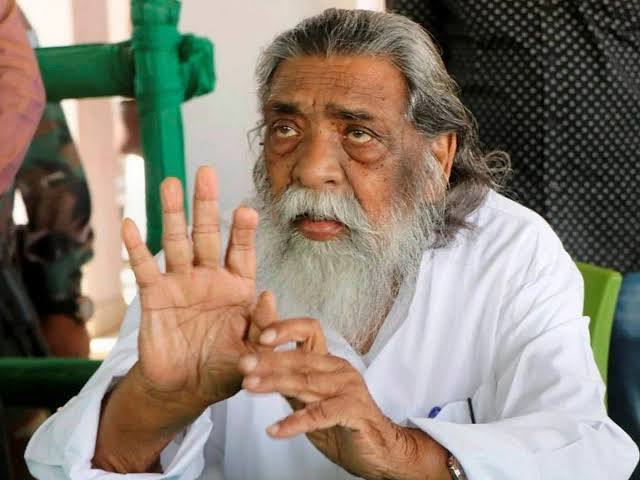
Some people make history through power, while others write history through struggle. Dishom Guru Shibu Soren belonged to that rare class of people’s leaders who dedicated every moment of their lives to the cause of Jal, Jungle, Zameen (Water, Forest, and Land), tribal identity, and the dignity of Jharkhand. August 4, 2026, marks the first death anniversary of Shibu Soren. It is not merely an occasion to pay tribute to a political leader, but a day to remember the historic struggle that gave a new dimension to India’s federal structure. The creation of the State of Jharkhand was not an act of governmental benevolence, but the outcome of decades of popular movements, the sacrifices of thousands of activists, and his indomitable courage.
Born into a society where tribal and indigenous communities battled exploitative moneylending, land grabbing, displacement, and economic inequality, Soren was deeply influenced by his father, Sobaran Soren, who fought against social injustice. His father's untimely death strengthened the young Soren’s resolve to fight oppression. He embraced politics not to acquire personal power, but as an instrument to secure justice for society. His greatest contribution was bringing the pain and aspirations of tribal communities from remote forests and villages directly into Parliament and national political discourse, making the rights over natural resources and local identity an integral part of India's democratic conversation.
He spearheaded a massive movement against exploitative moneylending, bonded exploitation, and illegal land alienation. His crusade was not merely for economic justice, but also for dignity, cultural identity, and social rights—which is why he earned the venerated title of "Dishom Guru" (Guide of the People). While the history of the Jharkhand Movement was shaped by many distinguished figures like Birsa Munda, Jaipal Singh Munda, Vinod Bihari Mahato, A.K. Roy, and Nirmal Mahato, Soren’s role was truly remarkable in taking this movement to every household, sustaining it over decades, and ultimately transforming it into political reality.
His struggle was never confined merely to the demand for a separate state. He consistently maintained that the objective behind forming Jharkhand was not simply to establish a new capital, but to ensure a life of dignity for tribal communities, indigenous people, farmers, laborers, and economically weaker sections. Society—not political power—remained the center of his politics. Whether in Parliament or on the streets, he consistently prioritized the interests of his people, serving as a Member of Parliament, Union Minister, and Chief Minister of Jharkhand. Though his political journey witnessed ups and downs, he repeatedly returned to the people and regained his strength through their trust.
Even after the formation of Jharkhand, Soren emphasized that genuine development would only be achieved when the benefits of the state's abundant natural resources primarily reached local communities. He continuously raised his voice on critical issues such as displacement, unemployment, tribal rights, education, and local policy. Perhaps his greatest distinction was that he never viewed tribal communities merely as a vote bank. Instead, he sought to secure for them true political dignity, establishing that economic development and tribal identity were not contradictory, but complementary to each other.
As the nation observes his first death anniversary, an important question arises: Should such an extraordinary leader not be honored with India’s highest civilian award, the Bharat Ratna? The Bharat Ratna is not merely an individual honor; it recognizes ideas, struggles, and historic contributions that strengthen Indian democracy. Just as Dr. B.R. Ambedkar was honored for social justice, Sardar Vallabhbhai Patel for national integration, and Atal Bihari Vajpayee for national service, the immense contribution of Dishom Guru Shibu Soren in leading the Jharkhand Movement to democratic success deserves serious national consideration.
It is unfortunate that by his first death anniversary, the Union Government has not initiated the process to confer the Bharat Ratna upon him posthumously. This issue deserves to be viewed beyond partisan political differences, as the maturity of any democracy is reflected in how it honors those who gave a voice to historically marginalized communities. Jharkhand is a land forged through struggle, and if Soren became the foremost political symbol of that struggle, honoring him would be a tribute to the democratic history of India itself.
To advance this cause, the Jharkhand Legislative Assembly should unanimously pass a resolution recommending to the Union Government that Dishom Guru Shibu Soren be posthumously conferred the Bharat Ratna. Members of Parliament across all political parties ought to rise above partisan considerations to support this demand. This is not the concern of a single political party; it is a matter of profound honor for the nearly 35 million people of Jharkhand.
On his first death anniversary, the Union Government should send a clear message that India never forgets those leaders who strengthened democracy, social justice, and regional identity. The Bharat Ratna is not an honor reserved only for those who shape politics in New Delhi; it belongs equally to mass leaders who emerge from forests, hills, and villages to give new direction to the nation. Recognizing Soren’s legacy would affirm that grassroots democratic struggles are integral to the Indian republic.
The life of Dishom Guru Shibu Soren will continue to inspire future generations with the timeless lesson that popular struggle is never in vain. Governments change and political power shifts, but the legacy of genuine people's movements remains eternal. Whenever the history of Jharkhand’s identity, tribal self-respect, and social justice is written, his name will forever be inscribed in golden letters. The most meaningful tribute to his legacy remains our commitment to building the Jharkhand of his dreams and a more just, equitable India.
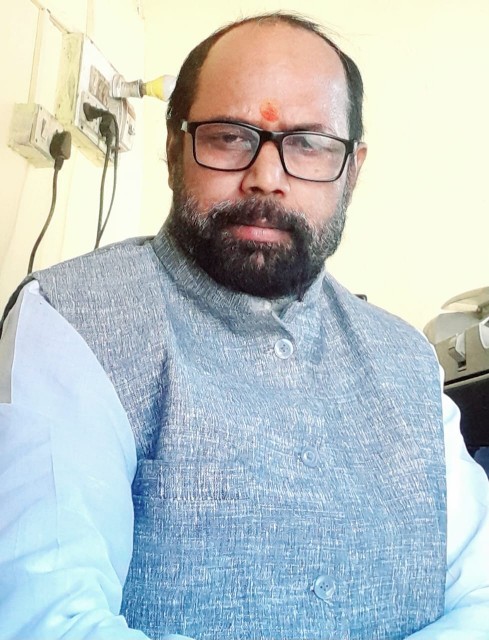
(Author is State Spokesperson of Jharkhand Congress.)







[[comment.comment_text]]