Remembering Sahir: The Poet of a Moment, The Voice for All Time
 2 hours ago
“Main pal do pal ka shayar hoon..” (I am a poet of a moment or two..) to “Main har ek pal ka shayar hoon..” (I am a poet for all the moments)
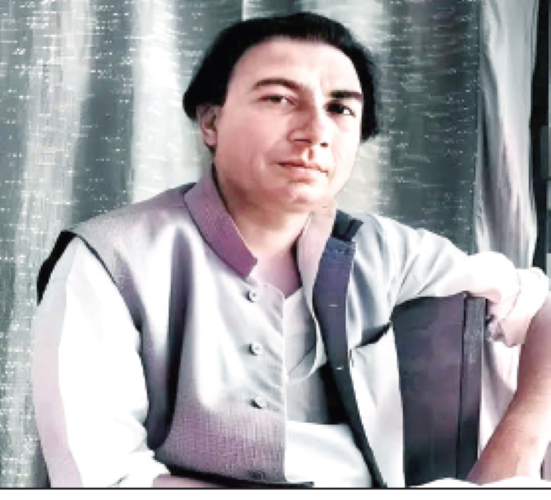
Forty-six years after his death, Sahir Ludhianvi’s eloquent lyrics continue to resonate in people’s minds, and no one in Bollywood is likely to take his place. The progressive Urdu poet who became the conscience of Hindi film songwriting remains unmatched in the way he fused romance with rebellion, philosophy with protest, and devotion with doubt. While his contemporaries—Shailendra, Majrooh Sultanpuri, Shakeel Badayuni, Rajinder Krishan, Kaifi Azmi and Hasrat Jaipuri—each carved distinctive niches of lyrical excellence, Sahir alone injected a consistent streak of cynicism and social defiance into every genre he touched.
“Yeh duniya agar mil bhi jaaye to kya hai” (Even if this world is gained, what of it?)
Sahir’s rebellion was never decorative. In Pyaasa (1957), the poet-hero’s anguish finds its sharpest expression in lines that dismiss worldly success as hollow. “Yeh mahalon, yeh takhton, yeh taajon ki duniya… yeh duniya agar mil bhi jaaye to kya hai” is not mere melancholy; it is a frontal attack on a society that values power and wealth over human dignity. Few lyricists of his generation dared such unvarnished scorn. Shailendra, the poet of Raj Kapoor’s cinematic socialism, wrote with warmth and hope—“Mera joota hai Japani” or “Awara hoon”—but rarely with Sahir’s bitterness. Kaifi Azmi, equally progressive and literary, brought intellectual elegance and humanist depth, yet his rebellion was often more measured. Sahir’s voice carried the edge of lived grievance—his parents’ bitter separation, the trauma of Partition, and an uncompromising Progressive Writers’ Association conviction that poetry must serve truth rather than ornament.
“Tu Hindu banega na Musalman banega” (You will become neither Hindu nor Muslim)
In the realm of patriotism and secular idealism, Sahir’s clarity remains unmatched. “Tu Hindu banega na Musalman banega, insaan ki aulad hai, insaan banega” from Dhool Ka Phool (1959) is both a lullaby and a manifesto. It refuses the comfort of religious identity in favour of a larger humanism. Compare this with Shakeel Badayuni’s graceful classical romanticism for Naushad, or Hasrat Jaipuri’s lighter, more conventional patriotic flourishes. Sahir’s nationalism was never triumphalist; it was interrogative. Even his parody of Iqbal—“Cheen-o-Arab hamaara, Hindostaan hamaara / Rahne ko ghar nahin hai, saara jahaan hamaara”—exposed the gap between official slogans and the homeless reality of the poor.
“Ishq azaad hai, Hindu na Mussalman hai ishq” (Love is free; love is neither Hindu nor Muslim)
Sahir’s qawwalis, particularly in Barsaat Ki Raat (1960), elevated the form beyond devotional entertainment. “Na toh karavan ki talaash hai” and its sequel transform mystical love into a radical declaration of freedom from communal boundaries. Here, as elsewhere, devotion is never blind. In Hum Dono (1961), “Allah tero naam, Ishwar tero naam” becomes a prayer for tolerance rather than sectarian piety. Majrooh Sultanpuri, the longest-serving and most versatile of the group, could write exquisite romantic and light-hearted lyrics across decades, yet he rarely fused spiritual longing with social critique the way Sahir did. Rajinder Krishan, prolific and popular, specialised in accessible, often playful numbers; Sahir’s qawwalis and bhajans carried philosophical weight.
“Kabhi kabhie mere dil mein khayal aata hai” (Sometimes the thought crosses my heart)
Romance, too, bore Sahir’s distinctive stamp. “Kabhi kabhie mere dil mein khayal aata hai” from the film of the same name is tender, yet shadowed by the knowledge of what might have been. Even his most sensual songs—“Yeh raat yeh chandni phir kahan,” “Abhi na jao chhod kar,” “Chhoo lene do nazuk hothon ko”—carry an undercurrent of impermanence or social awareness. Shailendra’s love songs possessed a pure, folk-like simplicity; Hasrat Jaipuri specialised in the courtly and the playful. Sahir’s romance was rarely untroubled. Love in his universe existed in a world of inequality, hypocrisy and fleeting time. The same man who wrote “Jo wada kiya woh nibhana padega” for Taj Mahal also dismantled the monument’s romantic myth in his famous nazm: an emperor’s wealth mocking the love of ordinary people.
“Man re, tu kahe na dheer dhare”
(O mind, why do you not find patience?)
Philosophy and introspection formed another of Sahir’s strengths. “Man re, tu kahe na dheer dhare” from Chitralekha and “Aage bhi jaane na tu” from Waqt confront the limits of human knowledge and the restlessness of desire. “Main pal do pal ka shayar hoon” is both self-deprecation and quiet assertion of lasting impact. While Kaifi Azmi brought a refined literary sensibility and Majrooh sustained melodic grace across changing eras, Sahir’s philosophical songs often carried a residual anger—against injustice, against the commodification of women (“Aurat ne janam diya mardon ko”), against a world that rewarded conformity.
What ultimately set Sahir apart was not merely range but attitude. He insisted that lyrics precede music, demanded respect and royalties for the lyricist, and refused to soften his progressive edge for commercial comfort. Shailendra and Hasrat thrived within the Raj Kapoor–Shankar-Jaikishan ecosystem; Shakeel found his perfect partner in Naushad’s classical idiom; Majrooh adapted across generations; Kaifi brought poetic gravitas; Rajinder Krishan supplied volume and accessibility. Sahir moved among composers—S.D. Burman, Roshan, Ravi, Khayyam, N. Datta—while remaining unmistakably himself.
Forty-six years on, his songs still sound contemporary because the inequalities and hypocrisies he named have not disappeared. The magician’s pen continues to cast its spell not through nostalgia alone, but through the uncomfortable clarity that refuses to look away. In an industry that has produced many gifted wordsmiths, Sahir Ludhianvi remains the poet who made the film lyric a vehicle for both beauty and dissent—and in doing so, ensured that no one else could quite take his place.
(The author is a former member of the history faculty at St. Xavier’s College, Mumbai.)







[[comment.comment_text]]