The Voice That Divided an Empire and United Its Soul: A Centenary Tribute to Noor Jehan

 2 weeks, 6 days ago
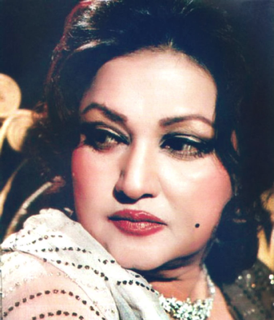
One hundred years after her birth in the historic town of Kasur, the name Noor Jehan continues to evoke an unmatched sensory landscape of South Asian culture. Long before the term "superstar" entered the subcontinent’s cinematic lexicon, Allah Wasai—the girl who would become Malika-e-Tarannum (the Queen of Melody)—established the archetype. She was not merely a playback singer or a screen siren; she was the first female single star of undivided India and Pakistan who commanded her own destiny, negotiated top billing alongside male contemporaries, and wielded absolute artistic sovereignty over music directors, filmmakers, and state institutions alike.
As South Asia marks her birth centenary, her legacy stands as a monumental bridge across a fragmented history. She remains a singular historical figure whose career successfully spanned the golden age of Lahore and Calcutta's early talkies, the glamorous heights of 1940s Bombay cinema, and the foundational rebuilding of post-partition Pakistani film and music.
“Awaaz De Kahan Hai, Duniya Meri Jawan Hai”
(Call out to me, where are you? My world is young and vibrant)
Born 21 September 1926 into a family of professional musicians, Noor Jehan’s talent was recognized almost immediately. Trained in classical vocal music from a young age, her early exposure to thumri, dadra, and kheyal under formidable masters gave her vocal delivery a structural perfection that set her apart from her peers. Moving from stage performances in Punjab to the bustling studios of Calcutta in the 1930s as a child artist, she honed an innate understanding of the camera and the microphone—two technologies that were rapidly redefining Indian culture.
By the early 1940s, her move to Bombay transformed her into a national sensation. Films like *Khandaan* (1942), *Zeenat* (1945), and *Anmol Ghadi* (1946) established her as an unbeatable box-office draw. In an era when female actors were often relegated to decorative roles, Noor Jehan sang her own songs with an expressive vigour that redefined the tragic heroine. When she performed Naushad’s composition "Awaaz De Kahan Hai" opposite Surendra in *Anmol Ghadi*, she captured the melancholic longing of an empire on the brink of profound transformation. Her performance in Zeenat also introduced the first all-women qawwali on screen, breaking gendered barriers in cinematic musical staging. She became the first woman in Indian cinema to demand parity in remuneration and control over her musical arrangements, setting a precedent for generations of women in performance arts.
“Mujh Se Pehli Si Mohabbat Mere Mehboob Na Mang”
(My love, do not ask of me that love of yesteryears)
The partition of British India in 1947 presented Noor Jehan with a pivotal crossroads. At the absolute peak of her fame in Bombay, having just starred in the record-breaking *Jugnu* alongside a young Dilip Kumar, she made the conscious decision to migrate to the newly created nation of Pakistan. Accompanying her husband, director Shaukat Hussain Rizvi, she left behind a thriving metropolis and an established ecosystem to reconstruct an industry from the ashes of looted and destroyed studios in Lahore.
Her arrival in Pakistan was not merely a relocation; it was an act of cultural foundation. Facing a severe lack of equipment and infrastructure, she co-directed and starred in *Chan Way* (1951), becoming the first female director in Pakistani cinema history. The film was a triumph, establishing the viability of Punjabi cinema in post-independence Pakistan.
It was during this period of dramatic personal and regional transition that her voice took on an added layer of intellectual gravity. Her rendition of revolutionary poet Faiz Ahmed Faiz’s ghazal, "Mujh Se Pehli Si Mohabbat Mere Mehboob Na Mang", set to music by Rasheed Attre, became an epochal cultural event. Faiz famously declared thereafter that the poem no longer belonged to him, but to Noor Jehan. Through her rich, resonant timbre, she transformed a poem about social consciousness and romantic disillusionment into a timeless anthem of the South Asian condition, bridging the gap between high literature and popular culture.
“Chandni Raatein, Sab Jag Soye Hum Jaage”
(Moonlit nights; while the whole world sleeps, I stay awake)
By the early 1960s, having dominated the silver screen for over two decades, Noor Jehan made a deliberate pivot away from acting to focus exclusively on playback singing. Rather than diminishing her stature, this transition elevated her into an ethereal realm. Her mastery over classical raagas, paired with her effortless modulation, allowed her to effortlessly navigate the microtonal nuances of Punjabi folk, Urdu ghazals, and complex film compositions.
Whether singing the delicate, haunting notes of "Chandni Raatein" in *Dopatta* (1952) or the fiery Punjabi folk tracks that defined rural Pakistani cinema for decades, her vocal control remained unmatched. Her voice possessed an intrinsic grandeur—crystalline at the highest notes, velvety in its mid-range, and effortlessly capable of improvisational taans that left trained classical musicians mesmerized.
During the 1965 conflict between India and Pakistan, her broadcasts on Radio Pakistan added another dimension to her public persona. Songs like "Aye Watan Ke Sajeele Jawano" resonated across millions of households. Regardless of political borders, music critics on both sides of the frontier acknowledged that her delivery transcended standard patriotic music, imbued as it was with raw emotion, maternal tenderness, and vocal majesty.
“Gaaye Gi Duniya Geet Mere, Surmai Chehre Ho Jaayenge”
(The world will sing my songs long after dusky faces turn to dust)
Noor Jehan’s artistic relationship with India never truly severed, despite the geopolitical barriers of the late 20th century. The mutual admiration between her and her Indian contemporaries—most notably Lata Mangeshkar—remained a testament to the shared musical heritage of the subcontinent. When Noor Jehan visited India in 1982 to attend the mortal celebration of Indian cinema's golden jubilee, her reunion with old friends and fellow artists was hailed as a historic cultural homecoming.
In her later years, as she turned her focus to ghazal recitals, her live renditions of Mirza Ghalib, Nasir Kazmi, and Habib Jalib solidified her status as the supreme interpreter of Urdu poetry. She stripped ghazal singing of excessive ornamentations, relying instead on pure emotional clarity and impeccable diction.
A century after her birth, the artistic blueprint laid down by Noor Jehan remains unassailable. She broke the glass ceiling for women in the South Asian entertainment industry, insisting on total artistic autonomy in a male-dominated studio system. She proved that a female artist could be both a pioneer of industry and a custodian of classical heritage. As generations of listeners across the globe continue to discover her vast discography, her own prophetic musical declaration rings truer than ever: long after the physical world changes, her voice remains eternal, defining the emotional landscape of millions.
(The author, a former member of the history faculty at St. Xavier’s College, Mumbai, is a known commentator on history, arts, literature and cinema.)





[[comment.comment_text]]