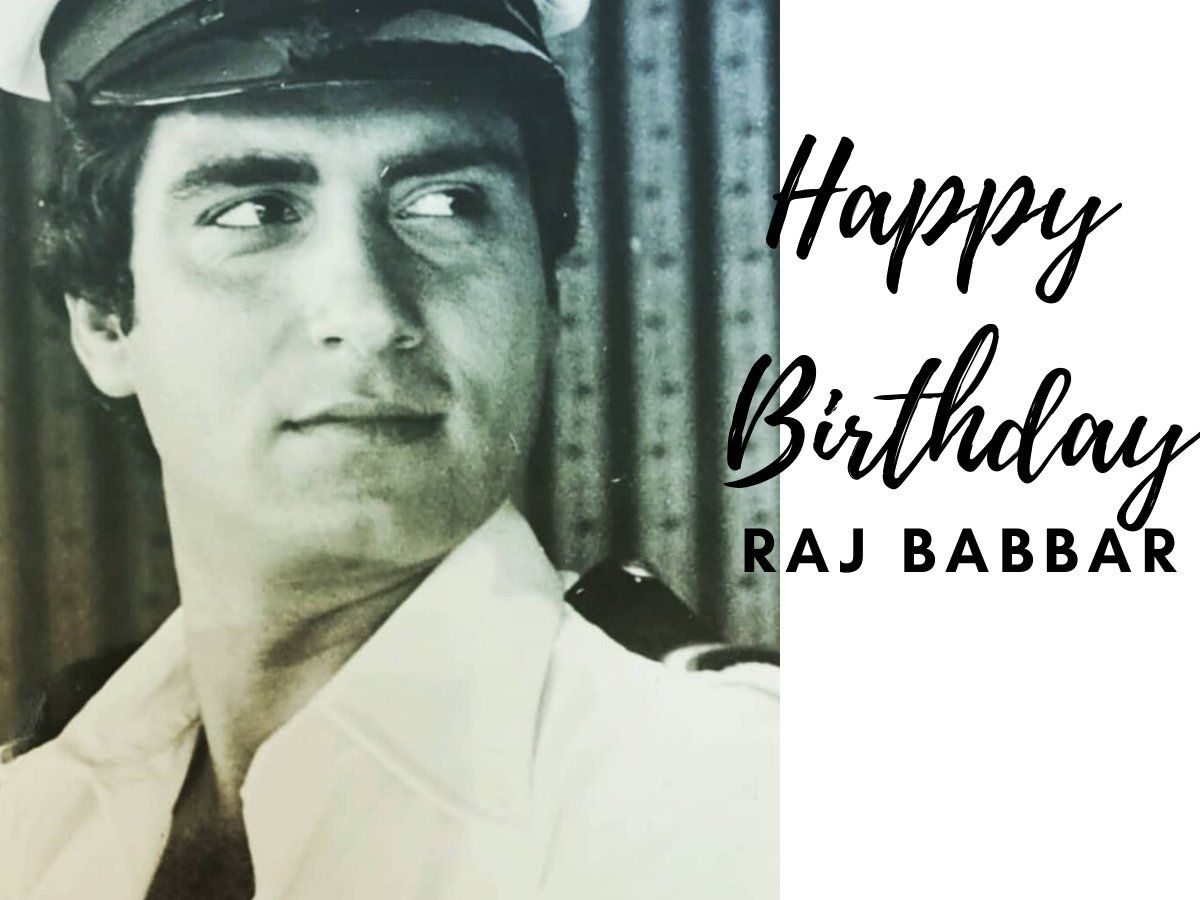
The Art of Intensity: A Birthday Tribute to Raj Babbar’s Dual Legacy in Cinema and Politics

 3 months, 2 weeks ago
On June 23, the cultural and political landscapes of India pause to celebrate the birthday of a man who transitioned seamlessly between the dramatic high-stakes of the silver screen and the volatile arenas of Indian democracy. *Raj Babbar* remains an enigmatic figure—an actor whose intense gaze could send shivers down the spine of an audience, and a politician whose voice resonated with the aspirations of millions.
Born in Tundla, Uttar Pradesh, to Kushal Kumar and Shobha Babbar, his journey from a small-town youth to a national figure is a masterclass in versatility and resilience.
The Crucible of Craft: From NSD to Cinematic Stardom
Babbar’s formidable command over his craft was not accidental. After completing his early education at Faiz-E-Aam Inter College and graduating from Agra College, he honed his skills at the prestigious *National School of Drama (NSD)*, graduating in the class of 1975. Steeped in the Method school of acting and seasoned by street theatre in New Delhi, Babbar arrived in Mumbai equipped with a raw, visceral energy that set him apart from the conventional romantic heroes of the era.
Making his debut alongside the celebrated Reena Roy, Babbar quickly broke away from standard typecasting. In 1980, he shocked the nation with his spine-chilling performance as an antagonist in B.R. Chopra’s *Insaaf Ka Taraazu*. His fearless portrayal of a ruthless predator earned him widespread notoriety and a Filmfare nomination, instantly establishing him as an actor willing to explore the darkest corners of human nature.
"True acting lies not in seeking the audience's affection, but in demanding their emotional truth, however uncomfortable it may be."
This audacious start cemented a long, fruitful association with the B.R. Chopra banner. Babbar soon balanced his dark cinematic persona with nuanced, sensitive roles, most notably in the classic *Nikaah* alongside Salma Agha and Deepak Parashar, and the socially charged *Aaj Ki Aawaz* opposite Smita Patil, the latter earning him a Filmfare Best Actor nomination.
A Maverick in Hindi Cinema and a Pioneer in Punjab
While mainstream Bollywood often utilized Babbar as a formidable antagonist—resulting in memorable, gritty performances in box-office hits and cult classics like *Aankhein*, *Dalaal*, *Yaarana*, *Barsaat*, and *Ziddi*—he refused to be confined by the borders of Hindi cinema.
Babbar arguably left an even more revolutionary mark on Punjabi cinema. In the 1980s, he became the face of a cinematic renaissance in Punjab, steering the industry away from cliché tropes toward realistic, serious themes. His powerhouse performances in art-house masterpieces such as *Chann Pardesi* (1980), *Long Da Lishkara* (1986), and *Marhi Da Deeva* (1989) introduced unprecedented depth to the regional film landscape. He seamlessly bridged this artistic realism with massive commercial success in Punjabi blockbusters like *Aasra Pyar Da*, *Mahaul Theek Hai*, and *Shaheed Uddham Singh*, proving his immense drawing power across diverse audiences.
The Small Screen and the Political Arena
As television began to reshape Indian households, Babbar lent his cinematic gravitas to the small screen. Audiences marveled at his regal portrayal of King Bharat in the introductory episodes of B.R. Chopra’s monumental TV series *Mahabharat*. He further showcased his historical versatility as Emperor Akbar in *Bahadur Shah Zafar* (1986) and later championed his roots by producing and acting in the acclaimed series *Maharaja Ranjit Singh* (2010). Even in recent decades, he continued to captivate TV audiences with sharp performances in contemporary series like Vipul Amrutlal Shah’s *Pukaar - Call For The Hero*.
However, the stage of fiction could not fully contain Babbar’s leadership instincts. Channelling his deep-rooted commitment to public life, he entered the political coliseum as a prominent leader of the *Indian National Congress*. Bringing the same dedication to governance that he brought to the camera, Babbar served the nation as a *three-time member of the Lok Sabha* and a *two-time member of the Rajya Sabha*. His leadership acumen was further recognized when he was appointed President of the Uttar Pradesh Congress Committee, guiding the party through critical political chapters in his home state.
A Lasting Legacy
To look back at Raj Babbar’s career is to witness a rare trajectory of an artist who never rested on his laurels. Whether earning critical acclaim through five distinct Filmfare nominations—spanning Best Actor, Best Supporting Actor, and Best Villain categories—or debating policies in the halls of Parliament, he has lived his life in the public eye with unmatched dignity.
As Raj Babbar celebrates another year, he stands as a bridge between two worlds: an actor of uncompromising intensity and a statesman of enduring dedication.
(The author is a former member of the history faculty at St. Xavier’s College, Mumbai.)



[[comment.comment_text]]