Passport service will be more citizen-friendly: EAM

New Delhi, Passport rules and processes will be simplified further by minimising the compliance burden on the citizens.

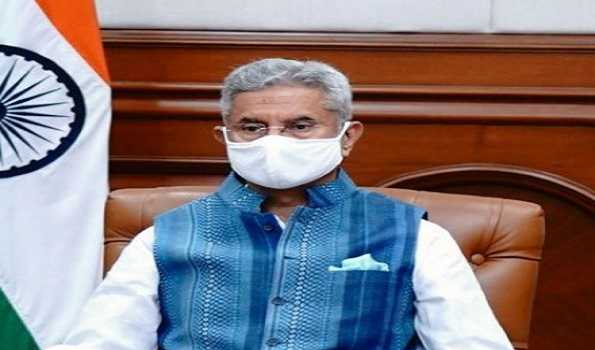
External Affairs Minister S Jaishankar gave the assurance in a virtual address to mark the Passport Seva Divas. The day is in commemoration of the enactment of the Passports Act on June 24, 1967.

The EAM said that the mandate of the government is to ensure timely, effective, assured, transparent and accountable public service delivery.

"Towards this end, our first approach was to bring in simplification of the passport rules and processes. However, as the process is dynamic, we should continue to look deeper and deliberate further on reducing the compliance burden of our citizens," he said.

"As we move ahead on the path of progress,' Jaishankar said, "we should take stock of the steps in the realm of passports that would make it not only more citizen-centric but also citizen-friendly."

The Ministry is leveraging the use of technology and digital systems into its functioning, such as in delivering passport service.

Collaborating with the Department of Posts, the MEA has also strengthened the outreach of Passport services to the citizens.

The ministry has extended its global outreach and 174 Indian Missions and Posts have been integrated into the Passport Seva Programme.

It has established Post Office Passport Seva Kendras across the country.

There is are 555 Passport Kendras in India. This includes 36 Passport Offices, 93 Passport Seva Kendras and 426 Post Office Passport Seva Kendras.

The MEA has recently integrated the Passport Seva Programme with DigiLocker.

The DigiLocker helps citizens to submit various documents in a paperless mode. This means, when one reaches the Passport Kendra, he/she is not required to carry the original documents.

(Agencies)

Renu’s Dhanjal:  Patna, Still Drowning

Patna’s recurring floods echo Phanishwar Nath Renu’s 1975 reportage. Fifty years later, the crisis exposes urban planning failures, drainage gaps and lost lessons.

Niraj Krishna   |  1 day, 7 hours ago

The Price of Profit in Satya Niketan, South Delhi

The Satya Niketan tragedy is not simply a story of one negligent landlord. It raises serious questions about unregulated construction, overcrowded student housing and the failure of civic enforcement in South Delhi.

Dinesh Dubey @ Editorial   |  1 day, 10 hours ago

The Rise of Rogue AI Agents and the Global Rush for Liability Laws

Rogue AI agents are raising new cybersecurity and accountability risks. Why governments need binding liability laws for autonomous AI systems.

Dinesh Dubey @ Editorial   |  1 day, 22 hours ago

NEPAL IN THE GRIP OF WORST FLASH FLOOD DISASTER

Nepal faces a devastating flash flood disaster linked to glacial ice and debris, with hundreds dead, thousands missing and major infrastructure badly damaged.

Alok K.Shrivastava   |  1 day, 22 hours ago

India’s Cities Are Growing Faster Than Their Infrastructure

India’s rapid urbanisation is outpacing infrastructure, governance and planning. Why cities need better housing, mobility, water management and climate resilience.

Ankita Mishra   |  1 day, 22 hours ago

Article 142:  Who Bowed—Power or Democracy?

The withdrawal of protest-related FIRs raises deeper questions about Article 142, public pressure, judicial power, institutional autonomy and the Rule of Law in India.

Niraj Krishna   |  2 days, 19 hours ago

Comments

YOU MIGHT ALSO LIKE

View More

By Niraj Krishna   |   1 day, 7 hours ago
Renu’s Dhanjal:  Patna, Still Drowning
By Alok K.Shrivastava   |   1 day, 22 hours ago
NEPAL IN THE GRIP OF WORST FLASH FLOOD DISASTER
By Ankita Mishra   |   1 day, 22 hours ago
India’s Cities Are Growing Faster Than Their Infrastructure
By Niraj Krishna   |   2 days, 19 hours ago
Article 142:  Who Bowed—Power or Democracy?