Govt to set rules for industry to go green

 5 years, 3 months ago
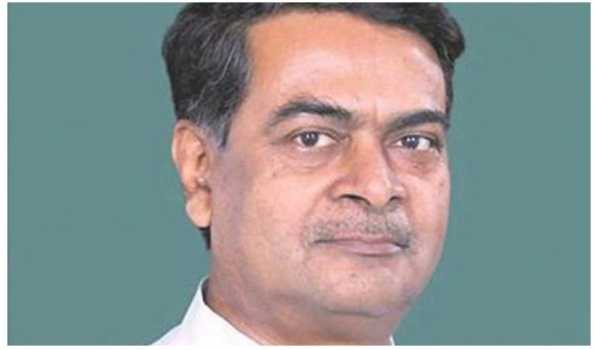
New Delhi, The government is planning to come out with rules and regulations allowing easier open access for industries which want to rely on green energy for their functioning, said Power and New and Renewable Energy Minister Raj Kumar Singh.
The rules will enable an industry to either set up green energy manufacturing capacity itself or through a developer, and draw power from it through open access.
The surcharge on open access will also be rationalised so as to ensure that open access is not saddled with unfair levies, said the minister.
He also referred to the mechanism of ALMM (Approved List of Models and Manufacturers) which will also provide protection to Indian Industries.
Singh was addressing a CII conference on “Aatmairbhar Bharat - Self Reliance for Renewable Energy Manufacturing”.On energy transition, he said India will also emerge as a leader in Green Hydrogen and Green Ammonia.
The minister also informed that India proposes to green industry sectors to replace Grey Hydrogen (drawn from imported natural gas) with Green Hydrogen.
For this, it will come out with a Green Hydrogen Purchase Obligation for different sectors like petroleum and fertilizer.
This will also provide huge demand for domestically manufactured solar and wind equipment as well as storage.
The minister pointed out that India had achieved universal access by connecting every village and every hamlet under Deen Dayal Upadhyay Gram Jyoti Yojana Scheme and connecting every household under Saubhagya Scheme.
It was the fastest and the largest expansion of access in the world. This had also resulted in the demand for electricity going up rapidly.
He said India had one of the fastest rates of growth of renewable energy capacity in the world.
Singh added that India had pledged in COP-21 in Paris that by 2030; 40 per cent of its power generation capacity will be from non-fossil fuel sources and had already reached at 38.5 per cent and if the capacity under installation is added, it comes to 48.5 per cent.
The Minister said India proposes to continue to be a world leader in the coming years as well and it has set a target of 450 GW of Renewable Energy capacity by 2030.
(Agencies)










[[comment.comment_text]]