All gaps along Pakistan, Bangladesh border to be plugged in next two years : Amit Shah

 2 years, 10 months ago
-HM Says, 'Modi government has fenced and plugged gaps in about 560 km of the India-Pakistan and India-Bangladesh borders in the last nine years since it came to power at the Centre
Ariz Sagar
Hazaribagh: Union Home Minister Amit Shah on Friday said India's two major borders with Pakistan and Bangladesh will be completely secured in the next two years, with work underway to completely plug gaps in about 60 km stretch along these two fronts.
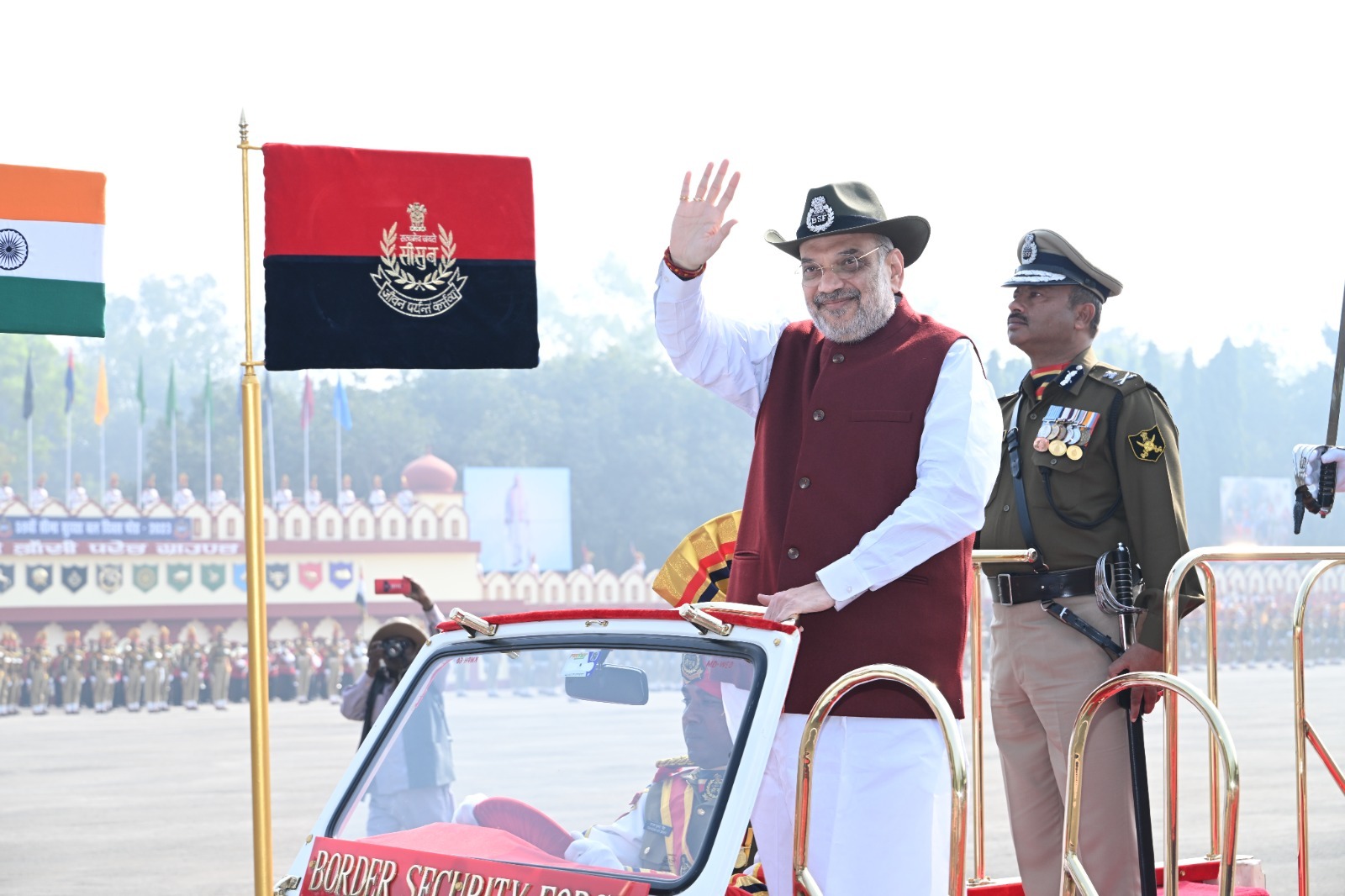
Shah was speaking after taking salute from a ceremonial parade of the Border Security Force (BSF) on the occasion of its 59th Raising Day celebrations here. The minister said the Narendra Modi government has fenced and plugged gaps in about 560 km of the India-Pakistan and India-Bangladesh borders in the last nine years since it came to power at the Centre. ‘These gaps were being used for infiltration and smuggling’, he said.
All the gaps in these two borders on India's western and eastern flank respectively are being plugged and work in only about 60 km is left. In the next two years we will entirely secure these two borders, Shah said.
The two borders-- 2,290 km of India-Pakistan International Border and 4,096 km of India-Bangladesh border-- are marked by long riverine, mountainous and marshy areas where it is very difficult to erect fences and hence the BSF and other agencies use technical gadgets to check infiltration.
"I firmly believe that a country cannot develop and prosper if its borders are not secure...the government of Prime Minister Narendra Modi has led the country to the moon with the Chandrayaan mission, G20 Summit and brought the economy from the 11th to the fifth spot, and this was all possible due to our forces deployed for securing the borders like the BSF," he said.
"You, the BSF, are the essential pillar of this journey," the minister told the BSF personnel at the 'Meru' training camp here during his 22-minute long address.
"I believe that the border fence does not alone protect the country, it only helps in rendering this task. It is the brave BSF jawan who does this task," he said.
The border force, about 2.65 lakh in strength, was raised on December 1, 1965, and is primarily tasked to guard the over 6,386 km-long Indian fronts with Pakistan and Bangladesh.
The home minister asserted that whenever a BJP government took the reins of power in the country, border security was prioritised, from the government of former PM A B Vajpayee to the Modi government. "We strengthened rail, road, waterways and telephone communication, people-to-people connectivity apart from trade," he said. The home minister said his government installed flood lights along the 11,000 km of this border, created 452 new border posts, maiden observation towers in the 'Harami Nala' area of Rann of Kutch, 510 observation towers, got electricity connection to 637 borders posts while 500 such facilities were linked with piped water along these two borders over the last nine years.
Talking about Left Wing Extremism (LWE), Shah said the country was close to eliminating this armed and violent movement being carried out by Maoist cadres. In the last ten years, he said, the incidents of Naxal violence have gone down by 52 per cent, deaths in these incidents declined by 70 per cent and the number of affected districts have come down from 96 to 45 and LWE hit police stations have come down from 495 to 176.
"The last strike against LWE by forces like the BSF, CRPF and ITBP is in the process. We are determined to end Naxalism in the country," he said.
The minister added that as many as 199 new security forces camps were established in the LWE affected areas since 2019. "I am sure we will win this battle," he said. In the last ten years of the Modi government, we have been able to win the battle in the "hotspots" of Jammu and Kashmir, LWE and insurgency in the north east and the security forces have been able to establish their domination in Jammu and Kashmir, he said. Shah exhorted the BSF and other security agencies to have a policy of 'zero tolerance' against the menace of narcotics and take stringent steps to curb its trafficking.
On this occasion, apart from Amit Shah, Minister of State for Human Resources Annapurna Devi, Leader of Opposition Babulal Marandi, MP Jayant Sinha, Sunil Kumar Singh, MLA Amba Prasad, Jai Prakash Patel, Director General of Border Security Force Nitin Agarwal, Deputy Inspector General Training Center. And School Hazaribagh Rajesh Kumar, Deputy Commissioner Nancy Sahay, Constable Superintendent Fourth Manoj Ratan along with senior officers of the district and others were present.




[[comment.comment_text]]