The Multibillion-Dollar Toll of the 15-Week Iran War
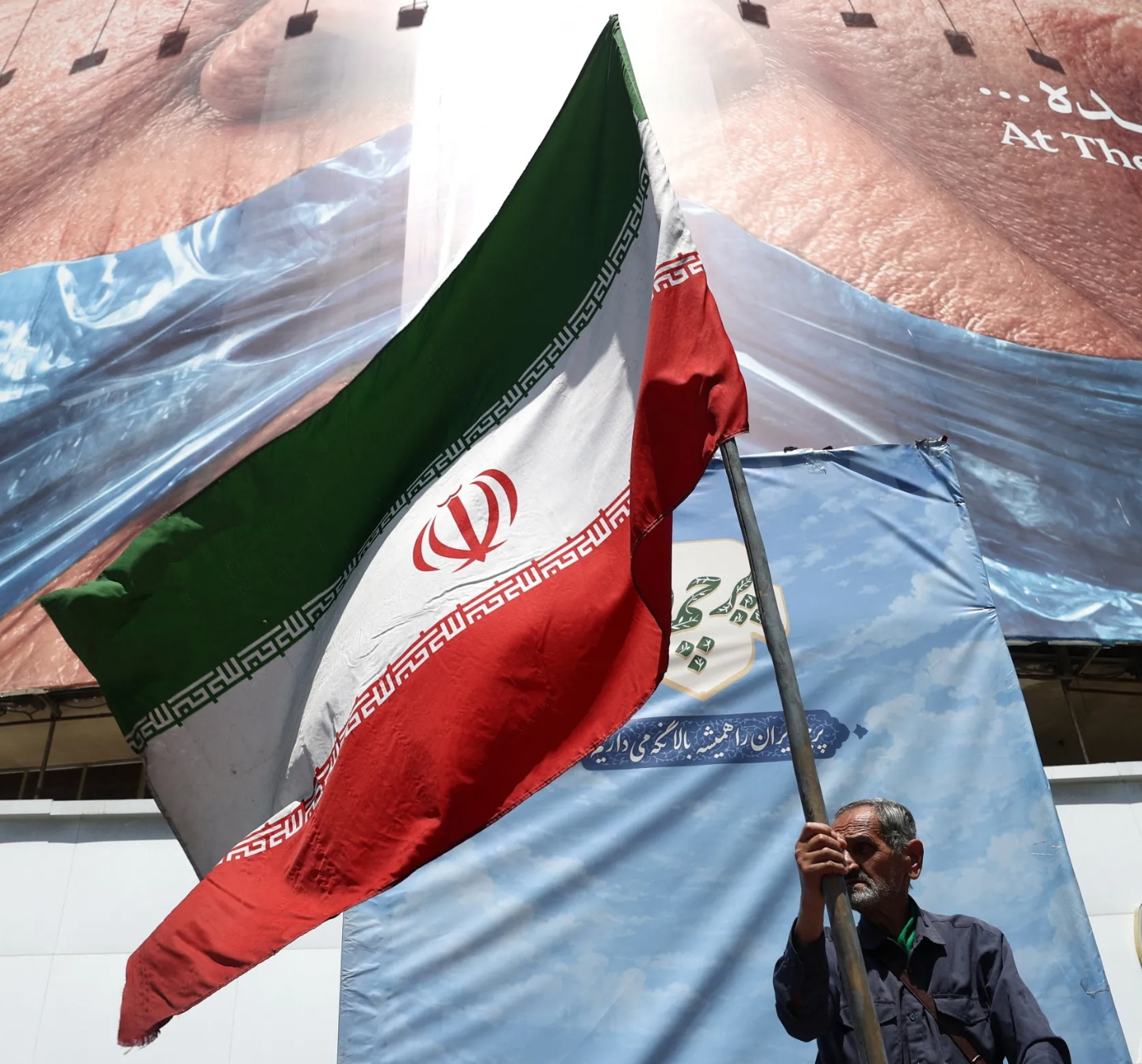



The swift conclusion of the 15-week war with Iran, capped by a preliminary peace deal signed electronically by President Trump and to be formalised at the Palace of Versailles in near future brings a welcome pause to open hostilities. Yet, the signing of a treaty at the very site of the ill-fated World War I accords serves as a chilling reminder of how easily short-sighted military actions can cast long, destabilising shadows over global history. Begun on February 28 with a joint American and Israeli assault, this conflict was sold as a swift surgical intervention. Instead, it rapidly spiralled into a devastating showcase of the immense human and economic ruin that modern warfare inevitably inflicts.


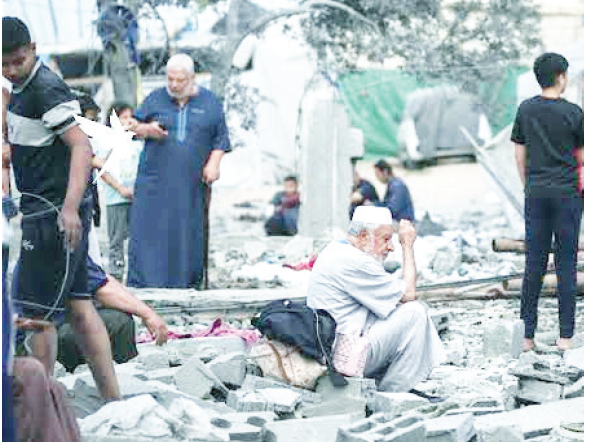
The human cost of this 15-week campaign is nothing short of catastrophic. More than 3,000 Iranians are reported dead, alongside thousands of injuries, while Israel mourns the loss of 26 of its citizens. The violence quickly bled across borders, triggering renewed attacks in Lebanon that claimed another 3,700 lives. Strikingly, the chaos ensnared entirely innocent bystanders, including South Asian migrant workers in the Gulf and three Indian civilian sailors killed by an American strike near Oman—an error that needlessly strained Washington’s relations with New Delhi. Most harrowing of all was the first day of the war, when a U.S. missile strike demolished an Iranian school, killing at least 175 people and leaving a permanent stain on the moral ledger of this intervention.


Beyond the immediate bloodshed, the structural and societal devastation inflicted upon Iran will take decades to repair. Already buckling under severe economic strain before the first bombs fell, the country’s economy is now in a total free fall. The Iranian Red Crescent Society reports that hundreds of schools and healthcare facilities have been damaged or destroyed, leaving the civilian population to navigate a broken landscape. With daily life reduced to a desperate struggle for survival, skyrocketing prices for food and basic necessities have triggered a profound humanitarian crisis that no peace treaty can instantly remedy.


For the American public, the illusion that foreign conflicts can be waged without domestic consequence has been shattered once again. Moody’s Analytics estimates the overall cost of the war to U.S. taxpayers and consumers at a staggering $132 billion. While the Pentagon tallies its direct military expenditures at $29 billion, that figure conveniently omits the massive bill required to repair over a dozen U.S. bases damaged by Iranian retaliatory strikes, as well as the destruction of high-value assets like a military radar jet and the embassy compound in Riyadh. Keeping massive carrier strike groups deployed at sea is an incredibly draining apparatus, and the financial bleeding is far from over as the 60-day negotiation period begins.


Ultimately, ordinary citizens are footing the bill at the gas pump and the grocery checkout. Due to Iranian attacks on commercial shipping in the vital Strait of Hormuz, global crude oil prices spiked to $120 a barrel in March, driving domestic gasoline from under $3 a gallon to around $4. This energy spike translated into a $60 billion penalty for American drivers—roughly $460 per household. Worse still, the closure of the strait choked off the supply of critical trade commodities like sulfur, inflating fertilizer costs and threatening global food security. This short, sharp conflict has proven that in the modern interconnected world, localized aggression rapidly translates into widespread economic pain, inflation, and global hunger.

The Multibillion-Dollar Toll of the 15-Week Iran War

The swift conclusion of the 15-week war with Iran, capped by a preliminary peace deal signed electronically by President Trump and to be formalised at the Palace of Versailles in near future brings a welcome pause to open hostilities. Yet, the signing of a treaty at the very site of the ill-fated World War I accords serves as a chilling reminder of how easily short-sighted military actions can cast long

Dinesh Dubey   |  an hour ago

The Fluidity of Conviction: Trinamool’s Fracture and the Era of Post-Ideological Politics

The sudden, tectonic shift within the Trinamool Congress (TMC)—where a 20-strong rebel faction of Lok Sabha MPs has engineered a merger with a little-known, Tripura-based outfit to leap into the National Democratic Alliance (NDA)—is more than just a localised mutiny. Led by veteran Kakoli Ghosh Dastidar and backed by seasoned faces like Sudip Bandyopadhyay, this splintering offers a masterclass in modern political survival. More profoundly, however, it serves as a glaring obituary for ideological consistency in contemporary governance.

Dinesh Dubey   |  5 days, 5 hours ago

The Wedding Circus: Why is the Bride’s Father Still the Ringmaster's ATM?

Every single girl out there needs to have a checklist. Seriously, write down 10 to 12 hard questions about compatibility before you even think about looking at guys in an arranged marriage setup. Figure out exactly what you want first, so when you ask your questions, they cut straight to the point. I used this strategy recently. There was this guy I had already rejected before, but he came back crawling, asking for "just one chance to prove himself." I thought, fair point, let's see what you’ve got. During our conversation, I dropped one of my standard questions: "Will you take dowry?"

Khushboo Jha   |  5 days, 5 hours ago

India's labour force: The Invisible Hands That Keep India Running

The importance of this acknowledgment cannot be overstated. Every household depends on a wide range of activities that are essential for daily life. Meals have to be prepared, children have to be cared for, elderly family members need support, homes need to be cleaned and maintained, and countless small responsibilities must be managed every day. These tasks consume time, energy, and skill. If families were required to hire separate workers for each of these responsibilities, the financial cost would be enormous. Yet when these same services are provided by a homemaker, society often assumes they have no economic value simply because no money changes hands. This contradiction has allowed one of the largest forms of labour in the country to remain hidden in plain sight.

Samridhi   |  5 days, 6 hours ago

Beyond Tenure: Why Comparing Modi and Nehru Requires Historical Context

For centuries, Eurocentric frameworks dominated intellectual discourse, producing comparisons that subtly reinforced Western superiority. Thus, Kalidasa became the “Shakespeare of India,” while Chanakya was described as the “Indian Machiavelli.” Such characterisations appear flattering, but they implicitly position Western figures as the universal benchmark against which all others must be measured. In reality, Kalidasa and Chanakya emerged from independent civilizational traditions whose significance does not require validation through foreign parallels.

Seema Joshi   |  5 days, 6 hours ago

Modi’s Record Tenure as Prime Minister

Narendra Modi’s upcoming milestone on June 10, which will mark 4,399 consecutive days in office and surpass Jawaharlal Nehru as India's longest-serving democratically elected leader, raises a fundamental question: does political longevity guarantee effective governance?

Hasnain Naqvi   |  1 week, 4 days ago

Comments

YOU MIGHT ALSO LIKE

View More

By Hasnain Naqvi   |   1 week, 4 days ago
Modi’s Record Tenure as Prime Minister
By Khushboo Jha   |   2 weeks ago
The Politics of Pedestals!
By VK Bahuguna   |   2 weeks, 3 days ago
Delhi Gymkhana Club: The flashpoint of dispute