Selective Outrage, Strategic Silence: Is Tharoor’s ‘Emergency’ Rehash Motivated?

 1 year, 2 months ago
While invoking the ghosts of 1975, Tharoor conveniently ignores the creeping authoritarianism of 2014–2025. Is the Congress intellectual playing devil’s advocate—or angling for a different kind of audience?
The Elephant in the Room
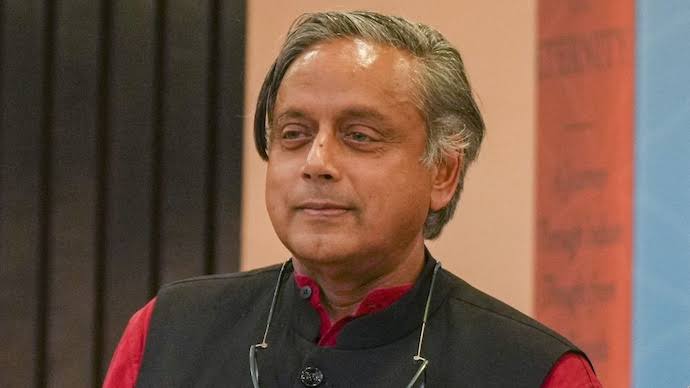
On July 10, 2025, Congress Working Committee member Shashi Tharoor penned an op-ed in the Malayalam daily Deepika, reminding readers of the horrors of the 1975 Emergency. While his reflections on the era’s authoritarianism are factually accurate, the glaring omission of any mention of India’s ongoing democratic backsliding since 2014 raises uncomfortable but urgent questions. Why is Tharoor, a senior Congress leader, echoing the BJP’s line at a time when the Modi-led regime stands weakened and exposed?
Emergency 1975: A Declared Aberration
Tharoor condemns the Emergency as “a dark chapter,” rightly calling out Sanjay Gandhi’s forced sterilisation drives and mass slum demolitions. But what he fails to acknowledge is that:
•It was a declared Emergency, under constitutional provisions.
•Free elections were held in 1977, and Indira Gandhi accepted defeat.
•Indira Gandhi apologised repeatedly in 1977–78.
•The Congress Party, including leaders like Rajiv Gandhi, Dr. Manmohan Singh, and Rahul Gandhi, has publicly admitted to the wrongdoings of that era.
Unlike today’s regime, there was repentance, accountability, and democratic correction. So why is this chapter being reopened now? Because it serves the BJP’s political agenda—and Tharoor, wittingly or unwittingly, is playing along.
Tharoor declares that “today’s India is not the India of 1975.” He’s right—but not in the way he suggests. Today’s India is arguably worse, not better. From 2014 onward, we’ve witnessed the rise of an undeclared
Emergency marked by:
Suspension of rights (but legally declared) Rights curtailed extrajudicially, informally.
No lynchings of minorities Dozens of Muslim lynchings, normalized by silence.
No communal riots Targeted hate crimes, state complicity.
No crony capitalism of current scale Adani, Ambani, electoral bonds, Rafale silence.
No trolling machinery, BJP IT cell, online abuse, state-backed propaganda. No Pegasus surveillance Journalists, judges, and activists spied on.
No institutional collapse ECI, ED, CBI now accused of being regime tools
No moral policing Beef bans, cow vigilantes, food policing rampant
No press assassinations Gauri Lankesh, Kalburgi, Dabholkar, Pansare murdered
No internet shutdowns India leads the world in shutdowns, esp. in Kashmir
No NEET/NET leaks 2024–25 paper leaks: systemic, national shame
These facts make it clear: what we’re living through is more insidious, less visible, and far more dangerous to the democratic fabric.
Why Now, Mr. Tharoor? Timing Matters
The timing of Tharoor’s article cannot be brushed aside. The BJP, having lost its outright majority in 2024 (240 seats vs. INDIA bloc’s 233), is desperately trying to reclaim moral high ground by invoking the Emergency. In this context, Tharoor’s essay reads like an assist to BJP’s ideological project.
Why did he choose now, of all times, to reiterate Congress’s past mistakes when:
•The RSS’s collaboration during the Emergency is being whitewashed?
•The BJP is ducking accountability for a decade-long authoritarian slide?
•The public mandate has clearly rejected majoritarian overreach?
Devil’s Advocate, or BJP’s Echo Chamber?
Let’s ask the uncomfortable question: What are Shashi Tharoor’s intentions?
•Is he currying favour with the right-wing intelligentsia that dominates literary festivals and media circuits?
•Is this part of positioning himself as a centrist statesman beyond the Congress, should the INDIA bloc rise or Congress decline?
•Is he attempting to appeal to the BJP voter base without overtly crossing over?
He has in the past:
•Praised Modi’s oratory.
•Supported causes like the Uniform Civil Code in theory.
•Written with great nuance about colonialism but failed to apply the same clarity to rising fascism at home.
This raises an alarming prospect: Is Tharoor legitimising the present by sanitising the past?
The RSS and 1975: What Tharoor Forgot to Mention
Tharoor calls out Sanjay Gandhi but spares the RSS, whose role during the Emergency was anything but heroic:
•RSS Chief Balasaheb Deoras wrote two letters to Indira Gandhi in 1975 supporting her 20-point programme to lift the ban on the RSS.
•Unlike communists, civil liberties activists, or opposition politicians, many in the Sangh quietly collaborated.
Why does Tharoor omit this?
Because it doesn’t fit his carefully curated brand of “respectable dissent” that doesn’t alienate the power elite—even when that elite is dismantling the Republic.
The Real Danger: A Sanitised Past, a Forgotten Present
Tharoor says, “The Emergency must be remembered as a lasting reminder.”
But a reminder without application is merely nostalgia.
Today’s undeclared Emergency is:
•Longer than the 21-month Emergency of 1975–77.
•More widespread, reaching into universities, NGOs, newsrooms, courts.
•More divisive, feeding on hate, religious bigotry, and social fracture.
What good is a historian who remembers the past but forgets the present?
Silence is Not Neutrality. It Is Complicity
Shashi Tharoor, one of India’s most eloquent public intellectuals, had an opportunity to expose the authoritarianism of the present while reflecting on the errors of the past. Instead, he chose selective outrage and historical tunnel vision.
In doing so, he not only undermines the Congress’s moral opposition to the BJP’s anti-democratic politics, but also legitimises the very forces he claims to critique.
Tharoor may claim to be a guardian of democracy. But real guardians speak truth to power—not half-truths to history. And certainly not at a time when power is the greatest threat to the Republic.
History should not be weaponised to deflect accountability. It should illuminate the present. Sadly, Tharoor has failed to do.
(Author is a former member of the history faculty at St. Xavier’s College, Mumbai. Views are personal.)


[[comment.comment_text]]