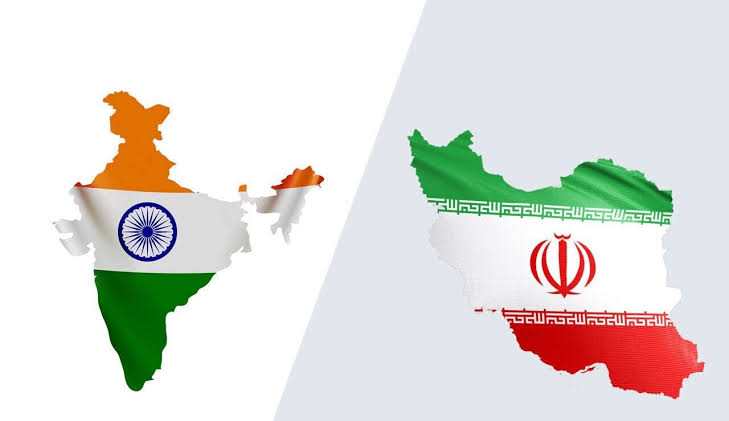
India and Iran: A Timeless Civilisational Bond

 1 year, 3 months ago
From linguistic roots to imperial ties, cultural exchanges to religious harmony, India and Iran share a relationship that predates modern nation-states and continues to shape regional identities.
In the cacophony of modern geopolitics, the ancient and enduring relationship between India and Iran remains one of the least understood yet most profound connections in the civilisational histories of both nations. Far beyond contemporary political alignments or strategic compulsions lies a deeply rooted legacy of linguistic, cultural, religious, artistic, and philosophical exchanges that have shaped identities on both sides of the Persian Gulf.
The Iranian Origin of “Hindu”
The very word Hindu—along with Hindustan, Hindi, and even Hinduism—is a product of the Indo-Iranian linguistic and cultural matrix. Derived from Sindhu (Sanskrit for river), especially the Indus River, the term was transformed by the Persian linguistic practice of pronouncing “S” as “H”. Thus, Sindhu became Hindu in Old Persian, and the people living east of the Indus were referred to as Hindus. The land was Hindustan. This early phonetic shift tells of close proximity and interaction, predating organized religion as we know it.
On the Iranian side, the name “Iran” itself originates from Ērān—the Middle Persian word meaning “Land of the Aryans,” rooted in arya, a term found in the Indo-Iranian linguistic family denoting nobility and kinship. These linguistic resonances reflect shared ancestry, particularly the Proto-Indo-Iranian speakers who fanned out into what are today India, Iran, and Central Asia.
Shared Genetic and Cultural Legacies
Modern genetic research supports the intertwined ancestry of the peoples of India and Iran. A significant portion of the Indian population, especially in the northern and central regions, shares genetic heritage with ancient Iranian farmers. This ancestry intermingled with indigenous hunter-gatherer groups and Eurasian pastoralists, forming the genetic mosaic of modern India.
The imprint of Persian culture on Indian languages, particularly Hindi, Urdu, and even Marathi, is ubiquitous. Everyday words Khuda (God),—dehat (village), rang (color), sabzi (vegetables), kitaab (book), and aloo (potato)—are of Persian origin. Grammar, too, bears influence, such as the use of prefixes like bey- and na- (as in beychain—restless, nasamajh—ignorant).
Civilisational Contact from the Indus to the Mauryas
The earliest civilisational contact goes back to the Indus Valley Civilization, contemporaneous with early Elamite and Mesopotamian cultures with which ancient Persia also interacted. The Achaemenid Empire under Darius I annexed parts of northwestern India—Sindh and Punjab—in 516 BCE, making them the 20th satrapy of the Persian Empire. This region was not only economically vital, contributing a substantial share of the empire’s tribute but also provided troops for Achaemenid military campaigns, including those led by Xerxes against Greece.
With the Achaemenid influence came the Kharosthi script, derived from Aramaic and written from right to left. It endured in northwestern India until the 3rd century CE. Even Emperor Ashoka’s inscriptions, with their moral code (Dhamma), were stylistically inspired by Achaemenid imperial proclamations. The famous bell-shaped capitals of Ashokan pillars bear striking resemblance to those found in Persepolis.
Medieval Bridges: Mughals, Sufis, and Shi’ites
The Indo-Iranian connection remained vibrant through the medieval period. Iranian dynasties such as the Parthians and Sassanids left their mark before the Islamic era intensified cultural flow. Mahmud of Ghazni and Mohammad Ghori heralded a phase of conquest that, while violent in parts, also brought with it Persian administrative systems, poetry, and aesthetics.
During the Mughal era, this relationship reached a civilisational crescendo. The Mughal court spoke Persian, read Persian literature, and employed Iranian scholars, artists, and architects. Emperor Humayun took refuge in the Persian court, and Persian painters and calligraphers such as Mir Sayyid Ali and Abd al-Samad flourished under Akbar. The Taj Mahal itself is emblematic of Indo-Persian fusion.
Sufi saints, Shi’ite theologians, and Zoroastrian refugees all found a home in India, enriching the pluralistic fabric of Indian society. Major Indian Shi’ite families, such as the Rizvis, Kazmis, and Naqvis, trace their roots to Iran. Their theological ties remain intact with seminaries in Qom, Najaf (Iraq), and Mashhad continuing to shape Indian Shi’ite thought.
Colonial to Contemporary Relations
During British colonial rule, cultural and religious ties between India and Iran were not only maintained but institutionalized. Trade flourished, and spiritual links endured. Even after independence, India and Iran preserved cordial relations. However, strategic shifts—especially India’s growing closeness to Israel and the United States—have impacted this dynamic in recent decades.
In 2005, India voted against Iran’s nuclear program at the UN, a move that marked a turning point. Despite ongoing trade and cultural exchange, political trust has since seen fluctuations.
Religious Harmony: A Lesson from Iran
Amid these shifts, Iran’s treatment of minorities stands in stark contrast to the communal tensions witnessed in parts of South Asia. Despite facing external aggression, sabotage, and prolonged wars—including the devastating Iran-Iraq War—Tehran has not resorted to scapegoating minorities. Jews, Christians, Zoroastrians, Parsis, and even Hindus and Sikhs live and worship in peace.
There are two Hindu temples in Iran—one in Bandar Abbas and another in Zahedan—both established in the 19th century by Indian merchants. Similarly, there are four prominent gurdwaras in Tehran, Mashhad, Zahedan, and Bushehr serving the thriving Sikh community. Iran’s minorities are protected under its constitution and participate fully in society, including in parliamentary representation.
This inclusiveness is in sharp contrast to the majoritarian discourse rising in some parts of India. Iran has never called upon its citizens to target Hindus, Sikhs, or any Indians based on New Delhi’s foreign policy choices—even as India visibly aligns with Israel, a sworn adversary of Iran.
Strategic Lessons for India
If India aspires to regional or global power status, there are critical lessons to learn from Iran. First, a sovereign power must not allow foreign interference in its neighbourhood. Iran has long resisted Western colonial and neo-imperial pressures and continues to assert regional autonomy despite sanctions and isolation.
Second, the strength of a nation lies in the loyalty of its minorities. Iran’s Jewish population today functions as a human shield against Israeli military aggression, complicating Tel Aviv’s rhetoric. Similarly, Sunni minorities within Iran prevent regional rivals like Saudi Arabia, Turkey, and Pakistan from monopolizing Sunni leadership in the Islamic world.
An Ancient Kinship in a Fractured World
India and Iran share more than a border of historical memory—they share civilisational DNA. Their mutual influences span language, art, spirituality, governance, and even ideas of cosmopolitanism. As global realignments test traditional alliances, it is imperative that these ancient ties be renewed with wisdom and foresight.
At a time when identity is weaponized and history is rewritten, the Indo-Iranian legacy serves as a quiet reminder: that cultural strength does not come from uniformity or hegemony, but from synthesis, pluralism, and mutual respect. In that sense, Iran is not just a neighbour or an ally—it is an enduring part of India’s own historical self.
(Author, a former history professor at St. Xavier’s College, Mumbai, is regular EW columnist.)




[[comment.comment_text]]