The Fragile Strait: Why the US-Iran Deal is Crashing on the Reefs of Lebanon


 3 months, 2 weeks ago
The recent closure of the Strait of Hormuz by Iran’s top joint military command exposes the agonising fragility of middle-ground diplomacy in a deeply fractured Middle East. Only days after a landmark US-Iran memorandum of understanding briefly reopened the world’s most critical energy chokepoint, the waterway has once again become a geopolitical hostage. Tehran’s rapid retreat from the pact, sparked by alleged US breaches and unchecked Israeli military actions in southern Lebanon, serves as a stark reminder that regional security cannot be negotiated in a vacuum. A diplomatic breakthrough on paper means little when the hard realities of local battlefields continue to dictate the terms of engagement.
At the heart of this collapse is a fundamental disconnect in accountability. Iran’s Islamic Revolutionary Guard Corps (IRGC) has made it clear that the security of vessels transiting the strait is no longer guaranteed, placing the blame squarely on Washington's failure to enforce the agreement’s initial clauses. From Teheran’s perspective, the United States bears the ultimate responsibility to halt Israeli military operations on all fronts, including Lebanon. However, by tying the success of a bilateral maritime and nuclear roadmap to the volatile crossfire between Israel and Hezbollah, Iran has anchored global economic stability to a conflict it does not fully control, virtually ensuring that any local spark could detonate the wider peace process.
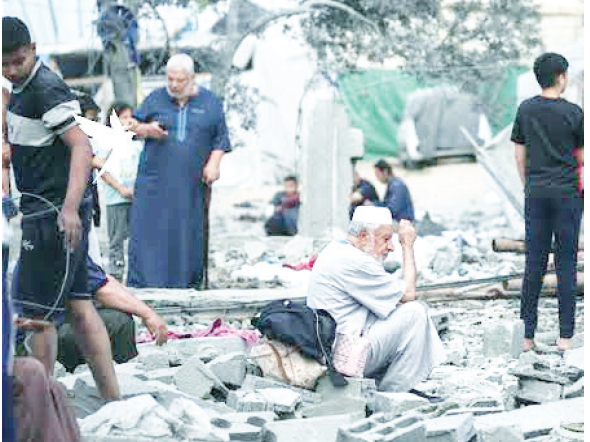
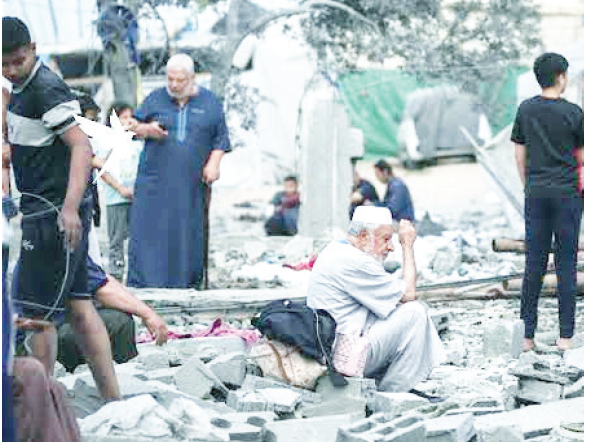
Israel’s position further complicates this diplomatic gridlock. Maintaining that it is not a party to the US-Iran memorandum, Israel has vowed to press ahead with its campaign until threats from Hezbollah are entirely eliminated. The sheer scale of the human toll—with Lebanon’s death toll now surpassing 4,000—coupled with continuous projectile launches into Israel, highlights a war of attrition that ignores the diplomatic calendars of Washington or Teheran. This disconnect reveals a glaring flaw in the architecture of the current deal: attempting to forge a grand bargain on regional security while leaving one of the primary military actors completely outside the negotiating room is an exercise in futility.
The immediate fallout of this brinkmanship places the highly anticipated technical talks in Switzerland in severe jeopardy.
What was designed as a promising 60-day window to negotiate permanent sanctions relief and nuclear limits has instead deteriorated into a game of diplomatic chicken. While top US negotiators wait in Switzerland and Vice President JD Vance prepares to join them, the Iranian delegation arrives not to iron out technical details, but to aggressively pressure Washington over its unfulfilled commitments. The promising horizon of a broader settlement has quickly vanished, replaced by an atmosphere of deep mutual suspicion that threatens to scuttle the talks before they even formally begin.
Ultimately, the closing of the Strait of Hormuz is a severe blow to a global economy that relies on the daily passage of millions of barrels of oil and liquefied natural gas. While the US military notes that commercial traffic precariously continues for the moment, the psychological and financial shockwaves of Iran's warning will soon register in global markets. If the United States and Iran cannot find a way to decouple their broader strategic goals from the daily violence in the Levant, this fragile memorandum will go down as a historical footnote—a brief, fleeting moment of hope crushed by the inescapable gravity of regional warfare.








[[comment.comment_text]]