Bihar Electoral Roll Revision: A Theatre of the absurd

 1 year, 3 months ago
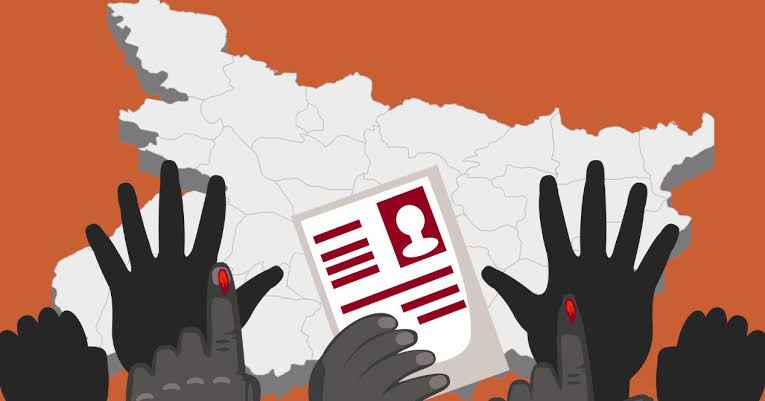
The decision of the Election Commission of India (ECI) for an intensive revision of the electoral roll right on the brink of elections in Bihar sounds cinematic and cynical. Are we living in a fantasy world where the magic wand comes into play and resolves all that the centre longs for to retain its draconian spell of governance? The ECI lost its autonomy after 2014 and since then has been held hostage by a government desperate to make it a puppet body.
The intensive electoral roll revision call by the ECI is a calculated madness to disenfranchise a vast majority of people in Bihar, mostly poor, backward,dalits, Muslims and those without a single document and the sharpest arrow is the irrelevance of Adhar card.
Aadhar card, which was once touted by the NDA government tantamount to the citizenship card, is no longer a valid proof of even one’s date of birth. The Election Commission, in a fit of gawky eccentricity, declares it invalid in the context of voting rights. In compliance of the orders issued by its masters really sends shivers down the spine of the citizens as the NRC rises from the slumber for a thud at every door in Bihar and as a plot of a story it is purported to be done before the assembly elections later this year. How many people in India have the birth certificate of their parent or parents? That's the first question and allied to it how many people in Bihar or India know where they were born and have certificates issued from the hospital or municipal corporation?
And what a paradox? Documents like Aadhar card and ration card issued by the government of India are not valid, and if these are not valid, then was the then or present government valid, which issued or issues these documents?
By the application of this logic, the governments become erratic, irresponsible, and chaotic when they contradict their own decisions in a democratic structure. Those who are born at homes or those who are illiterate like a migrant labourer or someone involved in a construction work outside the state of Bihar will run back in a jiffy to the homeland and produce documents to satisfy the conditions to be a citizen of the country?
It sounds like a fairytale, and interestingly, the electoral roll is to be revised in next one month, is conceived to be ill motivated with a sinister design to debar valid electorate from voting in the upcoming elections.
The important question in this context is whether this is a realistic possibility to modify the electoral roll in a huff and given the urgency to do it the Election Commission is short on commonsense and such a huge exercise is to be carried out in a matter of month only. Any sane mind would laugh it away and see it as an exercise in futility, which only tells how submissive and tamed the Election Commission has been in recent times. Introducing NRC through the backdoor is a fraudulent act with an ulterior motif. Can the Election Commission disenfranchise the whole mass in a matter of weeks and hold elections with the majority debarred? Do those sitting in the corridors of power know where their parents were born; do they know which hospital issued their birth certificates; and do they know every single birth in India is recorded in black and white and that too when Bihar is on the cusp of elections.
If a leader even today is struggling to produce his degree, how come he is sure the people of the same country have ready documents to reclaim their citizenship? Absurd becomes even more grotesque, and democracy dwindles to a joke under the current leadership, and the whole tamasha is to turn the country into the land of the Hitler. But Indian democracy is not fragile, and those who are dictating the Election Commission to act on its whims will surely be defeated because we are a democracy which thwarts any such design by a government under the influence of liquor. All said and done will end up into the anguish of the aggrieved, and nothing realistic is on cards. It's a game intended to hit those who have been on the government's radar historically. Rest history will determine who wins and who loses in the ultimate analysis!
The "loser" in the Bihar electoral rolls revision, according to the concerns raised by opposition parties, civil society organizations, and activists, will primarily be vulnerable and marginalized communities who may find it difficult to comply with the stringent new requirements.
Many impoverished individuals in Bihar may lack the specific documents now required by the ECI, such as birth certificates or parental birth records. The exclusion of commonly used IDs like Aadhaar and ration cards further exacerbates this issue.
Bihar has a significant population of migrant workers who live outside the state for employment. The short timeframe for the revision (25-30 days) makes it incredibly difficult for them to return to their native places to submit the necessary forms and documents, potentially leading to their disenfranchisement.
Critics allege that the new rules disproportionately target these communities. There are fears that the process could be used for "engineered exclusions" or "institutionalized disenfranchisement" of these groups.
A large segment of the current electorate falls into this category. Those born after 1987 need to prove a parent's place of birth, and those born after 2004 need to prove both parents' birthplaces. Obtaining such old documents can be a significant challenge for many.
The ECI's list of 11 accepted documents excludes common forms of identification like Aadhar and ration cards. This puts anyone who primarily relies on these documents at a disadvantage.
Those affected by natural calamities (e.g., floods): As highlighted by the Congress, people who have lost their homes and possessions due to frequent floods in Bihar may have no remaining documents, making it impossible for them to comply.
In essence, the fear is that a large number of genuine voters, estimated to be in the lakhs or even crores (some claims suggest 2.5 to 3 crore people), could be struck off the electoral rolls not because they are ineligible citizens, but because they are unable to navigate the new, burdensome, and time-bound documentation process.
(Author is a faculty member of the English Department at the College of Commerce, Arts & Science, Patna. )



[[comment.comment_text]]