An American Pope’s Reminder: Dignity Before Division

 3 weeks, 1 day ago
A Liberty Medal address that reframes patriotism
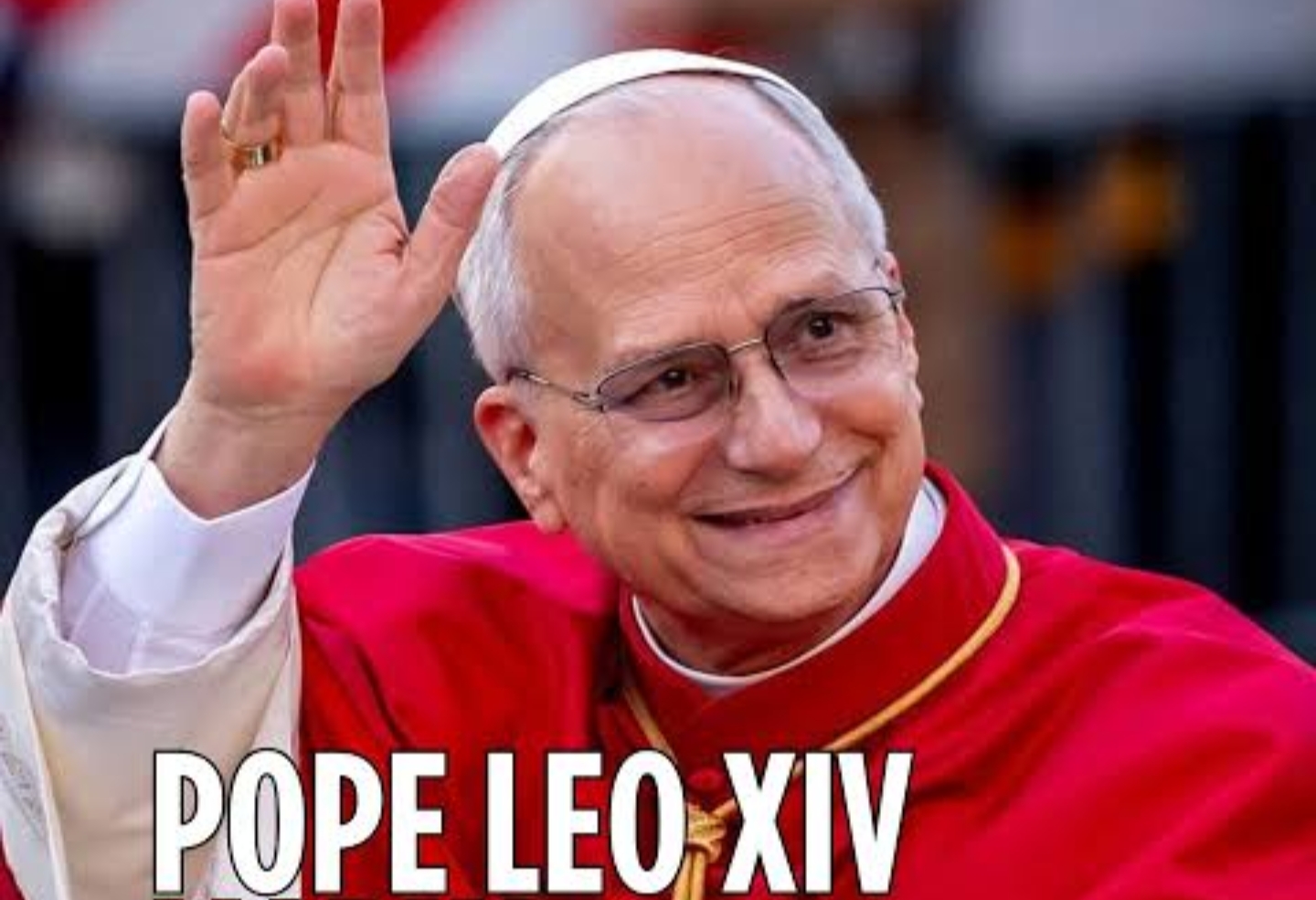
Pope Leo XIV’s acceptance of the Liberty Medal was intended as more than ceremonial recognition; it was a pointed moral summons delivered on the eve of America’s 250th anniversary. Speaking from the Vatican to a multi faith audience gathered on Independence Mall, the first American pope used the podium not merely to accept an honour but to remind a fractious nation of a foundational truth: human dignity precedes the authority of any state.
That assertion, made without naming names, functioned as an implicit rebuke to political currents that treat people as problems to be managed rather than human beings to be respected. In a moment when public language too often reduces complex lives to policy categories or electoral talking points, the pope’s framing returns the conversation to an ethical baseline. It is both pastoral and political: a theological claim with unmistakable civic implications.
Reclaiming the immigrant story
At the heart of Pope Leo’s remarks was a sustained defence of immigrants, told as central to the American experiment rather than incidental to it. By invoking the long arc of newcomers who have shaped the nation—often under duress, frequently in search of safety or opportunity—he reclaimed a narrative under strain in contemporary debate. Immigrants, the pope argued, are not merely contributors to economic growth or subjects of immigration law; they are co‑authors of the republic’s promise.
The pope’s invocation of E pluribus unum—“out of many, one”—was more than rhetorical flourish. It served as a moral anchor, insisting that diversity is not a challenge to be managed but a strength to be honoured. This line of argument runs against strains of public policy that treat cultural difference as a source of instability rather than as a reservoir of civic renewal. By celebrating immigrants as foundational, Pope Leo reframed patriotism as recognition of shared belonging, not exclusionary ownership.
A moral stance on war and peace
Pope Leo’s speech extended beyond domestic policy into matters of war and peace. He rejected any theological gloss that sanctifies violence, reminding listeners that no war is blessed by God and that the pursuit of security must never erase moral constraints. In an era of heightened international tensions, that stance functions as a caution: military action and national interest must still be judged by ethical standards that recognize the full humanity of those affected.
This is not a pacifist abstraction; it is a practical moral test for leaders who claim to act in the national interest. If the dignity of persons is the baseline, then policies that produce mass suffering—or that treat whole populations as expendable—cannot be defended solely by appeals to strategy or sovereignty. By placing human dignity before state authority, the pope challenged decision‑makers to consider whether their actions, however expedient, pass a moral litmus test.
Symbolism over spectacle
The moral force of the Liberty Medal address was amplified by the pope’s accompanying actions. While Washington prepared pageantry for the nation’s 250th, Pope Leo planned to spend July 4 on the Italian island of Lampedusa, laying flowers at the graves of migrants who drowned attempting to reach Europe. That gesture—quiet, symbolic, unmistakably public—served as a deliberate counterpoint to nationalist displays that equate strength with exclusion.
Choosing Lampedusa over a capital stage reframes patriotism not as a performance of power but as an ethic of solidarity. The image of a pope honouring lives lost at sea stands in stark contrast to rally rhetoric that traffics in exclusionary nostalgia. It reminds citizens that true national greatness is measured by how a society treats its most vulnerable, not by how loudly it proclaims its might.
A test for leaders and citizens
Pope Leo’s message poses a difficult but necessary question: will leaders translate moral rhetoric into policy that preserves the dignity of every person? Democracies must reconcile the twin imperatives of order and justice. Securing borders, maintaining rule of law, and ensuring public safety are legitimate functions of the state. But those ends do not exempt officials from moral accountability. Policies that diminish people’s basic worth—for example, by criminalizing migration, separating families, or normalizing dehumanizing language—betray the civic covenant such policies purportedly protect.
The pope’s address did not deliver a partisan manifesto. Its moral claims apply across political divides and should trouble both sides: to the right, because it rebukes nativist impulses that substitute uniformity for inclusion; to the left, because it demands practical pathways from moral conviction to sustainable policy. The challenge is institutional as much as rhetorical. Law and administration must be designed to protect dignity, not simply to express it.
What the anniversary should prompt?
Commemorations of national founding frequently emphasize triumph: constitutional ingenuity, military victory, and the steady accumulation of liberty. Those are worthy themes. But anniversaries are also opportunities for sober reflection. Pope Leo’s Liberty Medal address invited such reflection by insisting that a nation’s moral claims mean little if they are not embodied in public life.
For a nation charting its next quarter‑century, the pope’s horizon is clarifying. He offered no detailed policy programme; instead, he offered a principle that can guide policy: begin by recognizing the innate dignity of every person, then ask whether proposed actions affirm or undercut that recognition. This approach would shift debates away from mere partisan advantage and toward longer‑term questions of institutional design, law, and civic education.
A moral horizon, not a partisan salvo
Pope Leo XIV provided a moral compass at a fraught political moment. His speech—measured, symbolic, and unmistakably moral—asked Americans to measure themselves against a founding ideal that is often invoked but less often embodied. The pope’s insistence that dignity precedes the state is a reminder that institutions exist to serve people, not the other way around.
Whether leaders and citizens heed this call will determine whether the republic’s next chapter deepens its promise or abandons it. If the anniversary’s fireworks are to have lasting meaning, they must be followed by policies and practices that make dignity visible in law and daily life. That is the hard, persistent work of sustaining a free and humane polity—and it is the truer tribute to 250 years of American aspiration.
(Mr Hasnain Naqvi is a former member of the history faculty at St. Xavier’s College, Mumbai.)





[[comment.comment_text]]