Open-Book Examination System: From Paper Leaks to India’s Knowledge Tradition—The Educational Journey from Nehru to Modi

 2 months, 2 weeks ago
Is the biggest crisis facing Indian education today the recurring problem of examination paper leaks?
Or are paper leaks merely a symptom of a much deeper structural crisis that has been evolving within India’s education and examination system for decades?
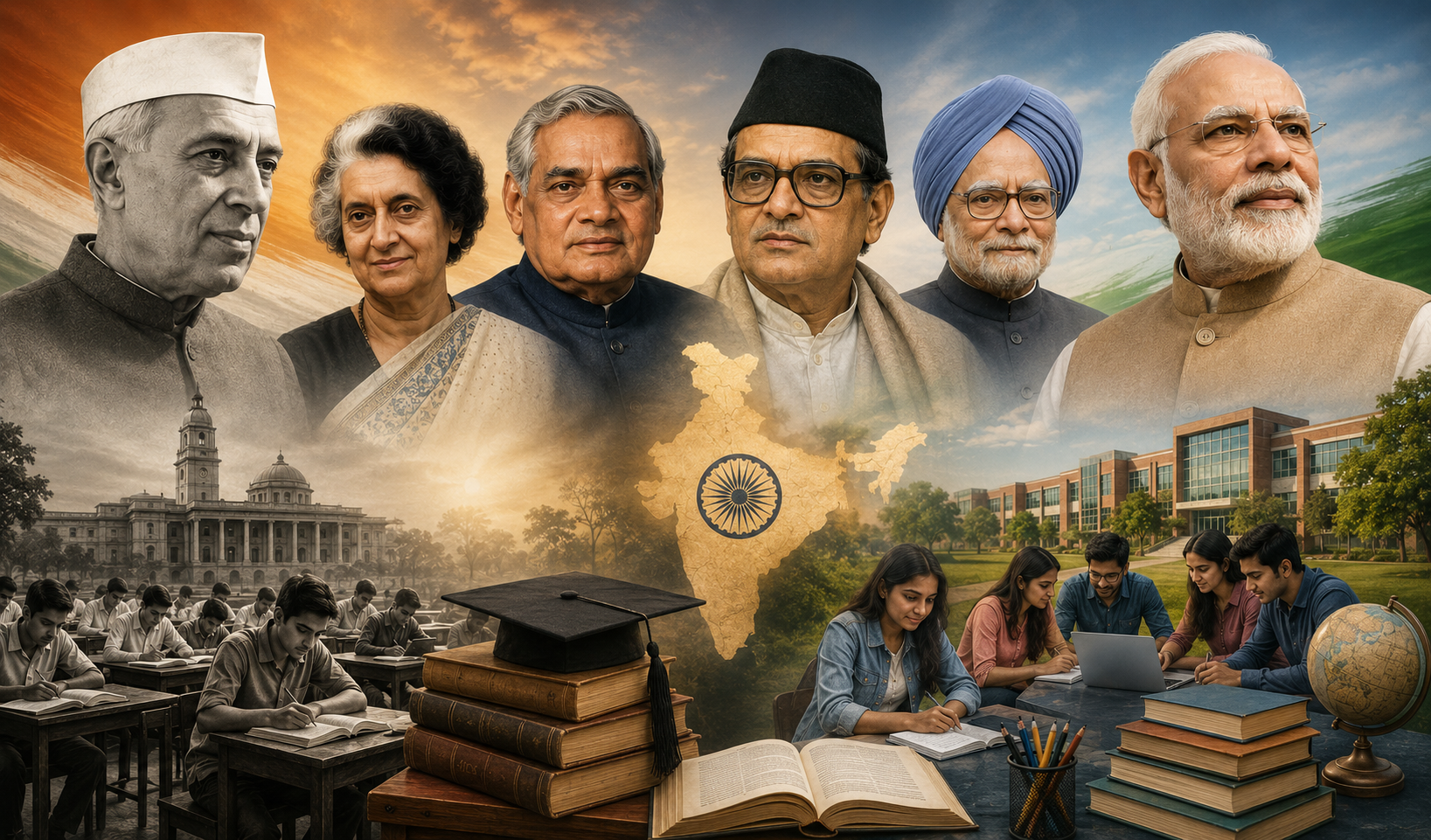
If we genuinely seek the answer, we must look beyond paper leaks and examine the broader trajectory of Indian education—from Jawaharlal Nehru’s era to that of Narendra Modi.
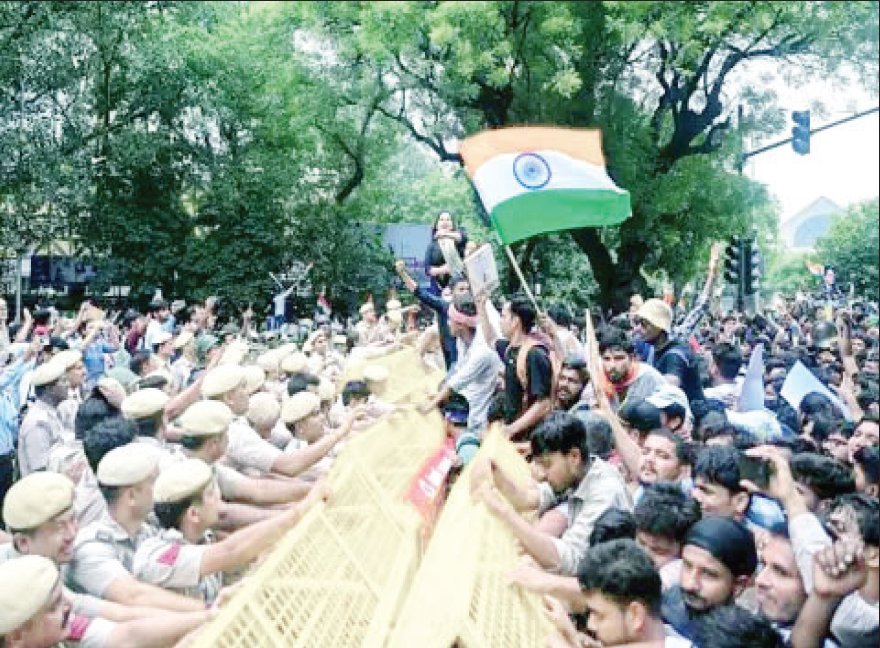
Every time the question paper of a competitive examination is leaked, public outrage erupts. Governments order investigations, opposition parties attack those in power, arrests are made, and after a few weeks the issue gradually fades from public memory. Yet one crucial question remains unanswered: Why do paper leaks continue to happen with such alarming regularity?
The answer lies not only in criminal networks but also in an examination system where a single question paper determines the future of millions of young people.
After Independence, Prime Minister Jawaharlal Nehru laid the foundations of modern scientific India. Institutions such as the Indian Institutes of Technology (IITs), major universities, scientific research centers, and modern academic structures were established during his tenure. These were essential milestones in India’s development.
However, during the same period, India’s traditional knowledge systems, classical languages, philosophy, logic (Nyaya), Mimamsa, Ayurveda, and indigenous knowledge gradually moved to the margins of mainstream education. An artificial divide emerged between modernity and India’s own intellectual heritage.
During Indira Gandhi’s tenure, educational expansion continued, although debates over the politicization of universities also intensified. Following economic liberalization, private educational institutions expanded rapidly. Under Prime Minister Dr. Manmohan Singh, higher education and global academic integration received significant encouragement, but commercialization of education also accelerated.
Gradually, the purpose of education shifted from acquiring knowledge to securing marks, ranks, and jobs. The coaching industry evolved into a multi-billion-rupee enterprise. When an entire future depends upon a single examination and one question paper, that paper inevitably becomes an extremely valuable commodity. Wherever immense value exists, illegal markets and organized crime inevitably follow.
This naturally raises an important question: Is it not time to fundamentally reform our examination system?
If India continues to depend on a nineteenth-century examination model in the twenty-first century, incidents like paper leaks will continue to recur. Many of the world’s leading universities have already moved beyond rote memorization. They now emphasize analysis, research, critical thinking, and problem-solving.
India, too, should seriously move toward an open-book examination system.
An open-book examination does not mean an easier examination. Rather, it tests the application of knowledge. Students are allowed access to books and reference materials, but only those who truly understand the subject can produce meaningful answers. Such examinations reward thinking instead of memorization. They significantly reduce the relevance of cheating, weaken the dominance of the coaching culture, and make paper leaks almost meaningless.
If universities and institutions of higher education gradually adopt open-book examinations, project-based assessments, and continuous evaluation, India’s educational landscape could undergo a profound transformation. Success would then depend not merely on what students remember, but on their ability to think, understand, analyze, and solve problems.
In this context, the National Education Policy (NEP) 2020 has introduced a new vision during the past decade. It gives renewed importance to India’s knowledge traditions, mother-tongue education, Indian languages, yoga, Ayurveda, indigenous knowledge systems, and multidisciplinary learning. Its supporters believe this represents an effort to move beyond a colonial mindset and restore India’s intellectual heritage to the center of education.
Critics have raised questions about several aspects of the policy. Such debate is both natural and healthy in a democracy.
What is beyond dispute, however, is that India’s traditional knowledge systems are increasingly attracting global academic attention. If India succeeds in integrating its ancient intellectual heritage with modern science, artificial intelligence, research, and innovation, it could offer the world an alternative knowledge model.
At the same time, stronger regulatory mechanisms are needed for both the education sector and the coaching industry. Private investment should certainly be welcomed, but education cannot be allowed to become merely another commercial enterprise. Transparency, quality, accountability, and above all the interests of students must remain paramount.
Today, the real need is neither to praise nor criticize any particular leader or government, but to view education from a national perspective. Nehru laid the foundation of modern institutions. Subsequent decades expanded educational access while also creating new challenges. The present era seeks to restore India’s knowledge traditions and strengthen the Indian character of education.
History will evaluate each of these phases objectively.
The India of the future, however, cannot be built solely upon the glory of the past or the politics of the present. It will emerge only when the country develops an education system that is simultaneously modern and Indian, scientific and culturally self-confident.
If India aspires to become a developed nation by 2047, it must become not only an economic superpower but also a global knowledge superpower.
That journey will not begin merely by making examination papers more secure. It will begin by transforming the examination system itself.
Therefore, the most important question today is not how to better protect the next examination paper. The real question is whether India has the courage to adopt an open-book examination system and shift education from rote memorization to thoughtful learning.
That is the most significant educational dialogue spanning the journey from Nehru to Modi—and perhaps one of the greatest challenges facing India’s future.

[[comment.comment_text]]