Will Kejriwal's Atishi Gamble Pay Off or Misfire?

 2 years, 1 month ago
- Delhi’s new CM handled more than 13 portfolios including education, finance, planning, PWD, water, power, and public relations in AAP's Arvind Kejriwal-led Government. Atishi may be a master stroke and the BJP may find it difficult to hit her

Manoj Kumar Pathak
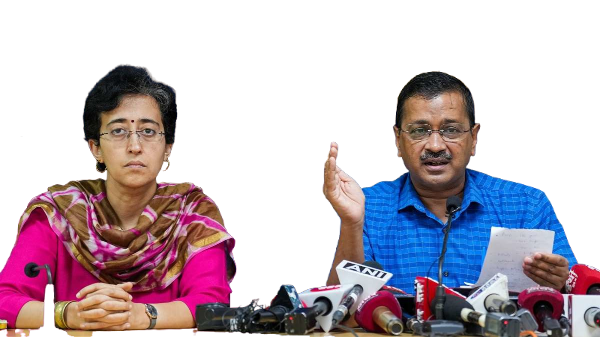
The recent announcement by Delhi Chief Minister Arvind Kejriwal that he will step down from his position has set the stage for a high-stakes political gamble by the Aam Aadmi Party (AAP). The party’s surprising nomination of Atishi Marlena as the potential successor has created ripples across the political spectrum. This move raises critical questions: Will Atishi Marlena’s appointment be a masterstroke that strengthens AAP’s position, or will it turn out to be a strategic misfire?
The Context of Kejriwal’s Decision
Kejriwal’s decision to step down from the Chief Minister’s position, albeit before the next Delhi Assembly elections scheduled for February 2025, is intriguing. The timing of his announcement, following his release from Tihar Jail, adds layers of complexity to the political calculus. By initiating the process of choosing a successor now, Kejriwal is not only addressing internal party dynamics but also sending a strategic message to his political adversaries.
The choice of Atishi Marlena as the potential next Chief Minister has stirred significant debate. The AAP’s decision to sideline prominent leaders like Rajya Sabha member Sanjay Singh, Delhi’s Minister of Labour and Employment Gopal Rai, and Dalit leader Rakhi Birlan in favor of Marlena is a bold move that could redefine the party’s future trajectory.
Atishi Marlena
Atishi Marlena, an Oxford University graduate, has emerged as a key figure in the Delhi political landscape. Her tenure as an advisor to former Delhi Education Minister Manish Sisodia and her subsequent role overseeing more than 13 portfolios—including education, finance, and public works—highlight her multifaceted capabilities. Her contributions to education, particularly the introduction of the ‘Happiness Curriculum’ and the ‘Entrepreneurship Mindset Curriculum,’ have been well-received.
Marlena’s performance in these roles has garnered praise for her effective governance and innovative approach. Her track record suggests she has the competence and vision to manage Delhi’s complex governance needs. The AAP’s nomination of Marlena reflects a strategic choice aimed at consolidating the party’s position and countering its rivals, particularly the BJP.
The Strategic Implications for AAP
By nominating Marlena, AAP is making a calculated move to position itself favorably in the political landscape. The decision to elevate Marlena, rather than more established party stalwarts, could be seen as a deliberate strategy to project a fresh and reform-oriented image. Marlena’s appointment would likely appeal to voters who are looking for innovative leadership and effective governance.
Furthermore, AAP’s choice to nominate a woman candidate aligns with its broader strategy of emphasizing women-centric policies. The party’s recent budget proposal for the Mukhyamantri Mahila Samman Yojana, which promises financial support to Delhi’s women residents, complements this strategy. If Marlena assumes the Chief Minister’s role, she would be at the forefront of implementing such policies, which could enhance the party’s appeal among female voters.
BJP’s Response
The BJP’s reaction to Marlena’s potential appointment reveals its strategic considerations. The saffron party has framed Marlena’s nomination as a political stunt, a tactic it uses to undermine AAP’s credibility. However, attacking Marlena directly poses significant challenges for the BJP. Unlike other figures in the Delhi government, Marlena has not been embroiled in corruption scandals, which limits the BJP’s opportunities to criticize her effectively.
Moreover, Marlena’s achievements in the education sector, including the successful implementation of progressive educational reforms, make it difficult for the BJP to attack her on grounds of competence. Her background and track record offer the AAP a robust defense against potential criticisms from opposition parties.
The Opposition’s Dilemma
Marlena’s appointment also puts the Congress and other opposition parties in a challenging position. With her reputation for effective governance and her focus on women-centric initiatives, the BJP and Congress will have to carefully navigate their critiques to avoid alienating voters who might support AAP’s reform-oriented agenda.
The BJP, in particular, must balance its criticism of Marlena with the need to avoid appearing overly antagonistic towards a candidate who has not been involved in any significant controversies. This delicate balance could impact the BJP’s ability to mount a cohesive and effective opposition.
Internal Dynamics Within AAP
Internally, AAP’s decision to sideline experienced leaders like Sanjay Singh and Gopal Rai raises questions about the party’s internal dynamics. Singh, Rai, and other potential candidates were seen as capable leaders who could provide stability. The decision to choose Marlena over them might reflect internal strategic calculations, including a desire to present a unified and forward-looking image.
However, this choice could also lead to potential friction within the party. Leaders who were passed over might feel marginalized, which could affect party cohesion and performance in the upcoming elections. Managing these internal dynamics will be crucial for AAP as it navigates the political landscape leading up to the elections.
AAP’s gamble on Marlena can be seen as part of a broader strategic vision to consolidate its position in Delhi and beyond. By promoting a candidate with a strong background in governance and reform, AAP aims to reinforce its image as a progressive and effective party. This move could also be intended to appeal to a wider electorate, including younger voters and those interested in innovative governance solutions.
The party’s emphasis on women-centric policies and Marlena’s role in implementing these policies is a deliberate effort to resonate with voters concerned about gender equity and social justice. This approach could enhance AAP’s electoral prospects and provide a counter-narrative to criticisms from opposition parties.
A Risk Worth Taking?
Arvind Kejriwal’s decision to nominate Atishi Marlena as the next potential Chief Minister of Delhi is a bold and strategic move. The gamble could pay off if Marlena’s proven track record in governance and her alignment with the party’s progressive agenda resonate with voters. Her appointment represents a strategic maneuver to project a fresh and dynamic image while addressing internal and external political challenges.
However, the success of this gamble will depend on several factors, including Marlena’s ability to navigate the complex political terrain, manage internal party dynamics, and effectively counter opposition criticisms. As the Delhi Assembly elections approach, the impact of this decision will become clearer, revealing whether Kejriwal’s gamble with Marlena proves to be a masterstroke or a misstep in the ever-evolving political landscape of Delhi.











[[comment.comment_text]]