Ministry of Women and Child Development Organises Cyber Security Awareness Workshop in New Delhi

 1 year, 3 months ago
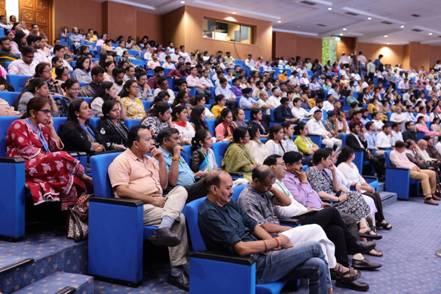
New Delhi: The Ministry of Women and Child Development, Government of India, organised a Cyber Security Awareness Workshop, 27th June 2025, at Dr. Ambedkar International Centre, New Delhi. The workshop aimed to build awareness about online safety, emerging cyber threats, and safe internet practices, especially for women and children, who are central to nation-building.
This marks the first phase of a broader initiative to embed cyber awareness into every level of the Ministry’s service delivery network. In the next phase, the Ministry plans to take the effort to the field, engaging frontline workers, Anganwadi staff, and state-level stakeholders to deepen digital security practices across the country.
The workshop saw enthusiastic participation from officers and officials of the Ministry and its affiliated bodies, including the National Commission for Women (NCW), Savitribai Phule National Institute for Women and Child Development, Central Adoption Resource Authority (CARA), and the National Commission for Protection of Child Rights (NCPCR).
Leading cybersecurity experts from government and industry contributed insights into tackling digital threats. Officials from the Indian Cyber Crime Coordination Centre (I4C) under the Ministry of Home Affairs underscored the growing complexity of cybercrime and the urgent need for stronger coordination. CERT-In, the national nodal agency under the Ministry of Electronics and Information Technology, shared critical knowledge about cyber policy, response strategies, and data protection. PwC India demonstrated real-world hacking scenarios to highlight the importance of digital resilience. From phishing and data breaches to securing government portals, sessions equipped participants with practical tools and emphasized that cybersecurity is not a one-time exercise but a continuous practice rooted in vigilance and accountability.
Addressing the gathering, Shri Anil Malik, Secretary, Ministry of Women and Child Development, said that in an era where government work and communication are deeply integrated with digital platforms, it is essential to remain vigilant and informed. He called on all officials to fully leverage the learning opportunities provided by the workshop.
Over the past decade, the Ministry has increasingly adopted technology to drive inclusive development and efficient service delivery. Initiatives such as the Poshan Tracker—recognised with the Prime Minister’s Award for Excellence 2024—have digitised records across 14 lakh Anganwadi Centres, enabling real-time dashboards for over 10 crore beneficiaries. Programmes like the Pradhan Mantri Matru Vandana Yojana operate through paperless, Aadhaar-enabled direct benefit transfers and mobile registration, while facial recognition ensures accurate beneficiary authentication. Platforms including SHe-Box, Mission Shakti Portal, and Mission Vatsalya Portal further demonstrate the Ministry’s commitment to technology-led access to services and redressal mechanisms.
As reliance on digital systems grows, cybersecurity has become critical to protecting sensitive data and sustaining public trust. Through this initiative, the Ministry reaffirmed its commitment to building a secure, transparent, and accountable digital governance environment. As India progresses into its Amrit Kaal, the Ministry expressed its resolve to equip its entire ecosystem with the tools and knowledge needed to contribute to the vision of Viksit Bharat by 2047.











[[comment.comment_text]]